
0%
According to NVIDIA’s 2026 State of AI in Retail and CPG survey, 91% of retail and consumer packaged goods companies already use or assess AI. For e-commerce businesses, AI has become a competitive standard.
Many online stores know they need AI but struggle to choose the right tools. Product recommendations, chatbots, content creation, inventory forecasts, and marketing automation can all help, but results also depend on site speed, UX, and e-commerce growth optimization.
This article reviews the best AI tools for e-commerce business success, shows which problems they solve, and helps you choose solutions that increase sales and save time.
Why AI Matters for Modern E-Commerce Businesses
AI matters for modern e-commerce businesses because it helps online stores improve customer experience, increase sales, reduce manual work, and make better decisions from data. With AI, businesses can personalize product offers, answer customer questions faster, predict demand, improve marketing, and support growth with less effort.
AI is useful for e-commerce because it helps businesses:
- Personalize product recommendations based on customer behavior
- Improve customer support with chatbots and faster replies
- Create product descriptions, emails, ads, and other content
- Forecast demand and manage inventory more accurately
- Detect fraud and reduce payment risks
- Improve search results and product discovery
- Analyze customer data to find sales opportunities
- Save time on routine tasks and daily operations
Key Benefits of AI in E-Commerce
AI helps e-commerce businesses improve sales, customer experience, daily operations, and marketing performance with less manual effort.
Personalized Customer Experience
AI helps e-commerce stores show the right products, offers, and content to each customer. It can use browsing history, purchase behavior, cart activity, and preferences to create more relevant shopping experiences. This helps customers find products faster and can increase conversions.
Faster Customer Support
AI chatbots and virtual assistants can answer common customer questions at any time. They can help with order status, delivery details, returns, product information, and basic troubleshooting. This reduces support pressure and gives customers quicker answers.
Smarter Product Recommendations
AI can analyze customer behavior and suggest products that match buyer intent. These recommendations can appear on product pages, category pages, carts, emails, and search results. Relevant suggestions help increase average order value and support repeat purchases.
Better Inventory Management
AI helps e-commerce businesses predict demand, track sales patterns, and avoid stock issues. It can show which products may sell faster, which items need restock, and which products may underperform. This helps stores reduce missed sales and avoid excess inventory.
More Effective Marketing
AI can improve email campaigns, ad targeting, customer segmentation, and content creation. It helps businesses send more relevant messages to the right audience at the right time. This can improve campaign performance and reduce wasted marketing spend.
Improved Decision Making
AI tools can turn large amounts of customer, sales, and website data into clear insights. E-commerce teams can use these insights to adjust pricing, improve product pages, plan promotions, and identify growth opportunities.
Lower Manual Workload
AI can automate repetitive tasks such as product description creation, customer request sorting, data analysis, and report preparation. This gives teams more time to focus on strategy, customer relationships, and business growth.
Types of AI Tools for E-Commerce Businesses
E-commerce businesses use different AI tools to improve customer experience, automate routine work, and make better decisions. Each tool type supports a specific part of online store growth.
Type of AI Tool | Main Purpose | How It Helps E-Commerce Businesses |
|---|---|---|
AI Chatbots | Customer support automation | Answer common questions, share order details, help with returns, and reduce support workload. |
Product Recommendation Tools | Personalized product suggestions | Show relevant products based on customer behavior, purchase history, and cart activity. |
AI Search Tools | Smarter product discovery | Improve search results, correct typos, understand buyer intent, and help customers find products faster. |
Content Creation Tools | Faster content production | Create product descriptions, email copy, ads, blog ideas, and social media content. |
Marketing Automation Tools | Personalized campaigns | Segment customers, send targeted messages, and improve email, ad, and retention campaigns. |
Inventory Forecast Tools | Demand prediction | Help stores avoid stockouts, reduce excess inventory, and plan product purchases more accurately. |
Pricing Optimization Tools | Smarter pricing decisions | Analyze demand, competitor prices, and customer behavior to support better pricing. |
Analytics and Reporting Tools | Data-based decisions | Turn sales, customer, and website data into clear insights for growth strategy. |
Fraud Detection Tools | Risk prevention | Identify suspicious orders, payment risks, and unusual customer behavior. |
Visual AI Tools | Image-based product search | Let customers search by image, match similar products, and improve product discovery. |
Get in touch
with our expert
Discuss your project requirements and get a free estimate.
Get in touch
with our expert
Discuss your project requirements and get a free estimate.
Best AI Tools for E-Commerce in 2026: Comparison Table
The table below compares the top AI tools for e-commerce by category, best use case, and main business benefit, so you can quickly choose the right option for your store.
AI Tool | Category | Best For | Main Benefit |
|---|---|---|---|
Shopify Magic and Sidekick | AI commerce assistant | Shopify store owners | Helps with store tasks, content, and commerce decisions inside Shopify. |
Gorgias AI Agent | Customer support AI | Stores with high support volume | Answers common customer questions and reduces support team workload. |
Klaviyo AI | Marketing automation AI | Email, SMS, and retention campaigns | Personalizes messages, segments customers, and supports repeat sales. |
Algolia | AI search and discovery | Stores with large product catalogs | Improves search results and helps customers find products faster. |
| GPTZero | AI content detection tool | Verifying AI-generated content before publication | Helps teams flag AI-generated drafts, maintain content quality, and keep product and blog copy consistent with brand voice. |
Nosto | AI personalization | Product recommendations and onsite experiences | Creates more relevant shopping journeys and helps increase order value. |
ChatGPT | AI content and productivity assistant | Content, planning, support, and daily workflows | Helps create product copy, emails, FAQs, blog outlines, and campaign ideas. |
| ChatGPT AI Content Generator (Amasty) | Cross-platform e-commerce AI content generator | Magento, Shopify, BigCommerce, Wix, Ecwid, and stores that need scalable product and SEO content | Generates product descriptions, SEO metadata, category or collection content, blog content, and other store copy to save time and keep catalog content consistent. |
Claude | AI writing and analysis assistant | Long-form content, research, and customer communication | Helps draft detailed content, analyze information, improve messaging, and support complex writing tasks. |
Prediko | AI inventory planning | Stock control and demand forecasts | Helps predict demand, plan replenishment, and reduce stock problems. |
Prisync AI Dynamic Pricing | AI pricing tool | Competitive pricing and market monitoring | Tracks competitor prices and supports smarter price decisions. |
Signifyd | AI fraud detection | Checkout security and payment risk | Detects suspicious orders and helps reduce fraud losses. |
Best AI Tools for E-Commerce in 2026
The best AI tools for e-commerce help online stores improve customer support, marketing, personalization, content, inventory, pricing, and fraud prevention. Below are 12 tools that support different parts of e-commerce growth and help businesses work more efficiently.
1. Shopify Magic and Sidekick
Best for: Shopify store owners
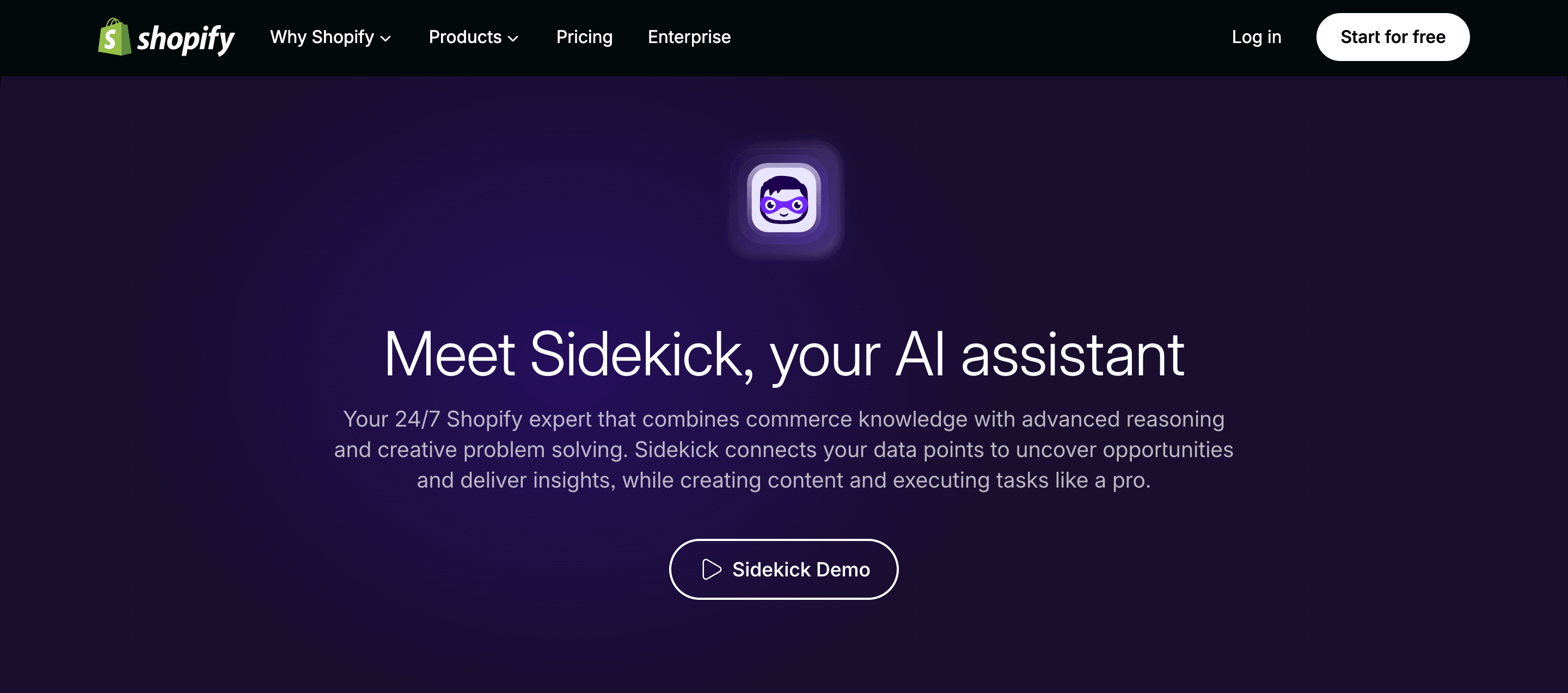
Shopify Magic and Sidekick are useful for merchants who want AI support directly inside their Shopify workflow. Shopify Magic can help with content creation, product descriptions, email copy, and other store tasks. Sidekick works more like an AI assistant for business questions, store setup, and daily decision support.
For e-commerce teams, these tools are helpful because they reduce the need to switch between platforms. Store owners can create content, review store information, and get practical suggestions in one place. This makes them a strong option for small and mid-sized Shopify businesses that need faster execution.
Main e-commerce value: Shopify Magic and Sidekick help merchants save time on store management, product content, customer communication, and daily business tasks.
2. Gorgias AI Agent
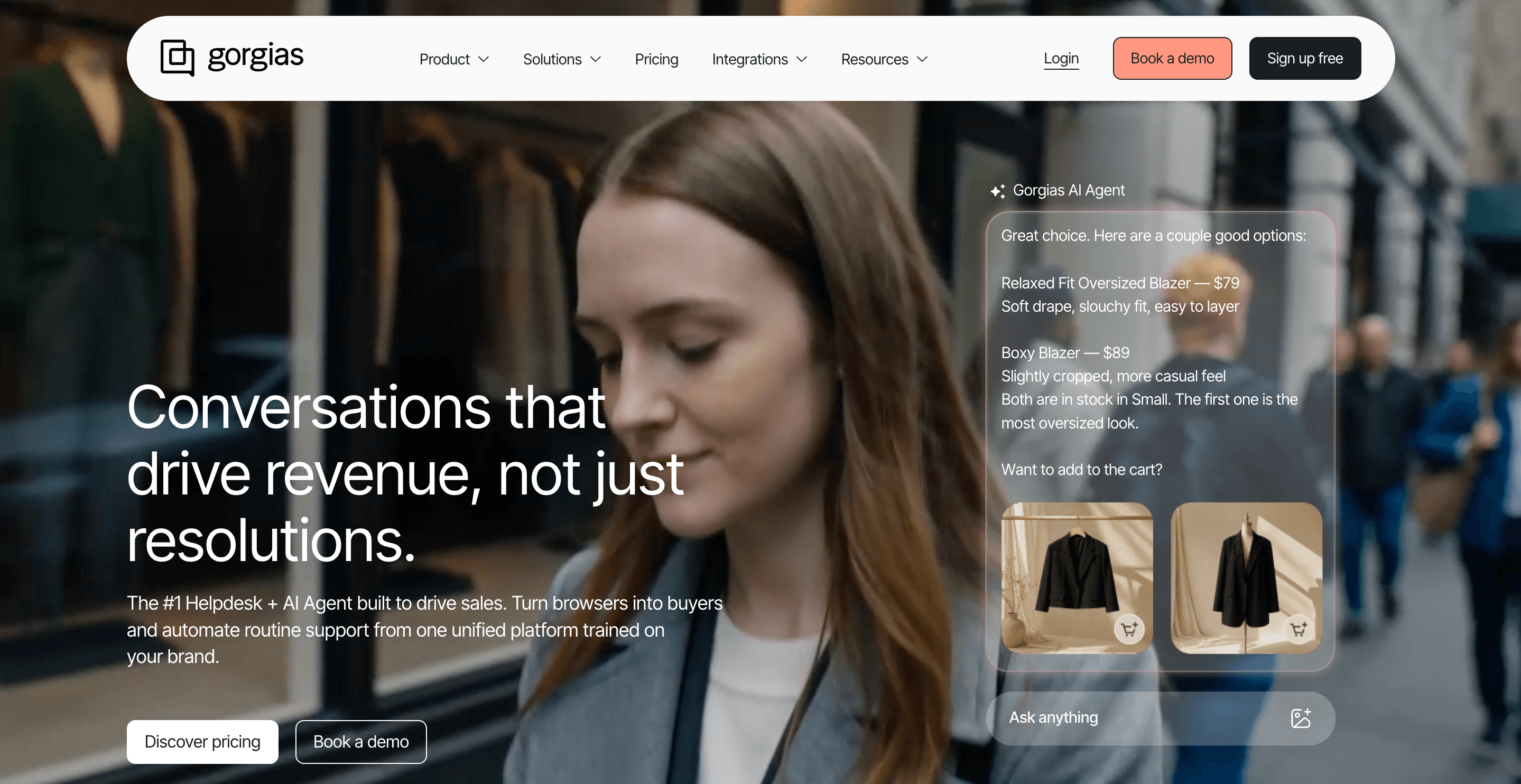
Best for: Stores with high support volume
Gorgias AI Agent helps e-commerce brands manage customer support more efficiently. It can respond to common questions about order status, shipping, returns, refunds, product details, and store policies. This is useful for stores that receive many repetitive customer requests every day.
The tool can also help support teams focus on more complex cases. Instead of manually answer every simple request, teams can let AI handle routine conversations and step in when a customer needs human help. This creates a faster support experience and can improve customer satisfaction.
Main e-commerce value: Gorgias AI Agent reduces support workload, improves response speed, and helps customers get answers faster.
3. Klaviyo AI
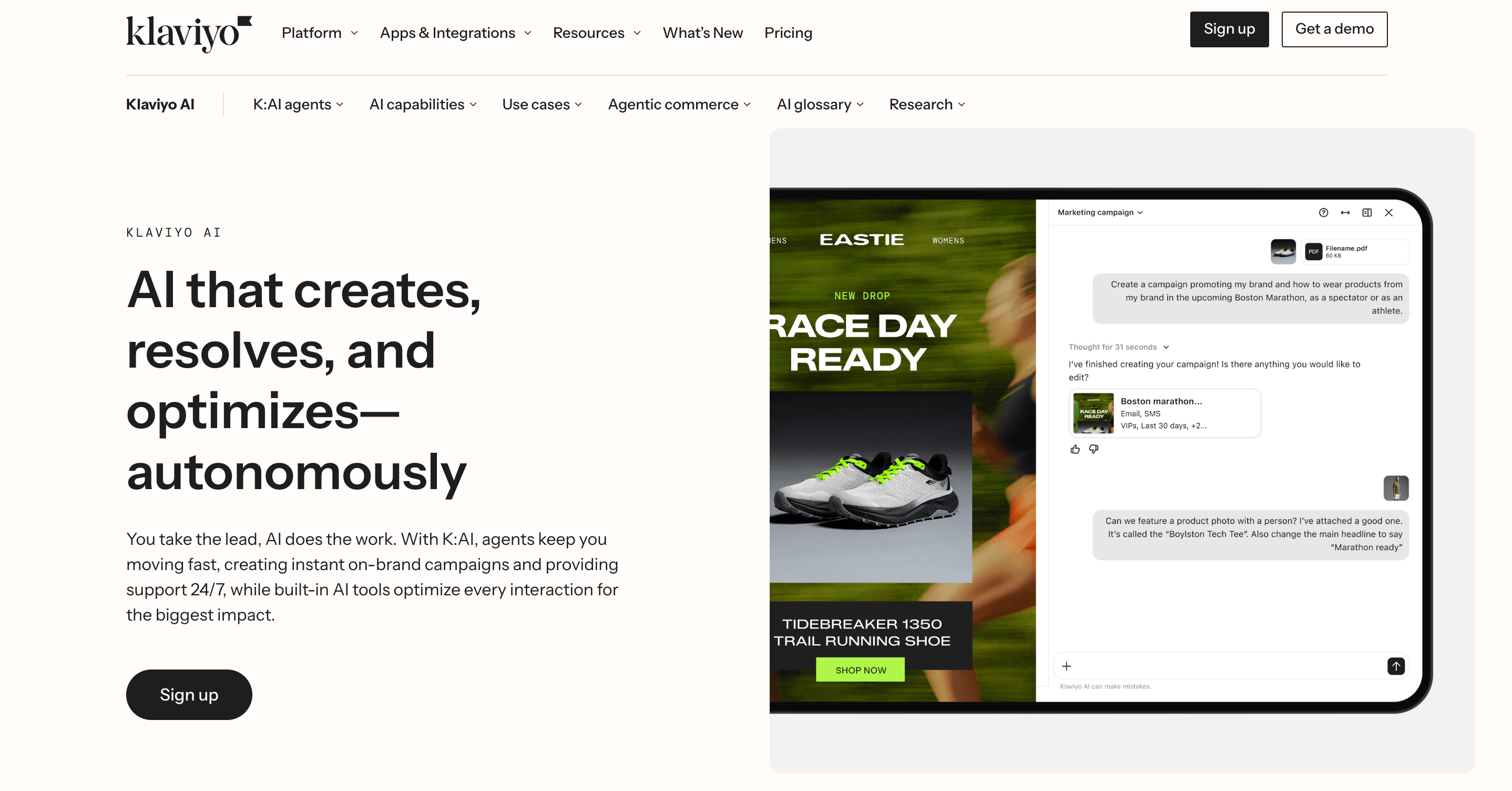
Best for: Email, SMS, and retention campaigns
Klaviyo AI helps e-commerce brands create more relevant marketing campaigns through customer data. It can support segmentation, product recommendations, predictive insights, email content, SMS campaigns, and customer lifecycle flows. This makes it useful for stores that want to increase repeat purchases and improve retention.
The tool can help businesses send more personalized messages based on customer behavior, order history, browsing activity, and engagement. For example, a store can use Klaviyo AI to improve abandoned cart emails, win back inactive customers, or promote products that match each customer’s interests.
Main e-commerce value: Klaviyo AI supports better retention, stronger customer relationships, abandoned cart recovery, and more personalized marketing.
4. Algolia
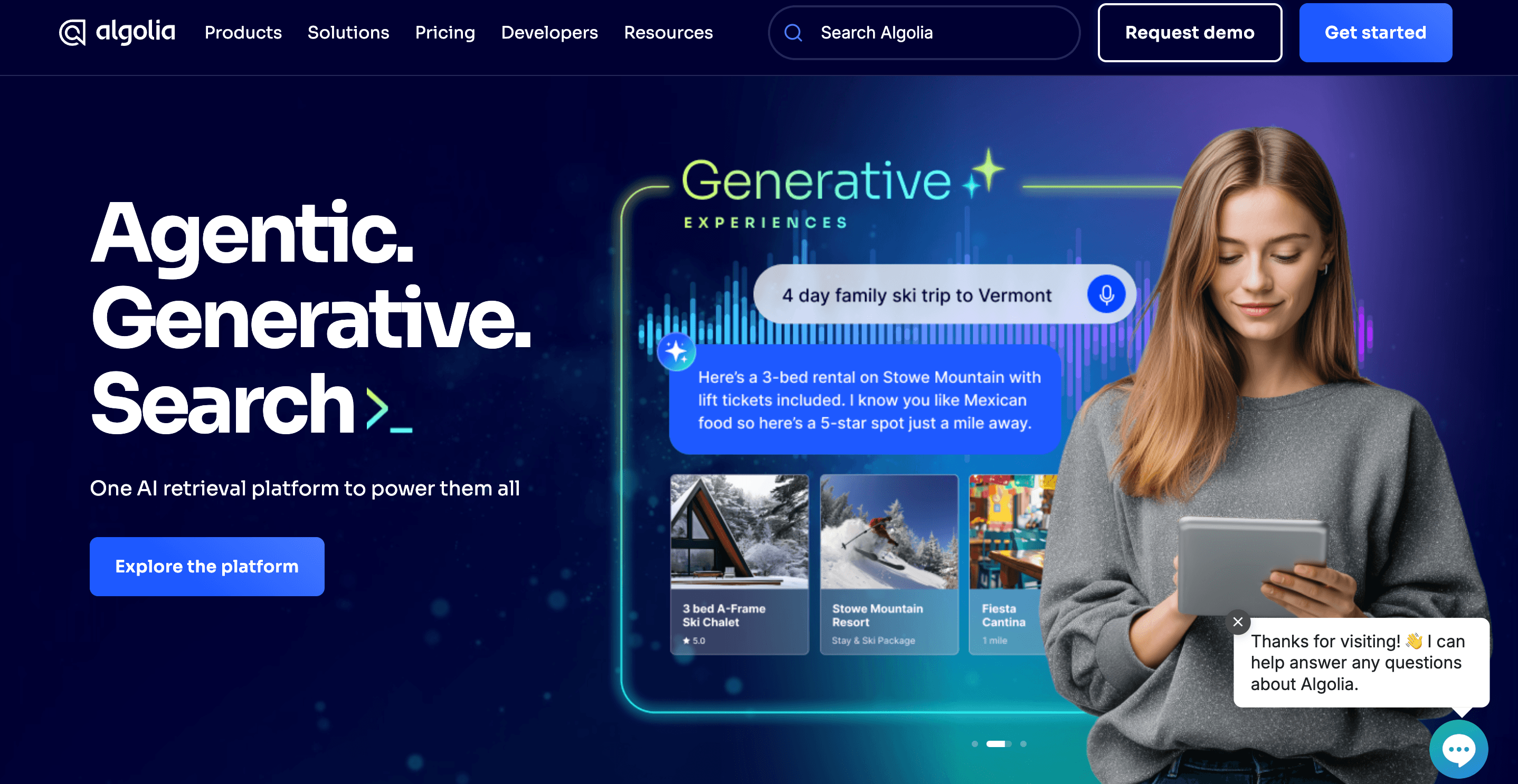
Best for: Stores with large product catalogs
Algolia helps e-commerce stores improve product search and discovery. It can deliver faster and more relevant search results, correct typos, understand shopper intent, and help customers find products even when they use different words from the product catalog.
This is especially valuable for stores with many SKUs, product variants, filters, or categories. If customers cannot find what they want quickly, they may leave the site. Algolia helps reduce that friction by making search more accurate, flexible, and user friendly.
Main e-commerce value: Algolia improves product discovery, reduces search frustration, and helps customers move faster from search to purchase.
5. GPTZero
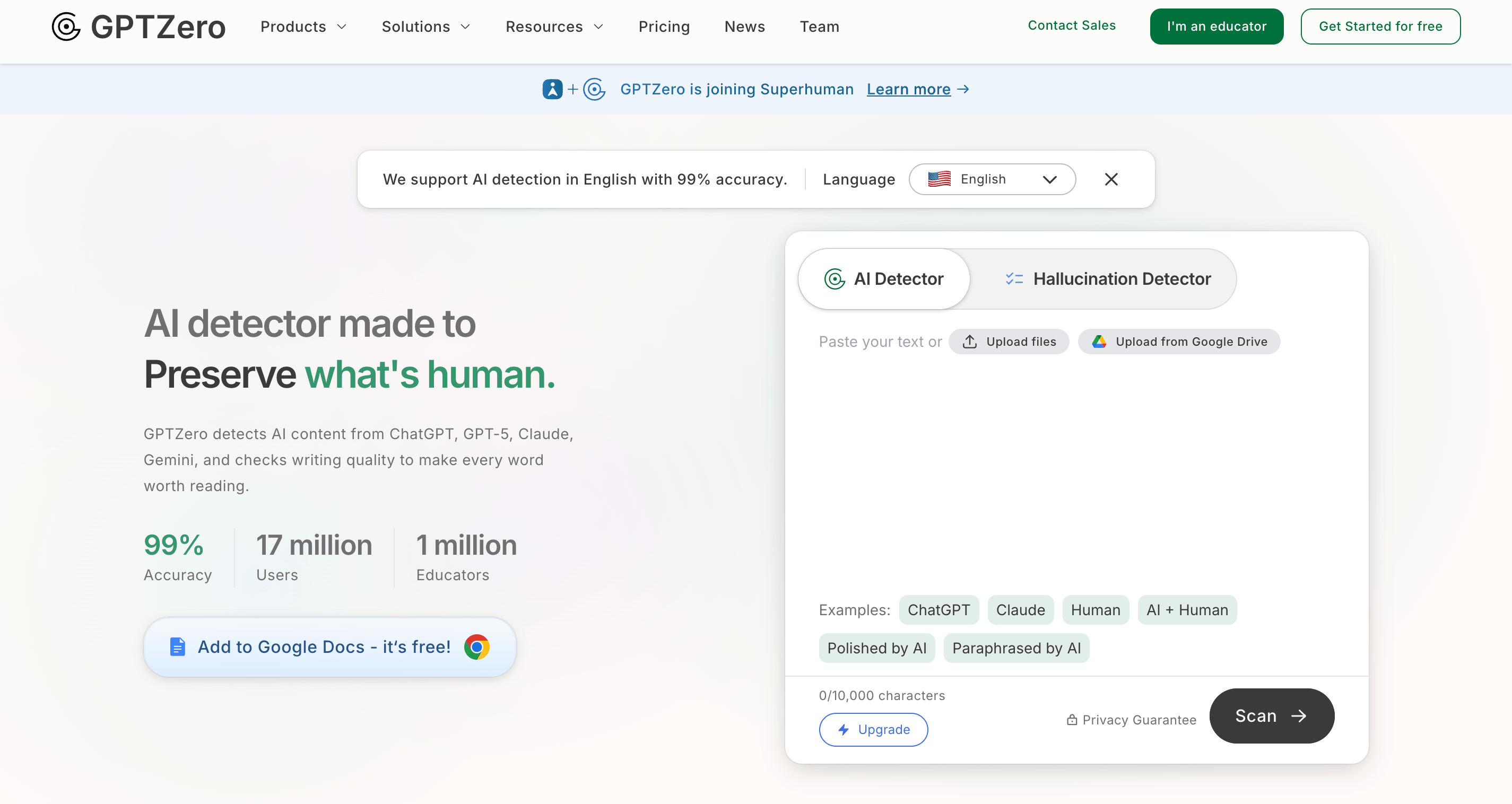
Best for: Verifying AI-generated content before it goes live
As more e-commerce teams use AI to draft product descriptions, blog posts, and marketing copy, GPTZero helps stores check that content before it's published. It works as an AI detector that flags text likely to be AI-generated, which is useful for brands that want to review drafts, maintain a consistent human voice, or confirm that content from freelancers and agencies meets their editorial standards.
This matters for stores that publish at scale. When multiple writers, contractors, or AI tools are involved in content production, it can be hard to keep quality and tone consistent across hundreds of product pages or blog posts. GPTZero gives teams a quick way to flag content that may need a closer human edit before it reaches customers or search engines.
Main e-commerce value: GPTZero helps teams maintain content quality, catch unreviewed AI drafts, and keep product and blog copy consistent with brand voice.
6. Nosto
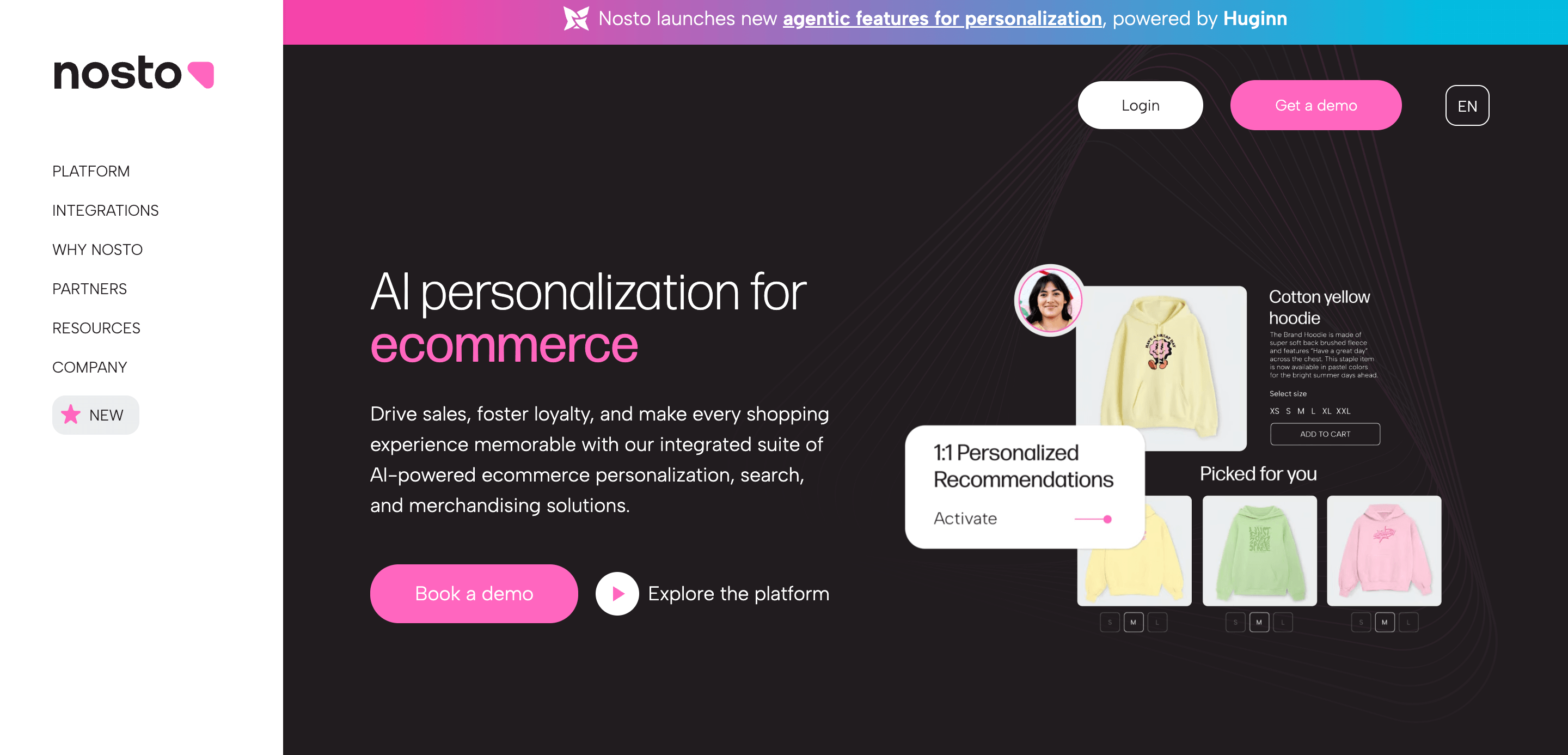
Best for: Product recommendations and onsite experiences
Nosto helps e-commerce businesses personalize the customer journey across the store. It can show relevant product recommendations, personalize category pages, adjust onsite content, and support merchandising decisions based on customer behavior.
For online stores, personalization can make the shopping experience feel more relevant. A returning customer may see products related to past purchases, while a new visitor may see popular items or category based suggestions. This helps stores guide shoppers toward products they are more likely to buy.
Main e-commerce value: Nosto creates more relevant shopping experiences, supports upsells and cross-sells, and can help increase average order value.
7. ChatGPT

Best for: Content, planning, support, and daily workflows
ChatGPT is a flexible AI assistant for e-commerce teams that need help with content, ideas, customer communication, and internal tasks. It can draft product descriptions, category copy, email campaigns, ad text, FAQ answers, blog outlines, customer replies, and product comparison content.
It can also help teams organize ideas and work faster. For example, marketers can use ChatGPT to plan seasonal campaigns, support teams can draft response templates, and content teams can create briefs for product pages or blog articles. It is especially useful when a business needs quick drafts that humans can review and improve.
Main e-commerce value: ChatGPT helps teams create content faster, improve communication, plan campaigns, and reduce time spent on repetitive writing tasks.
8. ChatGPT AI Content Generator from Amasty
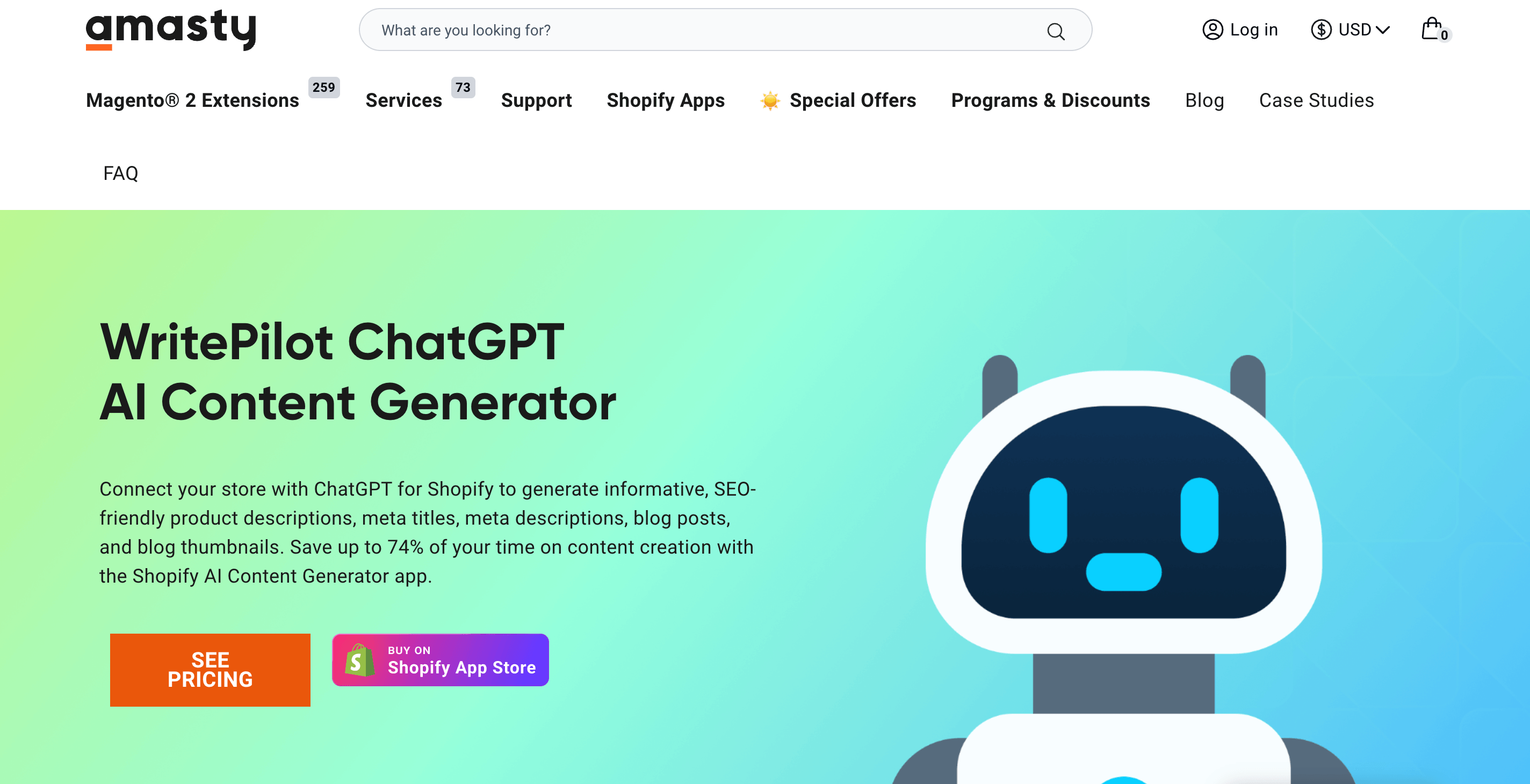
Best for: E-commerce product content, SEO metadata, and catalog copy automation
ChatGPT AI Content Generator from Amasty helps online stores create product descriptions, meta titles, meta descriptions, category or collection content, and other SEO-friendly store copy faster.
It is useful for merchants with large catalogs or limited content resources because teams can generate draft content, adjust it to match the brand voice, and keep product pages more complete and consistent. The tool is available for multiple e-commerce platforms, including Magento, Shopify, BigCommerce, Wix, and Ecwid.
Main e-commerce value: It saves time on content creation, improves SEO metadata, and helps scale product page optimization across online stores.
9. Claude

Best for: Long-form content, research, and customer communication
Claude is useful for e-commerce teams that work with longer content, detailed documents, research materials, and complex messaging. It can help draft product guides, buying guides, help center articles, customer emails, brand copy, and internal documentation.
This tool can be helpful when a store needs more detailed explanations or clearer communication. For example, a team can use Claude to refine product education content, summarize customer feedback, improve FAQ pages, or review long campaign drafts. It works well for tasks that require structure, clarity, and careful language.
Main e-commerce value: Claude helps teams create clearer long-form content, analyze information, improve messaging, and support customer communication.
10. Prediko
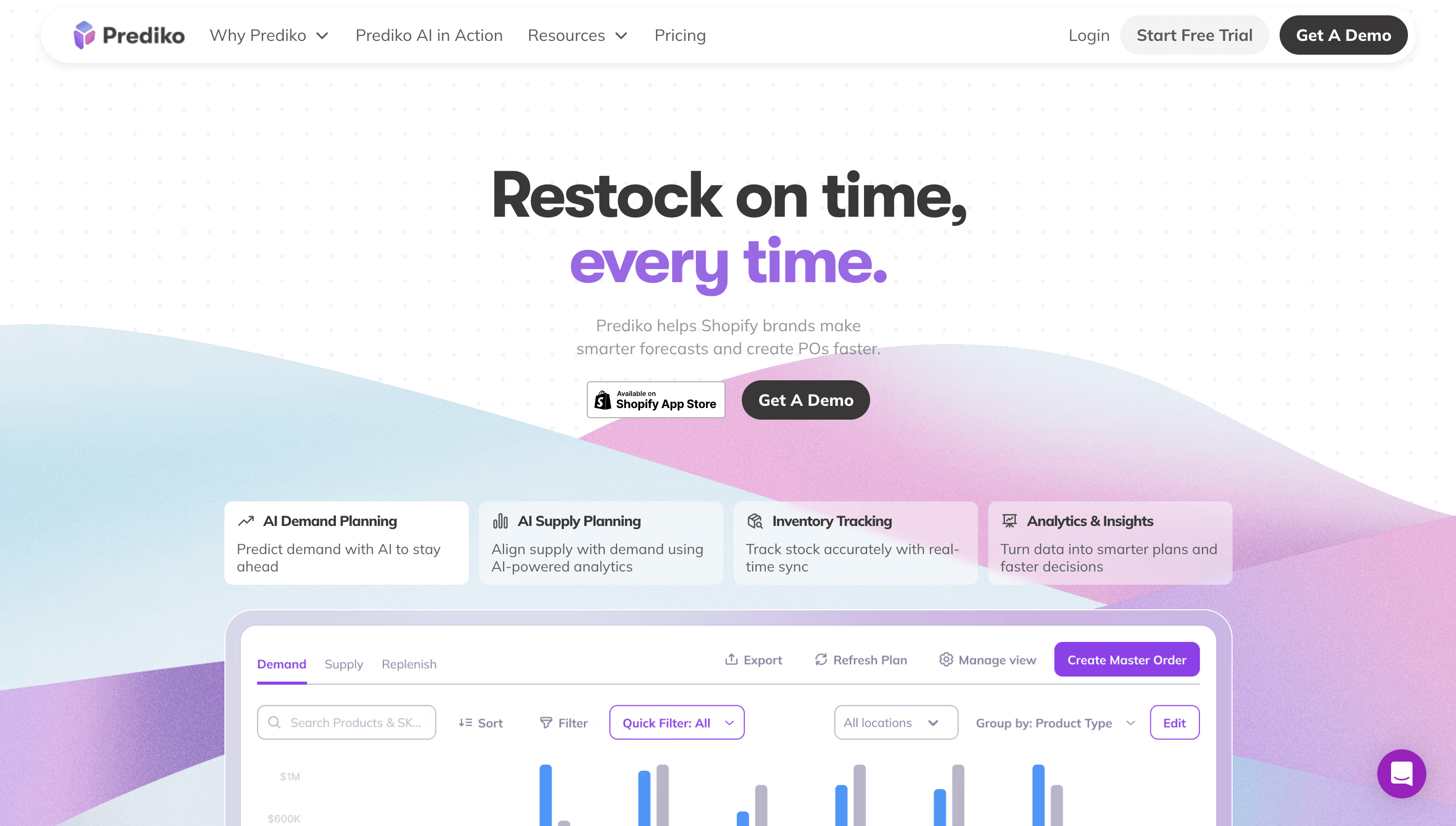
Best for: Stock control and demand forecasts
Prediko helps e-commerce businesses improve inventory planning and demand forecasting. It can support purchase planning, stock visibility, replenishment decisions, and sales trend analysis. This is important for stores that need to avoid both stockouts and excess inventory.
Poor inventory control can hurt growth. If products sell out too often, stores lose sales and disappoint customers. If they order too much stock, cash gets locked in slow-moving products. Prediko helps teams make better decisions by turning sales and inventory data into clearer forecasts.
Main e-commerce value: Prediko helps reduce stockouts, limit excess inventory, improve replenishment planning, and support better cash flow.
11. Prisync AI Dynamic Pricing
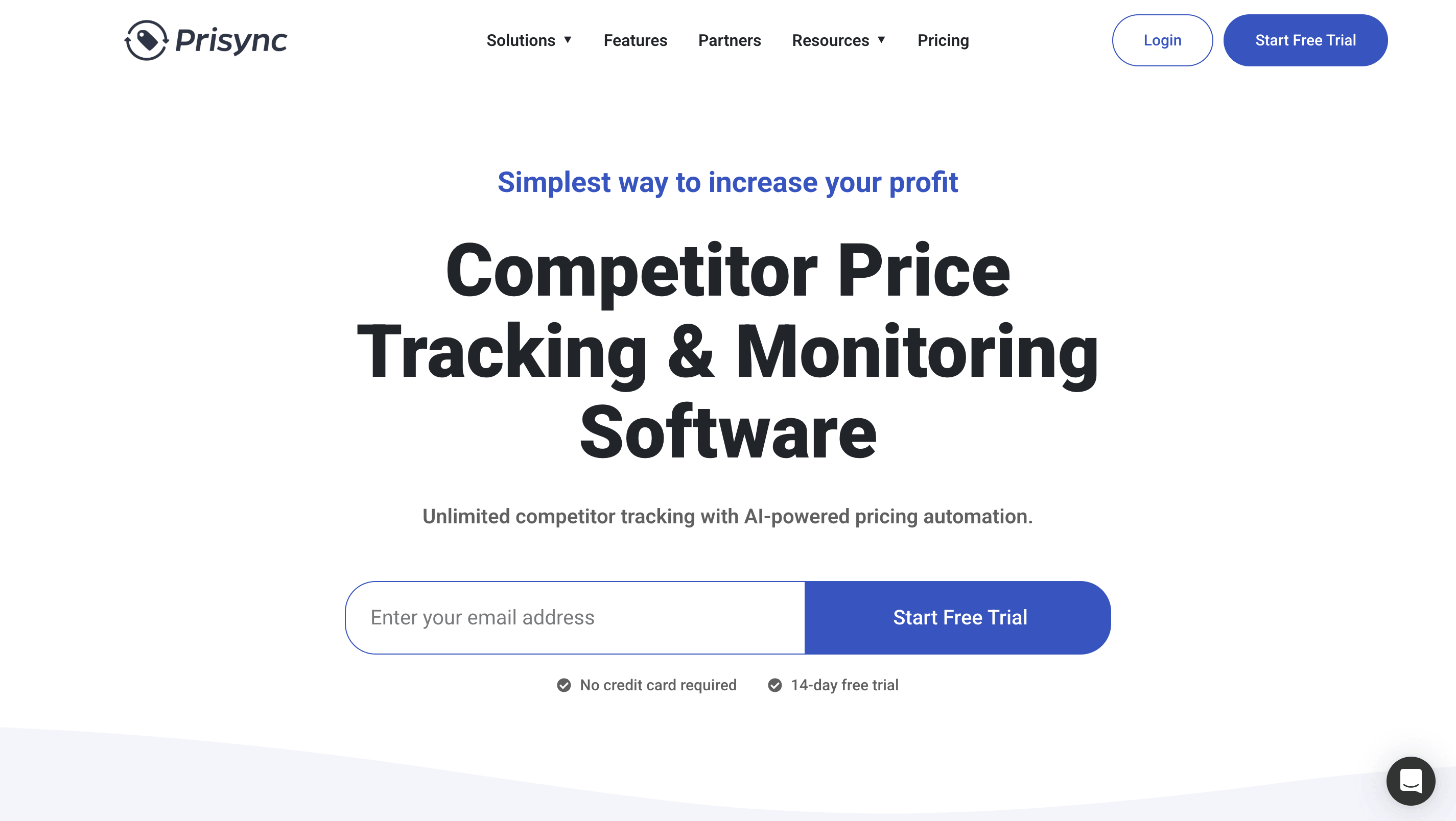
Best for: Competitive pricing and market monitoring
Prisync AI Dynamic Pricing helps e-commerce businesses track competitor prices and make smarter pricing decisions. It can monitor market changes, compare product prices, and support automated pricing rules based on business goals.
This is useful for stores in competitive categories where prices change often. Instead of checking competitor sites manually, teams can use Prisync to understand the market faster and adjust pricing with more confidence. The tool can help protect margins while keeping products competitive.
Main e-commerce value: Prisync AI Dynamic Pricing helps stores react to market changes, protect profit margins, and improve pricing strategy.
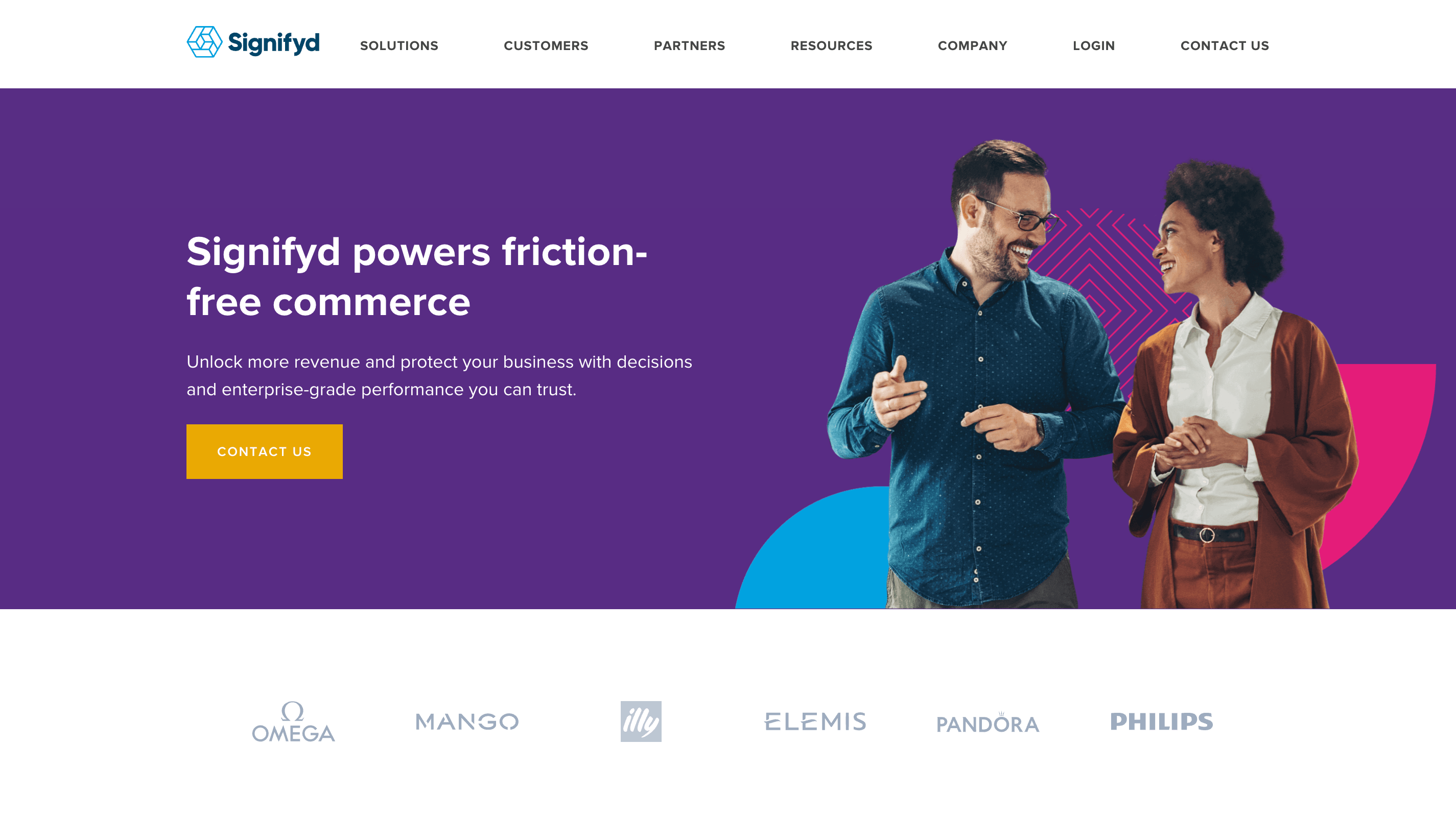
12. Signifyd
Best for: Checkout security and payment risk
Signifyd helps e-commerce businesses detect fraud and reduce payment risk. It uses AI to review transactions, identify suspicious behavior, and support safer order decisions. This is especially useful for stores with high order volume, international customers, or expensive products.
Fraud prevention matters because risky orders can lead to chargebacks, lost revenue, and extra operational costs. At the same time, stores do not want to block legitimate customers by mistake. Signifyd helps businesses manage that balance by supporting more accurate risk decisions during checkout.
Main e-commerce value: Signifyd helps reduce fraud losses, protect revenue, support safer checkout, and approve more legitimate orders.
Final Thoughts on AI Tools for E-Commerce Growth
AI can help e-commerce businesses work faster, serve customers better, and make smarter decisions across marketing, support, inventory, pricing, content, and fraud prevention. The right tools can reduce manual work, improve personalization, and help your team focus on higher-value tasks.
Still, AI works best when your store has a strong technical foundation. Slow pages, poor UX, weak integrations, or a limited checkout experience can reduce the impact of even the best AI tools. To support long-term growth, online stores need both smart automation and a reliable website built for customers.
If your current platform limits performance, scalability, or customer experience, professional e-commerce website development services can help you create a stronger base for AI-powered growth.
FAQ
How is AI used in e-commerce?
AI is used in e-commerce to personalize product recommendations, automate customer support, improve search results, create content, forecast demand, optimize prices, detect fraud, and analyze customer data. It helps online stores work faster, serve customers better, and make smarter business decisions.
What are the best AI tools for e-commerce?
The best AI tools for e-commerce include Shopify Magic and Sidekick, Gorgias AI Agent, Klaviyo AI, Algolia, Nosto, ChatGPT, Claude, Prediko, Prisync AI Dynamic Pricing, and Signifyd. The right choice depends on whether your store needs better support, marketing, search, personalization, content, inventory, pricing, or fraud protection.
Does AI improve customer experience in e-commerce?
Yes, AI can improve customer experience in e-commerce by making shopping faster, more relevant, and more convenient. It can show better product suggestions, answer questions quickly, improve site search, personalize offers, and help customers find what they need with less effort.
Is AI expensive for e-commerce businesses?
AI does not have to be expensive for e-commerce businesses. Many tools offer plans for small and mid sized stores, while larger platforms provide advanced features for bigger teams. The best approach is to start with one clear problem, such as support, content, or inventory, then choose a tool that fits your budget and expected return.

Expert in creating engaging written content. Skilled at analyzing audience behaviors and refining strategies to align business goals with customer interests. Proven ability to craft content that connects deeply with audiences. Passionate about staying current with trends to boost engagement.
Expert in creating engaging written content. Skilled at analyzing audience behaviors and refining strategies to align business goals with customer interests. Proven ability to craft content that connects deeply with audiences. Passionate about staying current with trends to boost engagement.