
0%
In This Article:
What Is AI in E-commerce?
Key Benefits of AI in E-Commerce
Most Popular AI Use Cases in E-Commerce
Best AI Tools for E-Commerce
How AI Helps Increase E-Commerce Sales
Challenges of Implementing AI in E-Commerce
How to Implement AI in Your Online Store (Step-by-Step)
AI Trends Shaping the Future of E-Commerce
Online retailers that get personalization right can lift revenue by 5–15% and increase marketing ROI by 10–30%, according to McKinsey. But many e-commerce businesses still find this hard to achieve. Shoppers expect fast answers, relevant product recommendations, accurate search results, and timely offers, while store teams face limited data, manual workflows, and stronger competition.
AI can help close this gap. With the right AI-powered e-commerce solutions, online stores can personalize product discovery, improve search, automate customer support, adjust prices, and predict customer behavior. In this article, we’ll look at practical ways e-commerce businesses can use AI to increase conversions, improve the customer experience, and grow revenue.
What Is AI in E-commerce?
AI in e-commerce is the use of artificial intelligence technologies to help online stores analyze data, automate decisions, and personalize the shopping experience. It allows retailers to understand customer behavior, improve product discovery, reduce manual work, and make faster business decisions.
Here’s how AI can support an online store:
Area | How AI Helps |
|---|---|
Product recommendations | Suggests relevant products based on customer behavior, purchase history, and similar shoppers. |
Site search | Helps shoppers find products faster, even when they use vague, long, or misspelled queries. |
Customer support | Answers common questions, provides order updates, and helps customers before they contact a support agent. |
Personalization | Adapts product offers, emails, banners, and promotions to each customer’s interests. |
Inventory planning | Predicts demand and helps avoid stockouts or overstock. |
Pricing and promotions | Analyzes demand, competitors, and customer behavior to support smarter pricing decisions. |
Marketing automation | Helps segment audiences, write campaign content, and send more relevant messages. |
Key Benefits of AI in E-Commerce
The main benefits of AI in e-commerce include higher conversions, stronger personalization, faster support, smarter operations, and better sales decisions. AI helps online stores use data more effectively across the full customer journey, from product discovery to post-purchase support.
1. Higher Conversion Rates
AI can help shoppers find the right products faster. For example, smart search, personalized recommendations, and tailored offers can guide customers toward items that match their interests and purchase intent. As a result, more visitors are likely to complete a purchase.
2. Better Customer Experience
Customers expect fast, relevant, and convenient shopping journeys. AI can support this through smarter product discovery, personalized content, instant chatbot answers, and more accurate recommendations. This helps reduce friction and makes the store easier to use.
3. Increased Average Order Value
AI can suggest related products, bundles, upgrades, and cross-sell offers based on customer behavior. Instead of showing the same offers to every shopper, online stores can present products that fit each customer’s needs, which can encourage larger orders.
4. More Efficient Marketing
AI helps e-commerce teams segment customers, predict purchase intent, and create more relevant campaigns. This can improve email, SMS, paid ad, and retargeting performance because customers receive messages that better match their interests.
5. Faster Customer Support
AI helps e-commerce teams segment customers, predict purchase intent, and create more relevant campaigns. This can improve email, SMS, paid ad, and retargeting performance because customers receive messages that better match their interests.
6. Smarter Inventory Planning
AI can analyze sales history, seasonal trends, and customer demand to help retailers plan stock levels more accurately. This can reduce the risk of stockouts, overstock, and missed sales.
7. Better Pricing and Promotion Decisions
AI can help stores analyze demand, customer behavior, competitor activity, and sales performance. These insights support more effective pricing strategies, discounts, and promotions.
8. Lower Operational Costs
Many e-commerce tasks are repetitive, from product tagging and customer segmentation to support replies and campaign analysis. AI can automate or speed up these processes, helping teams save time and focus on higher-value work.
Most Popular AI Use Cases in E-Commerce
The most popular AI use cases in e-commerce include recommendations, smart search, chatbots, personalization, inventory forecasting, dynamic pricing, fraud detection, marketing automation, content creation, and visual search. The table below shows how they help online stores grow sales.
AI Use Case | What It Does | How It Helps E-Commerce Stores |
|---|---|---|
Product Recommendations | Suggests relevant products based on browsing history, purchase behavior, cart contents, and similar shoppers. | Helps customers discover more products, supports cross-sells and upsells, and can increase average order value. |
AI-Powered Site Search | Understands search intent, misspellings, synonyms, and vague product queries. | Helps shoppers find the right products faster and reduces the chance they leave without buying. |
AI Chatbots and Virtual Assistants | Answer common questions, share order updates, help with product choice, and route complex issues to support agents. | Improves response speed, reduces support workload, and helps customers move toward checkout. |
Personalized Shopping Experiences | Adapts product blocks, offers, banners, emails, and recommendations to each customer. | Makes the shopping journey more relevant and can improve conversion rates. |
Inventory Forecasting | Analyzes sales history, seasonal trends, and demand patterns to predict future stock needs. | Helps reduce stockouts, avoid overstock, and prepare for peak sales periods. |
Dynamic Pricing and Promotion Optimization | Reviews demand, customer behavior, competitor prices, stock levels, and sales performance. | Supports smarter pricing, better discounts, and more effective promotions. |
Marketing Automation | Helps segment customers, predict purchase intent, create campaign content, and choose send times. | Improves email, SMS, paid ad, and retargeting campaigns with more relevant messages. |
Fraud Detection | Analyzes payment behavior, order patterns, login activity, device data, and location signals. | Helps detect suspicious transactions and reduce financial risk. |
Product Content Creation | Assists with product descriptions, meta titles, category copy, email copy, and ad text. | Saves time for stores with large catalogs and frequent product updates. |
Visual Search | Lets shoppers search by image or find similar products from a photo. | Useful for fashion, furniture, beauty, home decor, and lifestyle stores where style and appearance matter. |
Best AI Tools for E-Commerce
The best AI tools for e-commerce depend on the store’s goal: personalization, search, customer support, marketing automation, content creation, or inventory planning. Below are popular AI tools online retailers can use to improve customer experience, automate work, and increase sales.
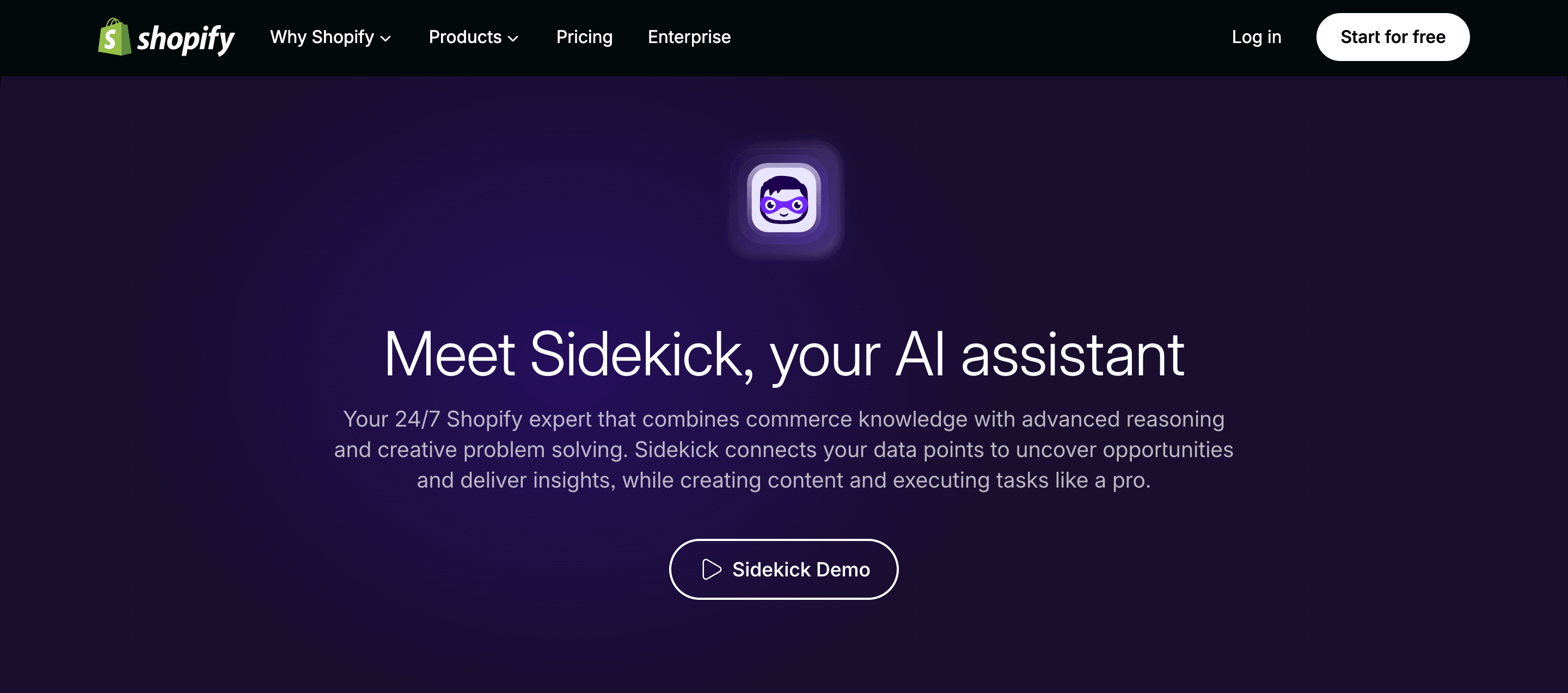
1. Shopify Magic and Sidekick
Shopify Magic and Sidekick are useful for Shopify merchants that want built-in AI tools for store management, content creation, and business insights. Store owners can use them to write product descriptions, generate content, analyze store data, and complete admin tasks faster.
Best for: Shopify stores that want native AI features without adding many third-party tools.
2. Klaviyo AI
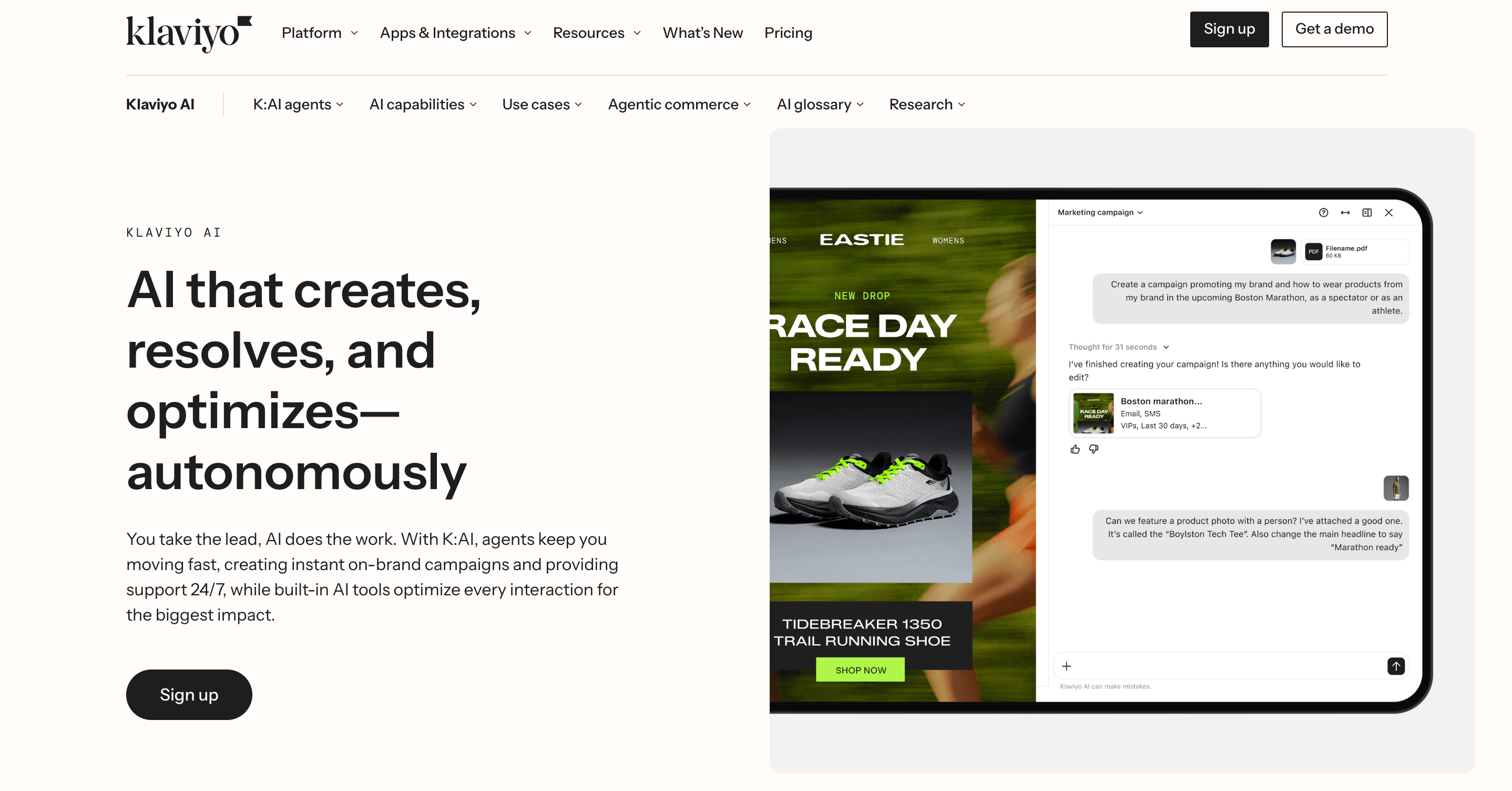
Klaviyo AI helps e-commerce brands improve email, SMS, and customer lifecycle marketing. It can support customer segmentation, campaign optimization, predictive analytics, and personalized messages based on customer data.
Best for: Online stores that want to improve retention, repeat purchases, and marketing performance.
3. Gorgias AI Agent
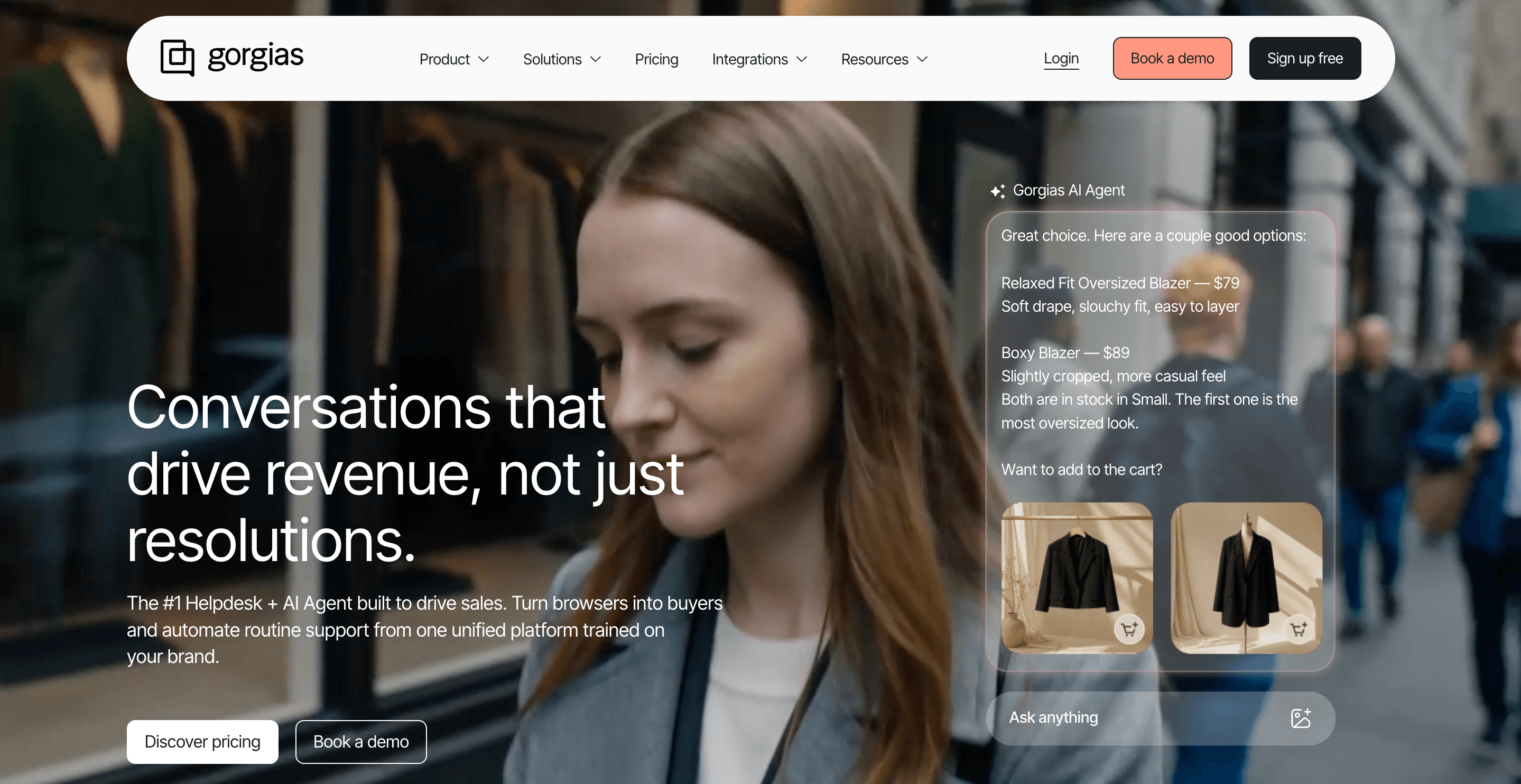
Gorgias AI Agent is designed for e-commerce customer support. It can answer common questions, help with order tracking, manage return requests, recommend products, and support customers before and after purchase.
Best for: Stores that want to reduce support workload and provide faster customer service.
4. Algolia
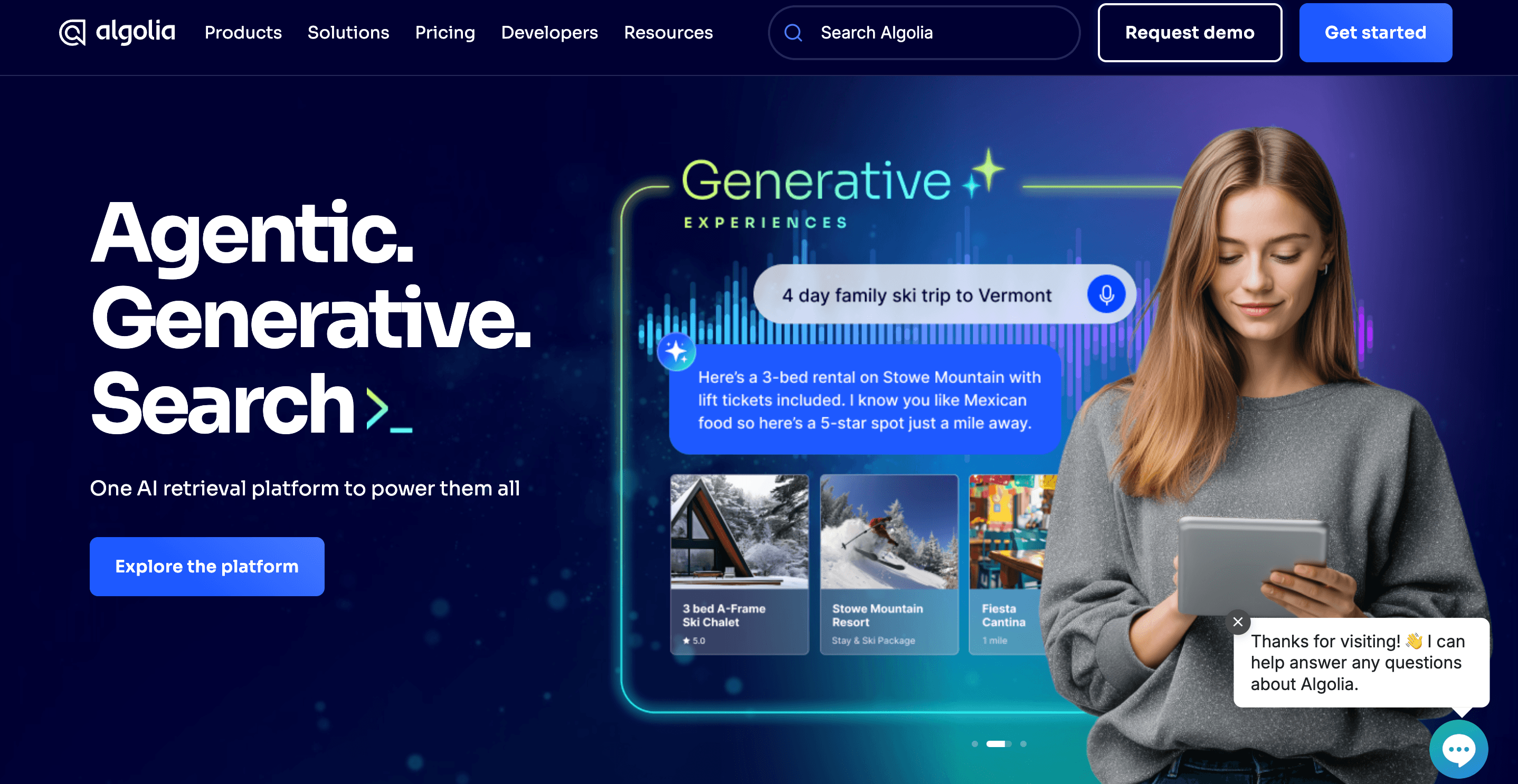
Algolia helps online stores improve site search, product discovery, recommendations, and personalization. Its AI-powered search can understand customer intent and return more relevant product results.
Best for: Stores with large catalogs or shoppers who rely heavily on search.
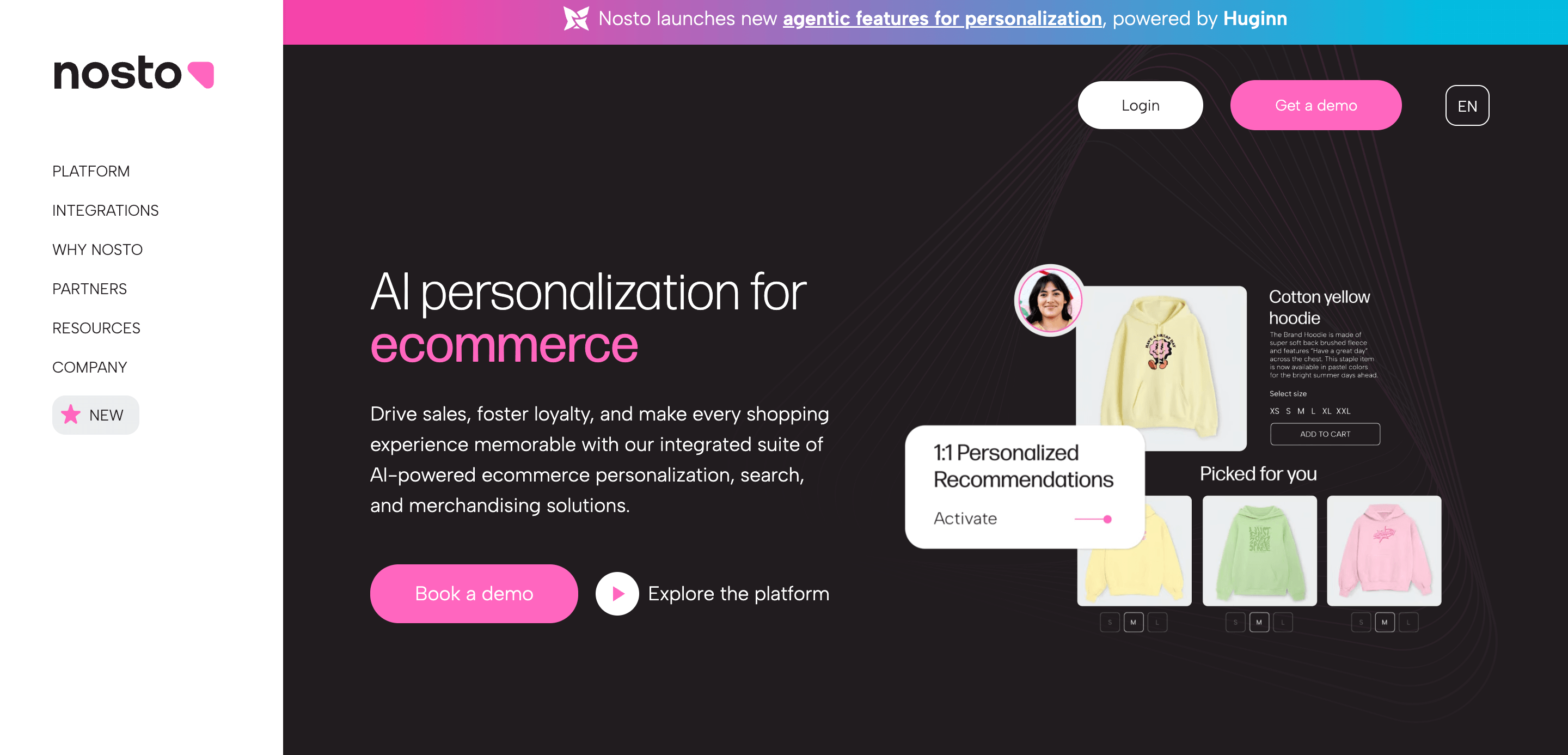
5. Nosto
Nosto focuses on AI-powered personalization, merchandising, product recommendations, and search. It helps retailers adapt product displays, category pages, and recommendations based on shopper behavior.
Best for: Mid-sized and growing stores that want stronger personalization across the shopping journey.
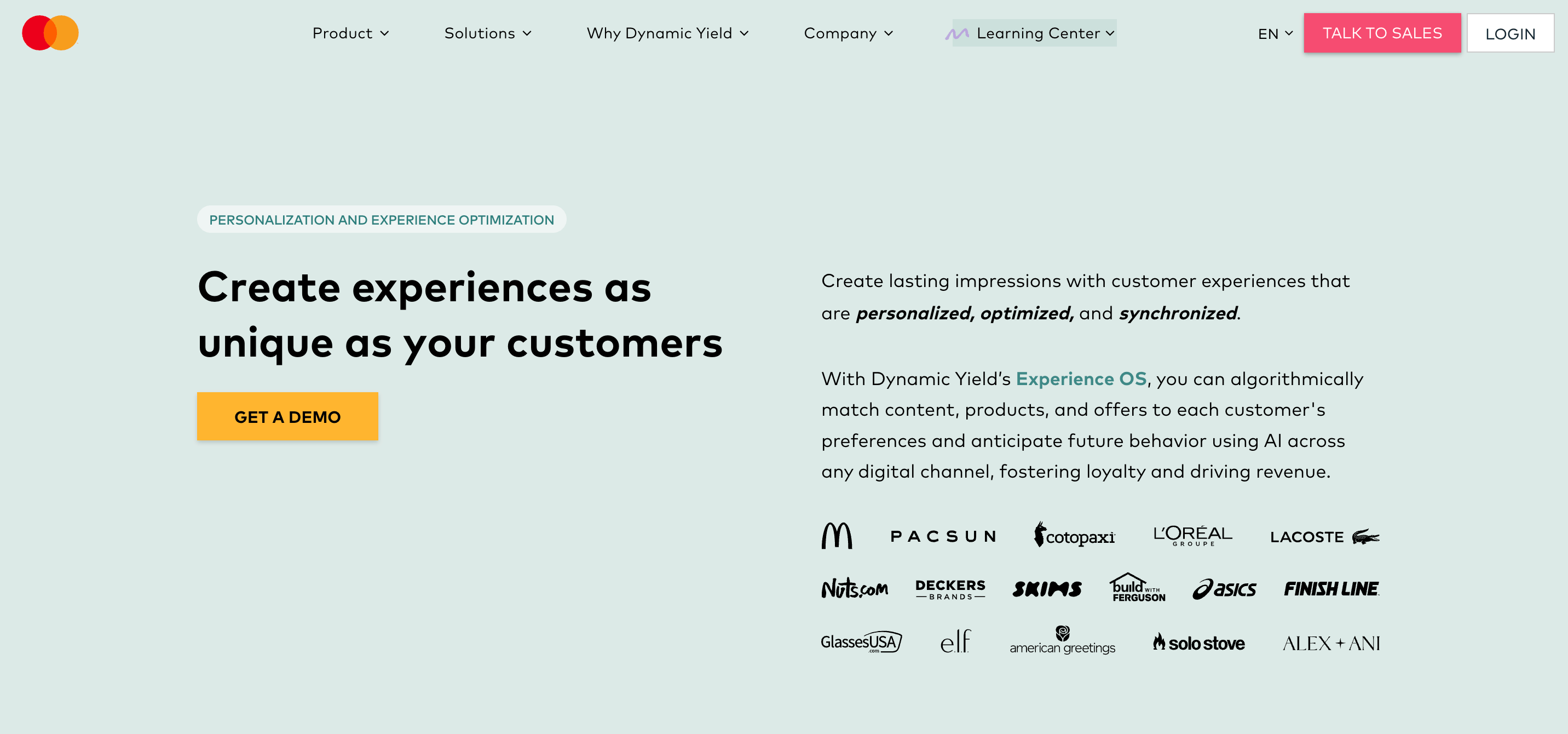
6. Dynamic Yield
Dynamic Yield by Mastercard is an AI personalization platform for larger e-commerce businesses. It helps brands personalize content, product recommendations, offers, and customer journeys across different channels.
Best for: Enterprise retailers that need advanced personalization and experimentation.
7. Bloomreach
Bloomreach offers AI tools for search, merchandising, personalization, and conversational shopping experiences. It can help retailers improve product discovery and guide customers toward relevant products through AI-powered recommendations and shopping assistants.
Best for: E-commerce businesses that want advanced search, merchandising, and customer journey personalization.

8. ChatGPT
ChatGPT can support e-commerce teams with product descriptions, email copy, ad text, SEO briefs, customer support scripts, FAQ content, and campaign ideas. It is especially useful for speeding up content and operational tasks.
Best for: Stores that need flexible AI assistance for content, marketing, support, and internal workflows.

9. Claude
Claude can help e-commerce teams create product descriptions, category content, email copy, ad text, FAQ answers, support scripts, and SEO briefs. It is also useful for summarizing customer feedback, analyzing long documents, and turning raw product information into clear, customer-friendly copy.
Best for: Stores that need AI support for content creation, research, customer communication, and internal documentation.

How AI Helps Increase E-Commerce Sales
AI helps increase e-commerce sales by making the shopping journey more relevant, faster, and easier to complete. It supports better product discovery, personalized offers, faster customer support, and smarter marketing decisions.
AI can help online stores grow sales by:
- Showing more relevant products: AI analyzes customer behavior, purchase history, cart contents, and browsing patterns to recommend products each shopper is more likely to buy.
- Improving product search: AI-powered search understands intent, synonyms, misspellings, and natural language queries, helping customers find the right products faster.
- Personalizing offers and content: AI adapts homepage blocks, product recommendations, discounts, emails, and retargeting ads to each customer or segment.
- Reducing cart abandonment: AI can identify shoppers who may leave without buying and trigger timely reminders, personalized discounts, or product suggestions.
- Speeding up customer support: AI chatbots and virtual assistants answer common questions about products, shipping, returns, availability, and order status.
- Improving marketing performance: AI helps segment audiences, predict purchase intent, optimize send times, and personalize email, SMS, paid ad, and retargeting campaigns.
- Supporting smarter pricing and promotions: AI analyzes demand, customer behavior, inventory levels, and competitor activity to help retailers plan better discounts and offers.
- Keeping the right products in stock: AI-powered inventory forecasting predicts demand, helping stores avoid stockouts, missed sales, and excess inventory.
Get in touch
with our expert
Discuss your project requirements and get a free estimate.
Get in touch
with our expert
Discuss your project requirements and get a free estimate.
Challenges of Implementing AI in E-Commerce
The main challenges of implementing AI in e-commerce include poor data quality, integration issues, high costs, privacy risks, lack of team expertise, and the need for regular human review. AI can bring strong results, but online stores need the right setup to use it effectively.
Poor Data Quality
AI depends on accurate customer, product, and sales data. If product details are incomplete, customer segments are outdated, or analytics data is incorrect, AI tools may produce weak recommendations, inaccurate forecasts, or irrelevant offers.
Integration with Existing Systems
Many online stores use several tools at once, such as an e-commerce platform, CRM, help desk, analytics system, email platform, and inventory software. AI tools must connect with these systems to work well. Without proper integration, teams may face data gaps, duplicate work, or inconsistent customer experiences.
High Setup and Tool Costs
Some AI tools require paid subscriptions, setup fees, technical support, or custom development. For smaller stores, these costs can become a barrier. Retailers should start with use cases that have clear business value, such as better search, automated support, or product recommendations.
Data Privacy and Security Risks
AI tools often use customer data, order history, browsing behavior, and payment-related signals. E-commerce businesses must protect this data and follow privacy rules such as GDPR or other regional regulations. Clear data policies, secure integrations, and vendor checks are important before adoption.
Lack of AI Skills
Store teams may not know how to choose, set up, or measure AI tools. This can lead to poor implementation or unrealistic expectations. Teams need basic AI knowledge, clear goals, and reliable metrics to understand whether a tool improves sales, customer experience, or efficiency.
Risk of Inaccurate or Generic Output
AI can make mistakes, especially in product content, customer support replies, recommendations, and forecasts. Human review is still important to check accuracy, brand voice, product details, and customer impact.
Difficulty Measuring ROI
AI results are not always instant or easy to measure. Some benefits, such as better customer experience or faster support, may affect sales over time. Stores should track clear metrics, including conversion rate, average order value, support response time, cart abandonment rate, repeat purchases, and revenue per visitor.
Customer Trust Issues
Some customers may feel uncomfortable if personalization feels too intrusive or chatbot replies sound unnatural. Stores should use AI in a transparent and helpful way, give customers control over their data, and make it easy to reach a human agent when needed.
How to Implement AI in Your Online Store (Step-by-Step)
To implement AI in an online store, start with one clear business goal, choose the right use case, prepare your data, test the tool, measure results, and scale what works. This approach helps reduce risk and makes AI easier to manage.
Step 1: Define the Business Goal
Start with a specific problem you want AI to solve, such as low conversion rates, high support volume, poor product search, weak email performance, or inaccurate inventory forecasts. A clear goal helps you choose the right AI tool and measure whether it works.
Step 2: Choose the Right AI Use Case
Match your goal with a practical AI use case. For example, use AI-powered search if customers struggle to find products, test an AI chatbot if support requests take too much time, or add product recommendations if you want to increase average order value.
Step 3: Check Your Data Quality
Review your product catalog, customer data, order history, analytics setup, and inventory records before you start. AI works best when product titles, descriptions, categories, prices, stock data, and customer segments are accurate and up to date.
Step 4: Select an AI Tool
Choose a tool that fits your e-commerce platform, budget, team skills, and business goal. Check whether it connects with your store platform, CRM, email tool, help desk, analytics system, and inventory software, and review pricing, support options, privacy policies, and setup requirements.
Step 5: Start with a Small Test
Launch AI in one focused area first, such as product recommendations on selected pages, an AI chatbot for common questions, or one personalized email campaign. A small test helps you compare results without major risk.
Step 6: Measure the Results
Track metrics that match your goal, such as conversion rate, average order value, revenue per visitor, cart abandonment rate, repeat purchase rate, response time, ticket volume, resolution rate, or customer satisfaction. Compare results before and after the test to understand the impact.
Step 7: Review and Improve
Check whether AI recommendations are relevant, chatbot answers are accurate, forecasts make sense, and campaign messages match your brand voice. Use customer feedback, analytics data, and team input to improve the setup.
Step 8: Scale What Works
Once the test shows clear value, expand AI to more pages, channels, customer segments, or workflows. Scale gradually so your team can control quality, costs, and customer experience.
AI Trends Shaping the Future of E-Commerce
Key AI trends in e-commerce include AI shopping agents, hyper-personalization, conversational commerce, visual search, predictive inventory, AI search optimization, and privacy-focused AI.
- AI Shopping Agents: Help customers compare products, check details, and choose the best option faster.
- Hyper-Personalization: Uses customer data and real-time behavior to show more relevant products, offers, and content.
- Conversational Commerce: Allows shoppers to ask questions, get recommendations, and receive support through AI chatbots.
- Visual Search and Virtual Try-On: Helps customers search by image or preview products before purchase.
- Predictive Inventory: Forecasts demand and helps stores avoid stockouts, overstock, and missed sales.
- AI Search and AEO Optimization: Makes product and category content easier for AI tools and search engines to understand.
- AI-Generated Product Content: Speeds up product descriptions, meta titles, category text, ads, emails, and FAQs.
- Privacy-Focused AI: Helps stores use customer data responsibly and build trust through transparency and control.
Final Thoughts
AI is changing how online stores attract customers, personalize the shopping journey, manage operations, and increase sales. From product recommendations and smart search to chatbots, marketing automation, and inventory forecasting, AI gives e-commerce businesses more ways to work faster and serve customers better.
The best approach is to start with one clear goal, test the right tool, measure the results, and scale what works. This helps your store adopt AI with less risk and more focus on real business value.
If you want to use AI to improve your e-commerce store, reach out to Transform Agency. Our team can help you choose the right AI solutions, integrate them into your store, and build a strategy that supports better customer experience and higher sales.
FAQ
How can AI improve e-commerce sales?
AI can improve e-commerce sales by helping customers find the right products faster, personalizing offers, recommending relevant items, reducing cart abandonment, and improving marketing campaigns. It can also support better pricing, faster customer support, and more accurate inventory planning.
What are the best AI tools for e-commerce?
The best AI tools for e-commerce depend on the store’s needs. Popular options include Shopify Magic and Sidekick for Shopify stores, Klaviyo AI for email and SMS marketing, Gorgias AI Agent for customer support, Algolia for site search, Nosto for personalization, and ChatGPT or Claude for content and workflow support.
Does AI improve customer experience in e-commerce?
Yes, AI can improve customer experience by making the shopping journey faster, more relevant, and easier to complete. It can power smarter search, personalized product recommendations, instant chatbot support, tailored offers, and better post-purchase communication.
Can small online stores use AI?
Yes, small online stores can use AI. Many e-commerce platforms, marketing tools, help desks, and content tools now include built-in AI features. Small businesses can start with simple use cases, such as product descriptions, email personalization, chatbots, or product recommendations, before they move to more advanced solutions.

Expert in creating engaging written content. Skilled at analyzing audience behaviors and refining strategies to align business goals with customer interests. Proven ability to craft content that connects deeply with audiences. Passionate about staying current with trends to boost engagement.
Expert in creating engaging written content. Skilled at analyzing audience behaviors and refining strategies to align business goals with customer interests. Proven ability to craft content that connects deeply with audiences. Passionate about staying current with trends to boost engagement.