
0%

Shopify powers over 5.6 million stores globally, solidifying its reputation as a user-friendly, feature-rich e-commerce platform. However, despite its widespread use, some businesses search for alternatives due to concerns such as pricing, customization limitations, or the need for specific features not offered by Shopify.
To address these issues, this guide explores the top 10 Shopify competitors, and provides insights and options to help you select the best solution tailored to your business needs.
Why Would You Look for Shopify Alternatives?
When exploring e-commerce options, you need to understand why some businesses seek alternatives to Shopify:
- Pricing: Monthly fees and reliance on third-party apps for advanced features can be costly, especially for growing businesses.
- Customization Limitations: Some businesses require more control over their store's design and functionality, which Shopify may not fully offer.
- Feature Requirements: Shopify may not meet all the specific needs of your business, such as advanced reporting, multi-currency, or complex inventory management.
- Scalability: While Shopify is great for small businesses, larger businesses may require a more scalable and customizable platform.
App Dependence: Extensive app marketplace is great for adding features, but too many apps can lead to increased costs and potential performance issues.
Shopify Alternatives Comparison
Use this comparison table to evaluate popular ecommerce platforms based on scalability, ease of use, transaction fees, migration complexity, strengths, and limitations.
| Platform | Type | Best For | Pricing | Scalability | Ease of Use | Transaction Fees | Migration Complexity | Strengths | Limitations |
|---|---|---|---|---|---|---|---|---|---|
| Magento (Adobe Commerce) | Open-source / enterprise | Enterprises that need a tailored, scalable solution with complete backend control | Magento Open Source: free self-hosted; Adobe Commerce typically starts around $22,000/year, depending on GMV and AOV | Very high | Difficult | Depends on payment provider and implementation | High | Highly customizable, scalable for large catalogs, advanced SEO and marketing tools, strong backend control | Complex setup, requires developers or an agency, high implementation and maintenance costs |
| BigCommerce | SaaS | Fast-growing businesses needing built-in features, multichannel sales, and scalability | Standard: $29/month; Plus: $79/month; Pro: $299/month; Enterprise: custom pricing, often starting around $1,000–$1,500/month | High | Medium | No additional platform transaction fees; payment provider fees still apply | Medium | Strong built-in features, built-in SEO tools, multichannel selling across Amazon, eBay, Facebook, and other channels | Less beginner-friendly than simple website builders; pricing can increase with scale |
| Salesforce Commerce Cloud | SaaS / enterprise cloud | Large enterprises that prioritize customer data, personalization, and marketing automation | Starter Suite: $25/month; Pro Suite: $100/month; Commerce Cloud: custom pricing, often around 1–2% of GMV | Very high | Difficult | Depends on contract and payment setup | High | AI-powered personalization, deep Salesforce CRM integration, scalable cloud infrastructure, advanced analytics | High cost, complex implementation, best suited to companies already using Salesforce |
| WooCommerce | Open-source / WordPress plugin | WordPress users seeking an affordable and customizable e-commerce solution | Core plugin: free; typical annual cost with hosting, premium extensions, and themes: $100–$500+ | Medium to high, depending on hosting and setup | Medium | No platform transaction fee; payment gateway fees apply | Medium to high | Free core plugin, large plugin ecosystem, flexible design and SEO control, active global community | Requires WordPress knowledge, hosting, updates, security, and technical maintenance |
| Wix | SaaS / website builder | Beginner merchants looking for a simple, code-free e-commerce builder | Core: $29/month; Business: $36/month; Elite: $159/month | Low to medium | Very easy | Payment processing fees apply | Low | Drag-and-drop builder, intuitive design tools, built-in payment solutions, hundreds of templates | Limited scalability and backend flexibility for complex e-commerce operations |
| Squarespace | SaaS / website builder | Creatives and small businesses that prioritize design and simplicity | Business: $23/month with 3% transaction fee; Basic Commerce: $28/month; Advanced Commerce: $52/month | Low to medium | Easy | 3% transaction fee on Business plan; no Squarespace transaction fee on Commerce plans; payment processing fees apply | Low | Beautiful templates, integrated blogging and marketing tools, all-in-one platform | Limited backend customization and fewer advanced e-commerce features |
| Hostinger Website Builder | SaaS / website builder | Startups and individuals looking for a low-cost, all-in-one solution | Website Builder & e-commerce: around $3.99/month with annual plan | Low to medium | Very easy | Payment provider fees apply | Low | Budget-friendly pricing, AI-powered website builder, bundled secure hosting, fast loading speeds | Less advanced than dedicated e-commerce platforms; limited scalability for larger stores |
| GoDaddy Website Builder | SaaS / website builder | Small business owners who want a quick setup with basic e-commerce features | E-commerce plan: around $14.99/month | Low to medium | Very easy | Payment processing fees apply | Low | Simple setup, domain and hosting integration, SEO tools, email marketing tools | Limited customization, fewer advanced e-commerce features, not ideal for complex stores |
| PrestaShop | Open-source | Global sellers needing multilingual support and deep customization | Core software: free; hosting, themes, and modules may range from $10–$500/year | Medium to high | Medium to difficult | Payment gateway fees apply | Medium to high | Multilingual and multicurrency support, flexible customization, extensive module marketplace, strong community support | Requires technical skills, hosting, maintenance, and module management |
| OpenCart | Open-source | Developers and entrepreneurs wanting full control with minimal costs | Core platform: free; typical hosting and extension costs: $50–$300/year | Medium | Medium | Payment gateway fees apply | Medium | Free to use, lightweight architecture, multi-store capabilities, wide range of extensions | Requires technical setup, fewer built-in features, may need extensions for advanced functionality |
Top 10 Shopify Competitors to Consider
Below, we review the leading Shopify competitors, including SaaS and open-source e-commerce platforms, to help you compare their strengths, limitations, pricing models, and best-fit use cases.
1. Magento (Adobe Commerce)
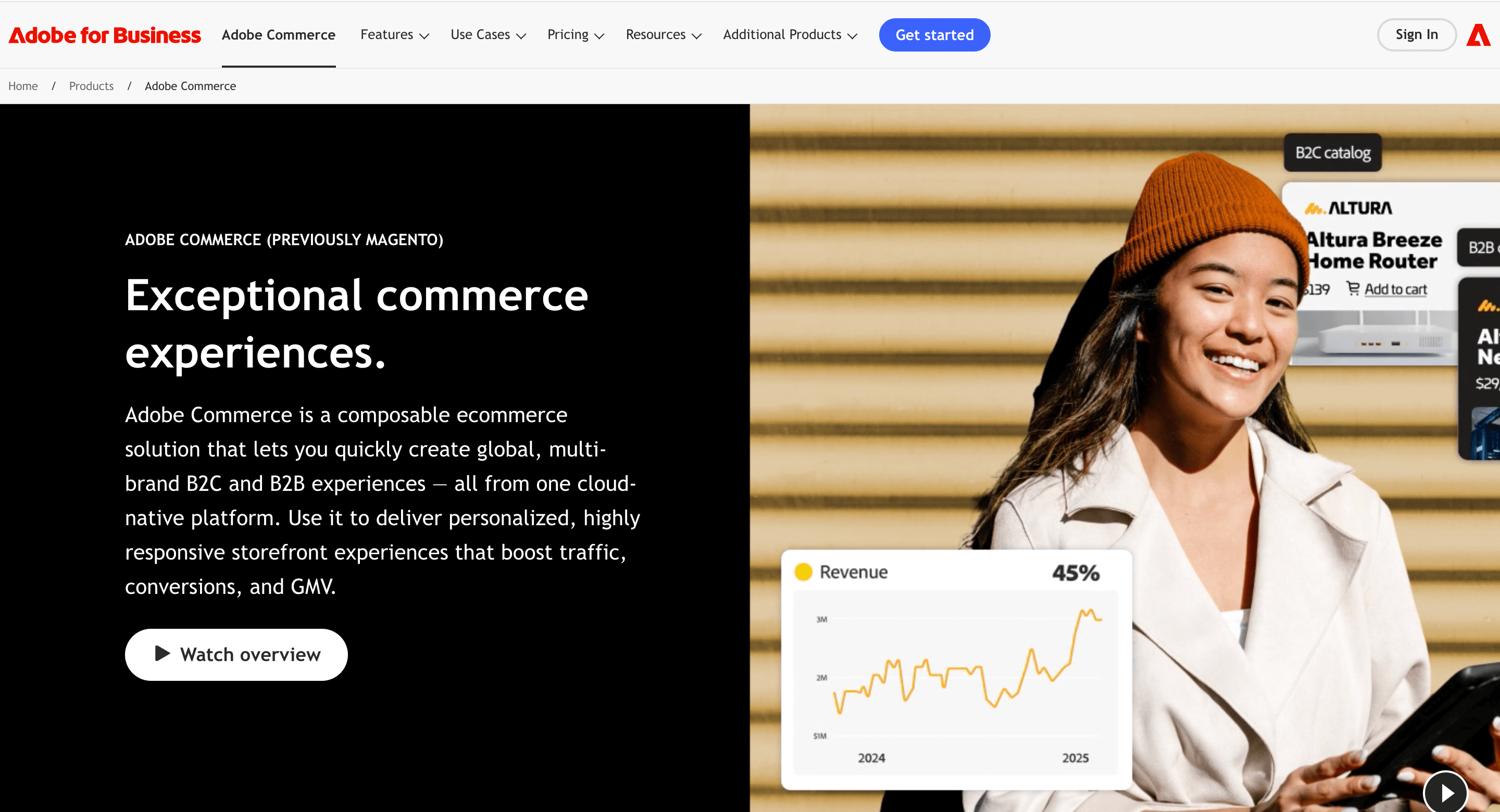
Magento, now known as Adobe Commerce, is a powerful e-commerce platform designed for enterprise-level businesses. Its open-source nature and high customizability make it ideal for large companies with specific requirements. As a leading competitor to Shopify Plus, it stands out for its flexibility and scalability. While not beginner-friendly, it becomes a robust, high-performing engine when managed by an experienced development team or agency.
Key Features:
- Highly customizable with open-source flexibility.
- Scalable for large product catalogs.
- Advanced SEO and marketing tools.
Pricing:
- Magento Open Source: Free (self-hosted).
- Adobe Commerce (cloud-hosted): Typically start around $22,000 per year, varying based on gross merchandise volume (GMV) and average order value (AOV).
Best For: Enterprises that need a tailored, scalable solution with complete backend control.
For a detailed comparison, check out our Shopify vs Magento guide.
2. BigCommerce
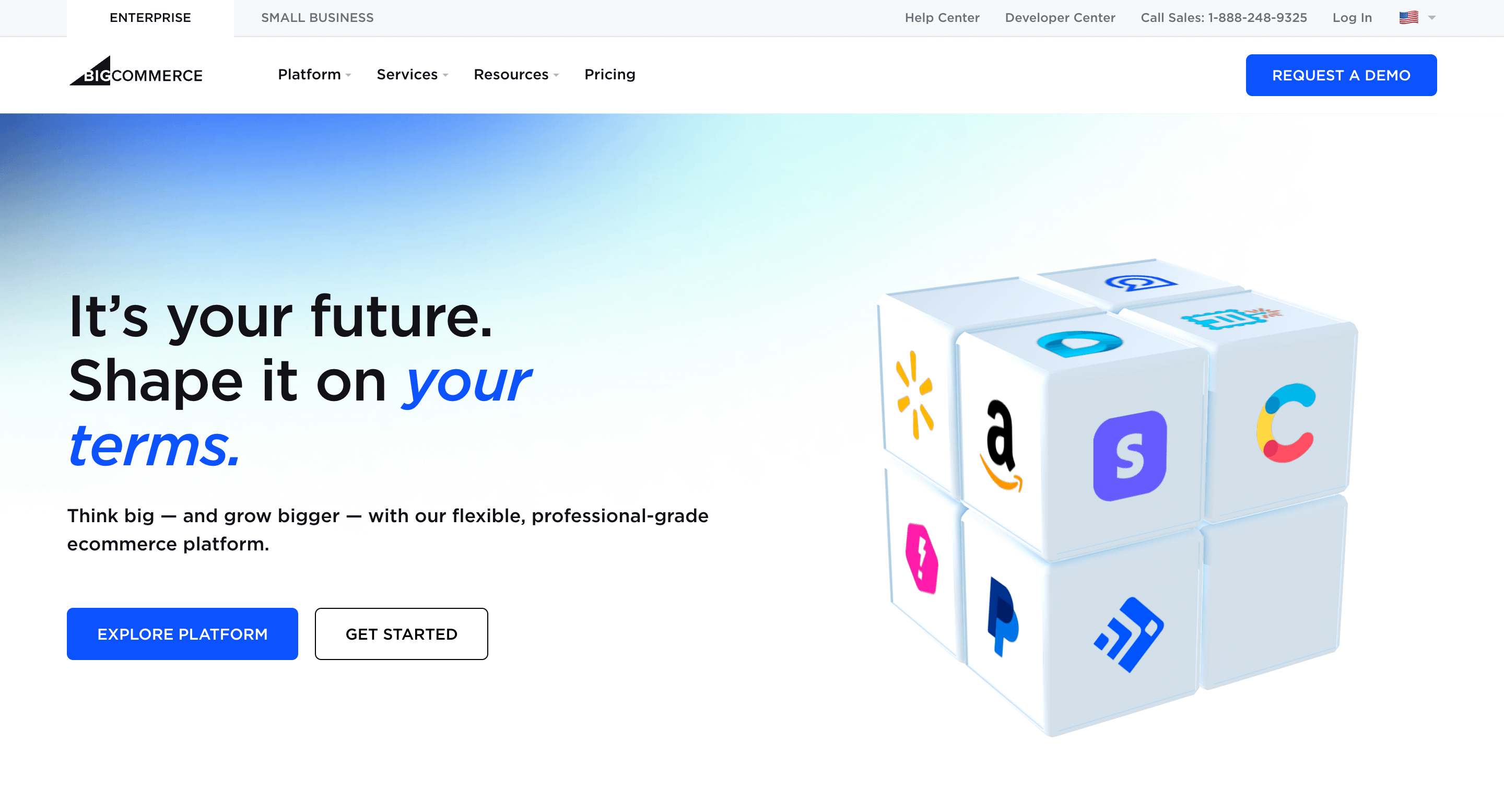
BigCommerce stands out for offering many built-in features, especially for businesses looking for scalability without relying on third-party apps. It's particularly strong in multi-channel selling, allowing brands to expand across platforms like Amazon, eBay, and Facebook. Compared to Shopify, BigCommerce offers more out-of-the-box functionality, making it an excellent choice for fast-growing businesses.
Key Features:
- No additional transaction fees.
- Built-in SEO tools.
- Multi-channel selling (Amazon, eBay, Facebook).
Pricing:
- Standard: $29/month.
- Plus: $79/month.
- Pro: $299/month.
- Enterprise: Custom pricing, typically starts at $1,000 to $1,500 per month and vary based on business needs and scale.
Best For: Fast-growing businesses needing built-in features, multichannel sales, and scalability.
3. Salesforce Commerce Cloud
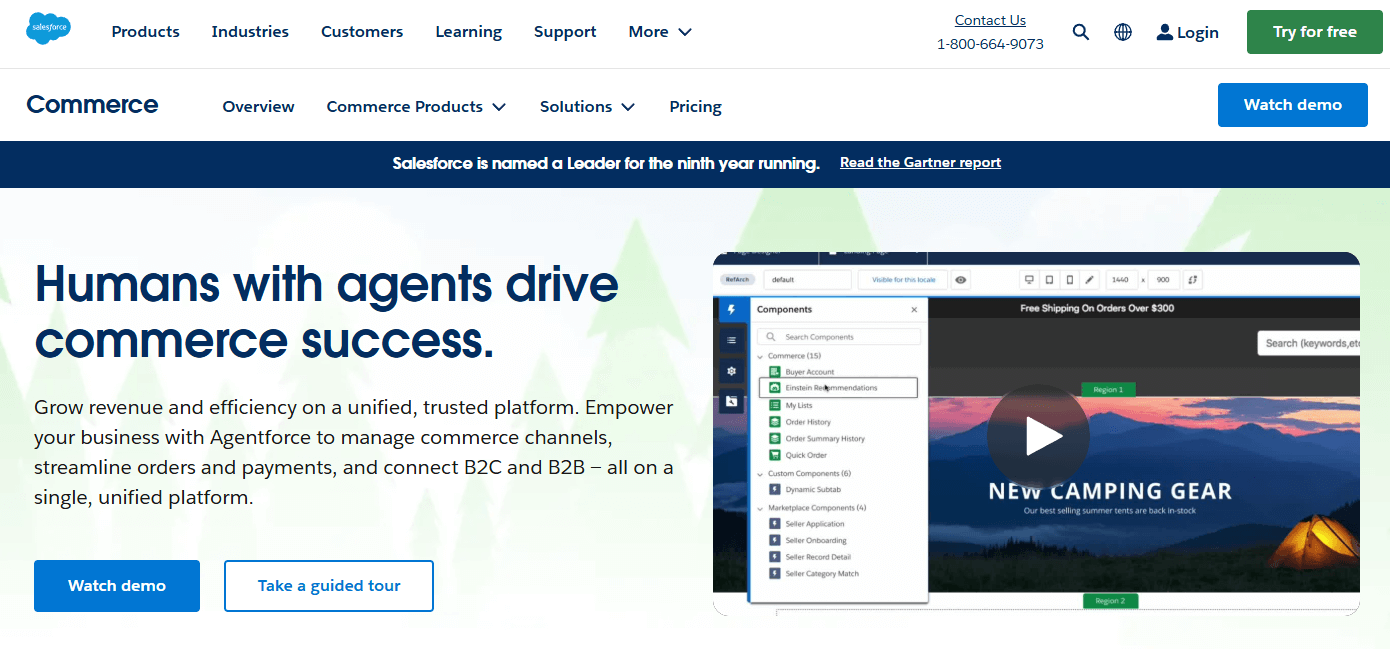
Salesforce Commerce Cloud is a premium SaaS solution designed for large enterprises. With its deep integration into Salesforce CRM, this platform excels in providing AI-powered personalization and advanced marketing analytics, making it a strong Shopify Plus competitor.
Key Features:
- AI-powered personalization.
- Deep CRM integration.
- Scalable cloud infrastructure.
Pricing:
- Starter Suite: $25/month.
- Pro Suite: $100/month.
- Commerce Cloud: Custom pricing, often starting around 1-2% of gross merchandise volume (GMV).
Best For: Large enterprises that prioritize advanced customer data and marketing automation.
4. WooCommerce
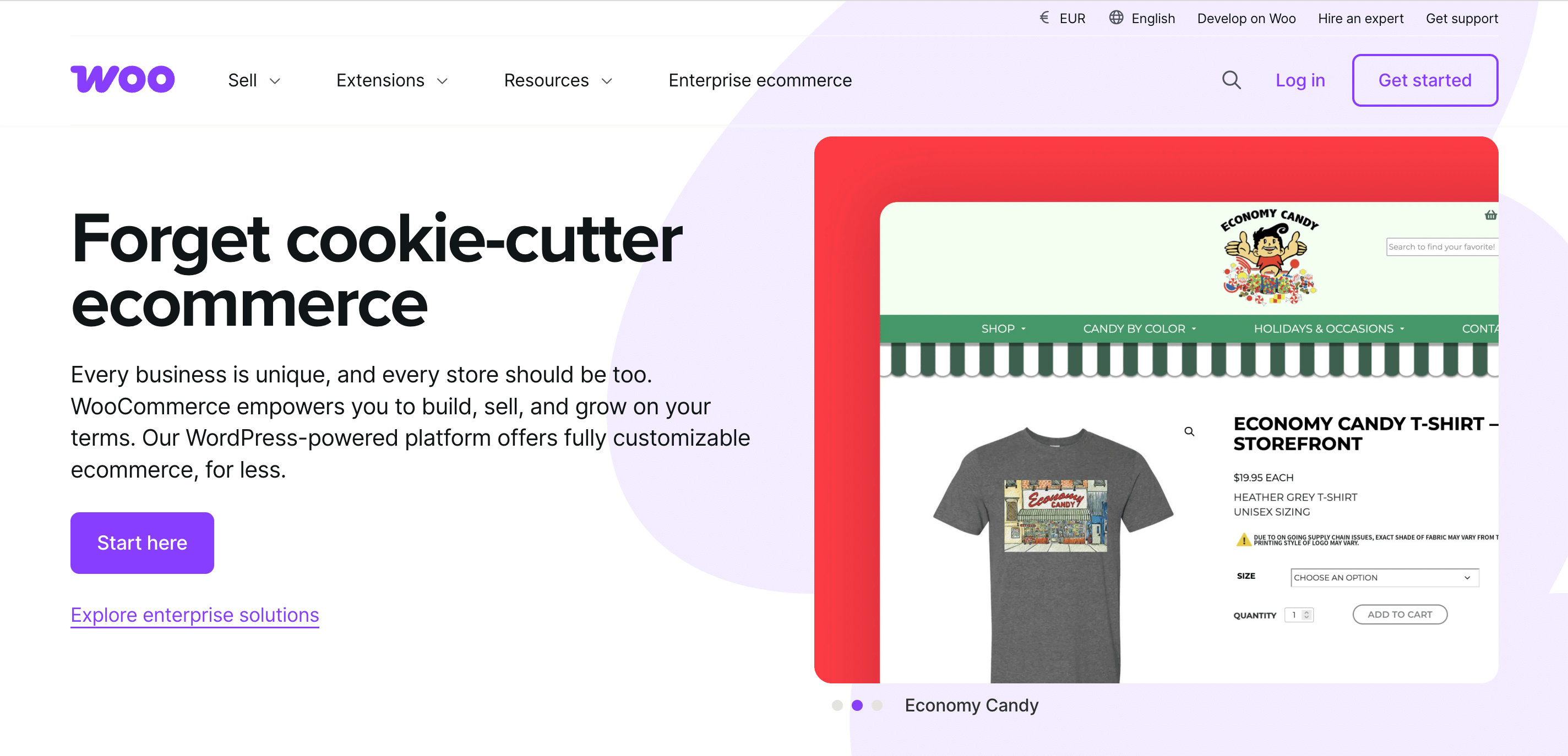
WooCommerce is a WordPress plugin that transforms a website into a full-featured online store. As an open-source solution, it offers flexibility and cost-efficiency, making it ideal for users familiar with WordPress. Versus Shopify, WooCommerce is a popular choice for small to mid-sized businesses seeking more control, affordability, and room to scale.
Key Features:
- Customizable with themes and plugins.
- Active global community.
- Free core plugin.
Pricing:
- Core plugin: Free.
- Typical annual cost with hosting, premium extensions, and theme: $100–$500+.
Best For: WordPress users seeking an affordable and customizable e-commerce solution.
5. Wix
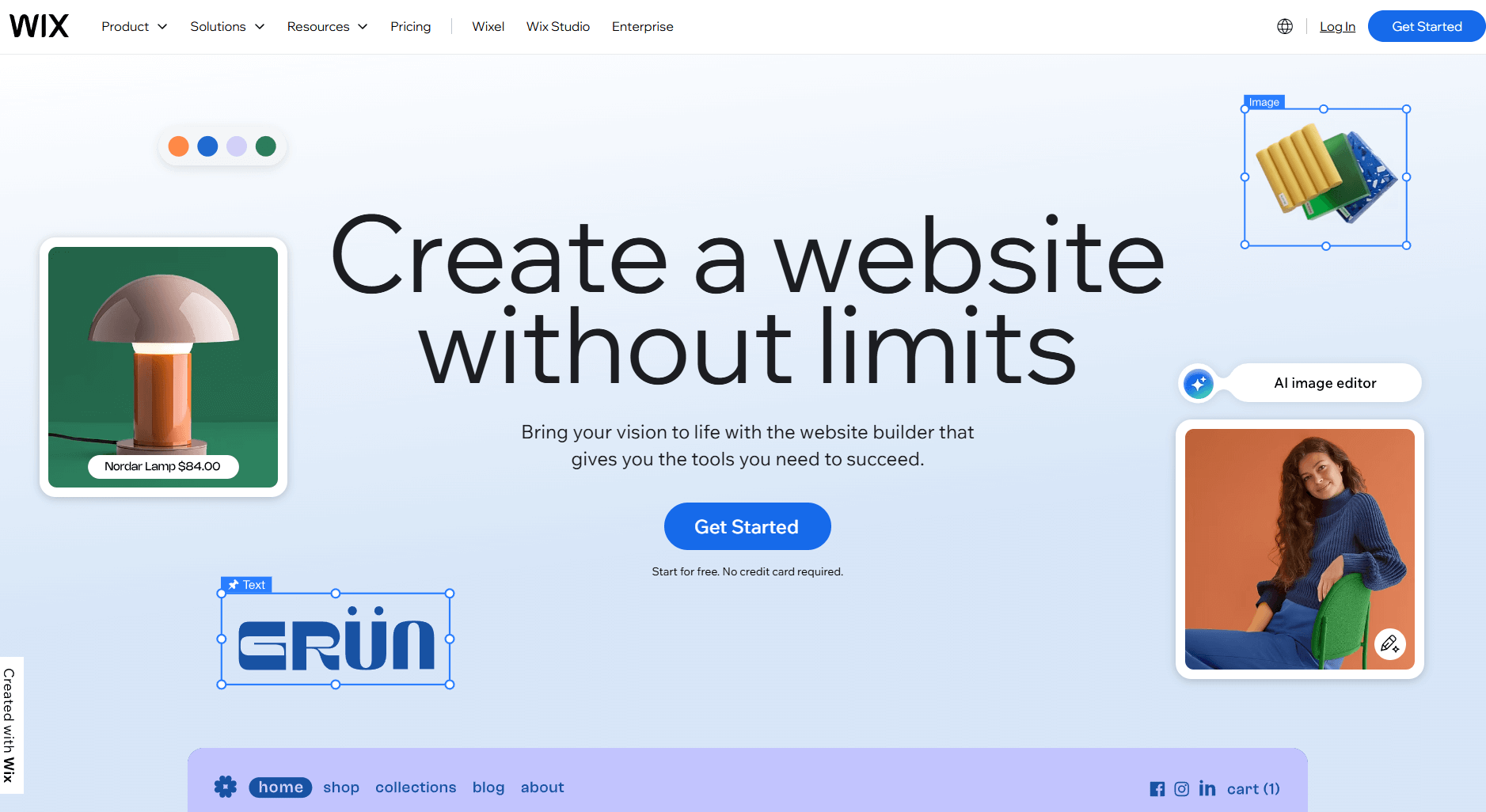
Wix is a popular website builder with built-in e-commerce features, making it perfect for beginners looking to quickly launch an online store without needing coding knowledge. Its drag-and-drop functionality makes it user-friendly, but it may not scale as well as other platforms.
Key Features:
- Intuitive design tools.
- Built-in payment solutions.
- Hundreds of templates.
Pricing:
- Core: $29/month.
- Business: $36/month.
- Elite: $159/month.
Best For: Beginner merchants looking for a simple, code-free e-commerce builder.
6. Squarespace

Squarespace is known for its beautifully designed templates, making it a go-to platform for businesses focused on aesthetics. It is particularly popular among creators, artists, and boutique retailers who want to tell their brand story through elegant design.
Key Features:
- Award-winning templates.
- Integrated blogging and marketing.
- All-in-one platform.
Pricing:
- Business: $23/month (3% transaction fee).
- Basic Commerce: $28/month.
- Advanced Commerce: $52/month.
Best For: Creatives and small businesses who prioritize design and simplicity.
7. Hostinger Website Builder
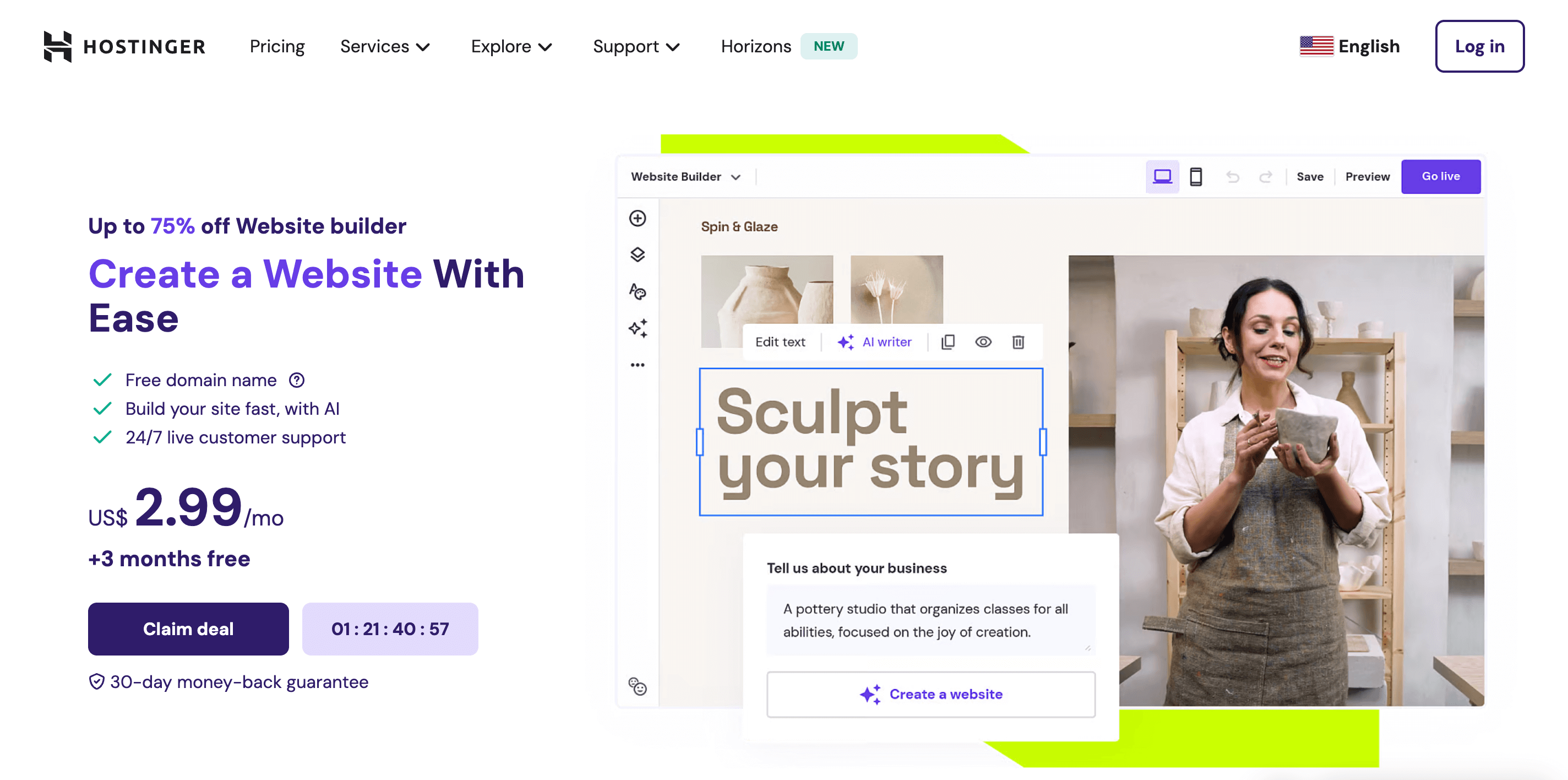
Hostinger’s e-commerce platform is gaining traction for its affordability and ease of use. Featuring an AI website builder and bundled hosting, it’s a practical choice for startups seeking a low-cost, efficient way to launch an online store.
Key Features:
- Budget-friendly pricing.
- AI-powered website building.
- Secure hosting and fast loading speeds.
Pricing:
- Website Builder & e-commerce: $3.99/month (with annual plan).
Best For: Startups and individuals looking for low-cost, all-in-one solutions.
8. GoDaddy Website Builder
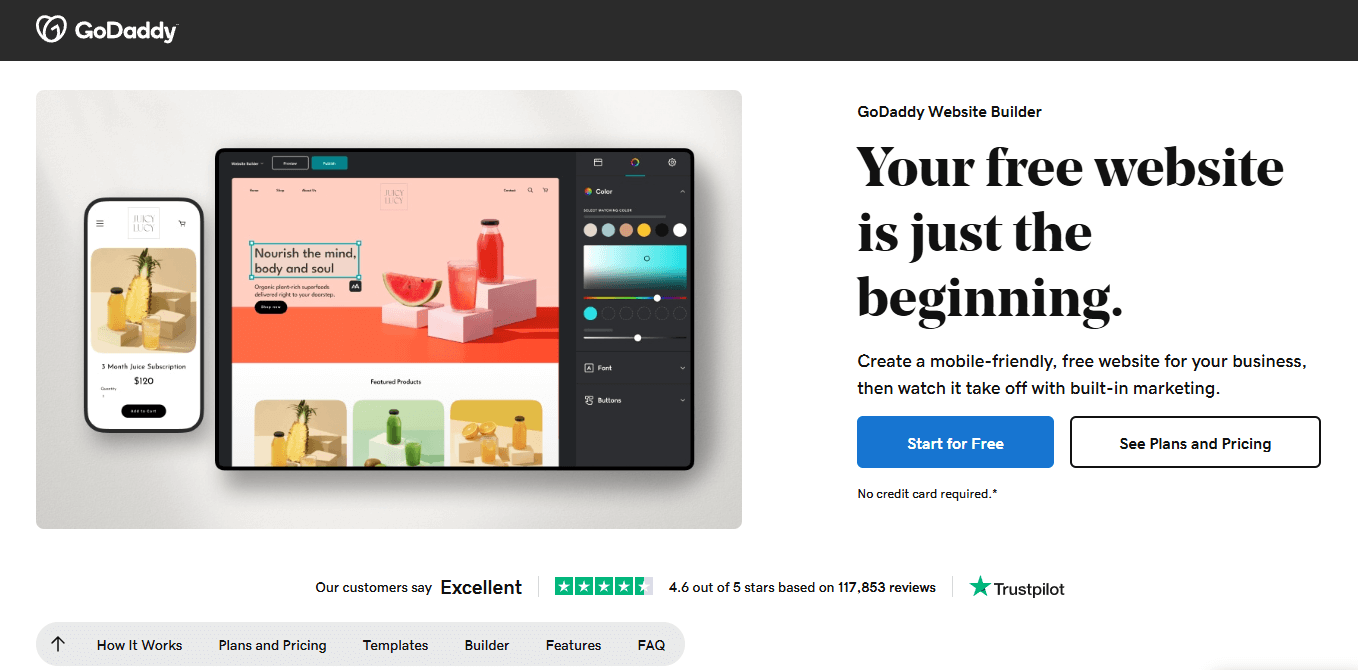
GoDaddy’s Website Builder is a quick, straightforward option for small businesses that want to get online with minimal setup. With built-in e-commerce features and integration with GoDaddy’s domain services, it’s ideal for businesses looking for speed and simplicity.
Key Features:
- Simple setup.
- Integration with GoDaddy domains and hosting.
- SEO and email marketing tools.
Pricing:
- E-commerce Plan: $14.99/month.
Best For: Small business owners who want a quick and simple setup with basic features.
9. PrestaShop
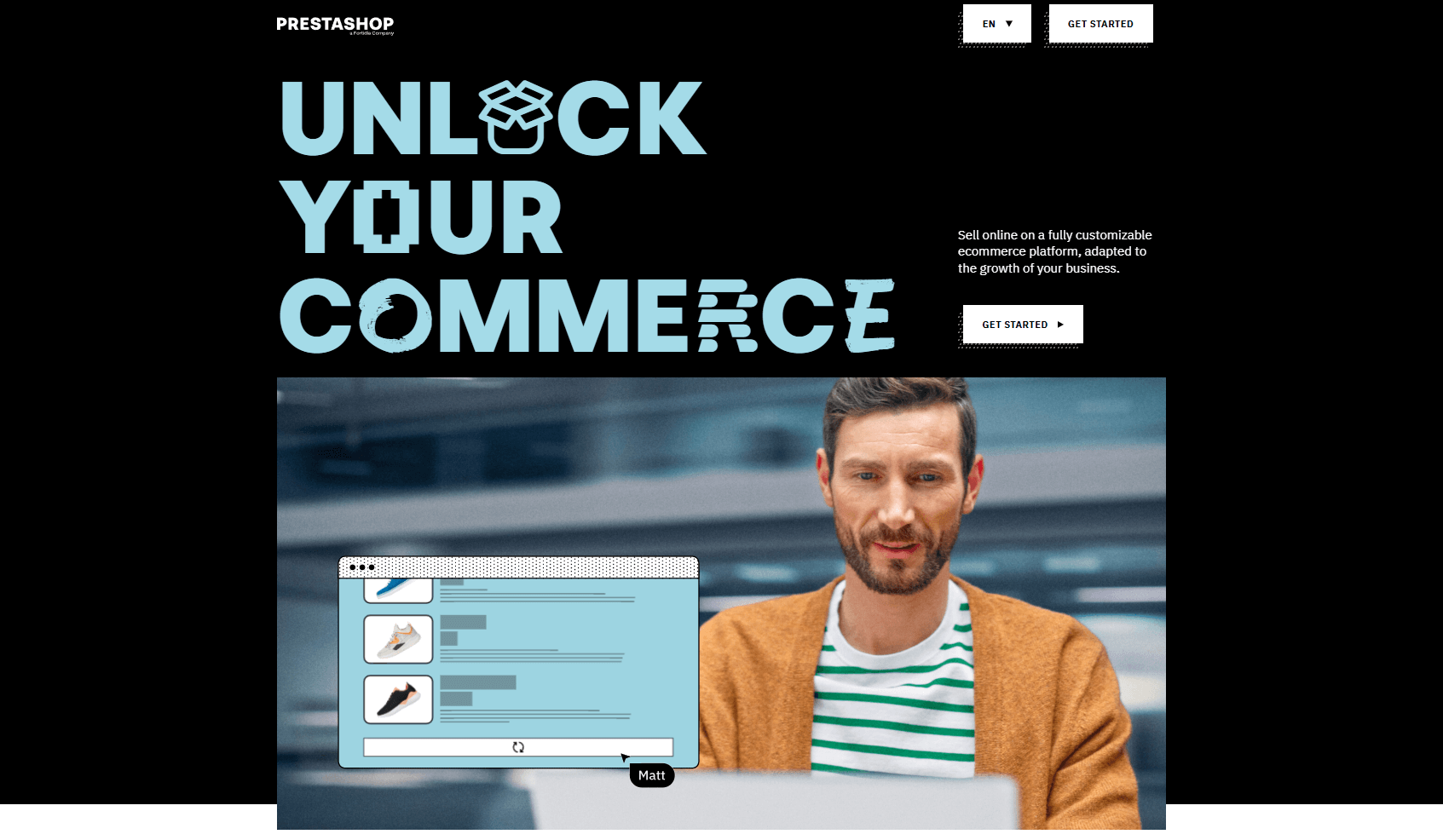
PrestaShop is a widely used open-source platform, especially popular in Europe. It offers strong flexibility for both developers and merchants, making it a solid choice for international sellers who need multilingual and multicurrency support.
Key Features:
- Multilingual and multicurrency support.
- Extensive module marketplace.
- Strong community support.
Pricing:
- Free core software.
- Hosting, themes, and modules may range from $10 to $500/year.
Best For: Global sellers needing multilingual support and deep customization.
10. OpenCart
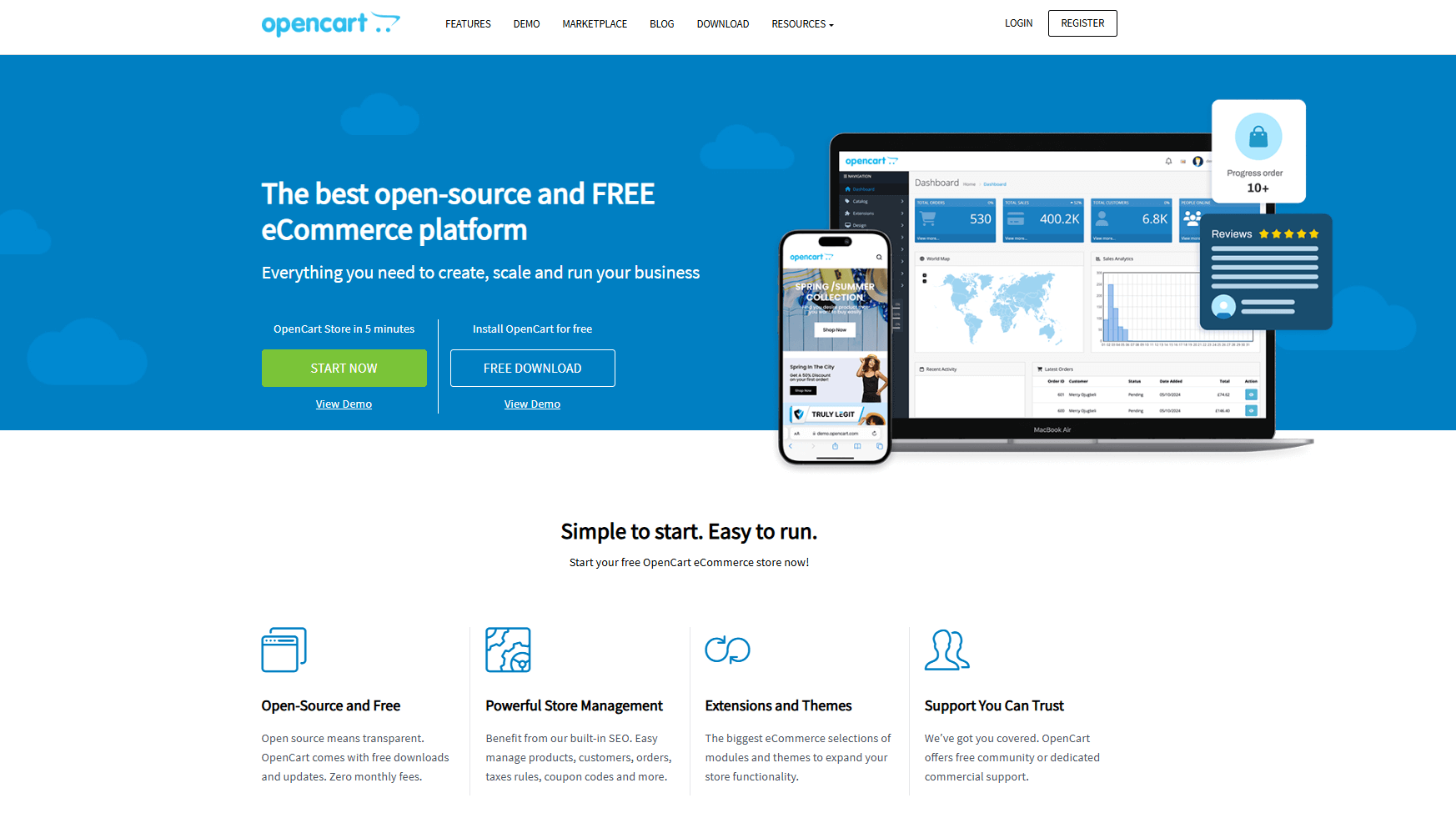
OpenCart is another open-source platform with a lightweight architecture. It’s popular among developers and businesses wanting full control without the cost of enterprise software. As one of Shopify biggest competitors in the open-source arena, it offers flexibility with minimal licensing fees.
Key Features:
- Free to use.
- Multi-store capabilities.
- Wide range of extensions.
Pricing:
- Core platform: Free.
- Hosting and extension costs: $50–$300/year typical.
Best For: Developers and entrepreneurs wanting full control with minimal costs.
How to Choose a Shopify Alternative
The right Shopify alternative depends on your business model, budget, technical resources, and growth plans. Some platforms are better for small businesses that need a simple setup, while others are designed for enterprise scalability, advanced SEO control, B2B commerce, or lower operating costs.
If You Are a Small Business
For small businesses, ease of use and fast setup are usually the top priorities. Platforms like Wix, Squarespace, and Shopify are strong options because they offer hosted solutions, ready-made templates, and user-friendly store management tools.
Wix is a good choice for beginners who want a simple drag-and-drop builder. Squarespace works well for design-focused brands, creatives, and service-based businesses. Shopify is often the strongest option for small businesses that plan to grow, thanks to its app ecosystem, ecommerce features, and scalability.
If You Need Enterprise Scalability
Larger businesses need platforms that can handle complex product catalogs, high traffic, multiple storefronts, international sales, and advanced integrations. In this case, Adobe Commerce and Salesforce Commerce Cloud are better suited than basic website builders.
Adobe Commerce is ideal for businesses that need deep customization and powerful ecommerce functionality. Salesforce Commerce Cloud is a strong choice for enterprises already using Salesforce CRM, especially when personalization, automation, and customer data integration are priorities.
If SEO Matters Most
If organic search traffic is a major part of your ecommerce strategy, consider platforms that offer strong control over URLs, metadata, content, site structure, and technical SEO. WooCommerce and Magento / Adobe Commerce are often strong choices for SEO-focused businesses.
WooCommerce is especially useful for content-driven ecommerce sites because it runs on WordPress, which gives teams strong blogging and SEO flexibility. Adobe Commerce is better suited for larger stores that need advanced SEO customization, structured product data, and control over technical implementation.
If You Need B2B Features
B2B ecommerce often requires features like custom pricing, customer groups, bulk ordering, quote management, account-based catalogs, and advanced permissions. BigCommerce and Adobe Commerce are two of the strongest Shopify alternatives for B2B selling.
BigCommerce offers many built-in ecommerce features and can support growing B2B brands without requiring as many third-party apps. Adobe Commerce is better for complex B2B operations that need custom workflows, integrations, and enterprise-level flexibility.
If You Need Low Costs
For businesses with limited budgets, open-source platforms can be attractive because they reduce or remove monthly platform fees. WooCommerce and OpenCart are common options for cost-conscious merchants.
WooCommerce is a strong low-cost choice for businesses already using WordPress, although hosting, premium plugins, themes, and maintenance can still add costs. OpenCart can also be affordable and lightweight, but it may require more technical setup and ongoing management compared to SaaS platforms.
Final Thoughts: Choosing the Right Shopify Alternative
No single e-commerce platform is perfect for everyone. While Shopify is a popular choice, today’s market offers a wide range of powerful alternatives—so you don’t have to settle. Depending on your technical skills, business model, and growth goals, there may be a better fit for your needs. Explore various platforms to meet your specific needs.
If you're uncertain which one is best for your business, contact our Shopify experts. We’ll help you explore your options and find the perfect solution tailored to your needs. Get in touch today to get started!
FAQ
What is the best Shopify alternative for enterprise businesses?
Magento (Adobe Commerce) is the best choice for enterprises that need scalability, customization, and full backend control. Salesforce Commerce Cloud is also strong for companies already using Salesforce.
Which e-commerce platform has the best customization options?
Magento (Adobe Commerce) offers the most customization. WooCommerce is also flexible, especially for WordPress-based stores.
Which Shopify alternative is best for B2B e-commerce?
BigCommerce and Adobe Commerce are the best options for B2B ecommerce. BigCommerce is easier to manage, while Adobe Commerce is better for complex B2B workflows.
What are the disadvantages of Shopify?
Shopify’s main drawbacks are app dependency, possible transaction fees, limited checkout customization on standard plans, and high Shopify Plus costs.
Which e-commerce platform scales better than Shopify?
Adobe Commerce and Salesforce Commerce Cloud can scale better for complex enterprise needs. BigCommerce is also a strong option for growing mid-market brands.
Which e-commerce platform has no transaction fees?
BigCommerce has no additional platform transaction fees. Open-source platforms like WooCommerce, PrestaShop, and OpenCart also avoid platform transaction fees, though payment processing fees still apply.

A seasoned product manager specializing in e-commerce, Helen excels in market analysis and strategic marketing for Magento platforms.
A seasoned product manager specializing in e-commerce, Helen excels in market analysis and strategic marketing for Magento platforms.