
0%

By 2040, studies suggest that 95% of all purchases will happen online. This future creates an urgent problem for any business today: you need an e-commerce platform that will not only work now but also evolve and grow for the next 15 years, whether you use a DIY builder or professional web development services.
To help you make this critical choice, this article examines the top e-commerce platforms in 2026. We evaluate them on their ability to scale, integrate new technology, and remain a strong foundation for your business well into the future.
What is an E-commerce Platform?
An e-commerce platform is the fundamental software application that allows businesses to present, manage, and sell their products or services directly over the internet. Think of it as the digital engine and foundation for your entire online sales operation, powering everything from the storefront that your customers see to the complex backend processes that happen behind the scenes.
At its core, a modern e-commerce platform is responsible for several critical functions:
- Storefront Presentation – It provides the framework to create and design your online store, displaying your products with images, detailed descriptions, variants (like size or color), and customer reviews.
- Shopping Cart and Checkout – It enables customers to select items, hold them in a virtual shopping cart, and proceed through a secure checkout process to complete their purchase.
- Payment Processing – It integrates with payment gateways (like Stripe or PayPal) to securely accept various payment methods, including credit cards, digital wallets, and sometimes installment plans.
- Inventory and Order Management – It acts as a central hub where you can track stock levels in real-time, update product availability, and manage the details of every order from receipt to fulfillment.
- Tax and Shipping Calculations – It automatically calculates appropriate sales tax and provides customers with various shipping options and accurate costs.
Beyond these core features, today's platforms often include integrated tools for marketing (like email campaigns and discount codes), customer relationship management (CRM), and analytics to help you understand sales performance and customer behavior.
How We Evaluated the E-commerce Platforms
A strong e-commerce platform must do more than provide basic store functionality. For this 2026 comparison, we evaluated platforms based on the factors that have the greatest impact on business growth, flexibility, and long-term success.
Ease of Use & Technical Requirements
We looked at how easy each platform is to launch, manage, and maintain. SaaS solutions like Shopify and Wix reduce technical complexity, while platforms like Adobe Commerce and WooCommerce offer more flexibility but require more technical expertise.
Scalability & Performance
We assessed how well each platform supports business growth, including larger catalogs, higher traffic volumes, increased order volumes, and new markets.
Customization & Flexibility
We evaluated the level of control each platform provides over storefronts, checkout, workflows, and business logic. We also considered support for modern approaches such as headless and composable commerce.
Integration Ecosystem
Modern commerce relies on connected systems. We considered how well each platform integrates with essential business tools, including ERP, CRM, PIM, payment providers, marketing platforms, analytics solutions, and marketplaces.
B2B & International Commerce Capabilities
We reviewed support for advanced business requirements, such as company accounts, custom pricing, approval workflows, and bulk ordering. We also considered international features, including multiple currencies, languages, taxes, and regional storefronts.
AI & Automation Capabilities
AI has become an important factor in modern commerce. We evaluated features such as AI-powered search, personalized recommendations, automated merchandising, content generation, and customer assistance.
Omnichannel Experience
We considered how well each platform supports sales across websites, mobile devices, marketplaces, social channels, and physical stores.
Total Cost of Ownership
We looked beyond subscription fees and considered the full investment required, including hosting, apps, extensions, development, maintenance, and transaction costs.
Build a Commerce |
Top-Rated E-commerce Platforms Comparison Table
This table provides a quick overview of key features and considerations to help you compare the platforms side-by-side.
| Platform | Best For | Business Size | Architecture | AI & Automation | Scalability | Customization | B2B Capabilities | Technical Requirements |
|---|---|---|---|---|---|---|---|---|
| Shopify | Businesses looking for a fast, reliable commerce solution | SMB → Enterprise | SaaS / Headless-ready | High | Excellent | Medium | Medium | Low |
| Adobe Commerce (Magento) | Complex commerce experiences and customized stores | Mid-market → Enterprise | Open-source / Cloud / Composable-ready | High | Excellent | Very High | Excellent | High |
| WooCommerce | WordPress-based businesses needing flexibility | SMB → Mid-market | Open-source | Medium | Good with optimization | Very High | Medium | Medium → High |
| BigCommerce | Growing brands with advanced commerce needs | SMB → Enterprise | SaaS / Headless-ready | Medium | Excellent | High | Excellent | Medium |
| Salesforce Commerce Cloud | Global enterprise retailers | Enterprise | Cloud commerce platform | High | Excellent | High | Excellent | High |
| Shopware | European retailers and flexible commerce projects | Mid-market → Enterprise | Open-source / Headless-ready | Medium | Excellent | High | Excellent | Medium → High |
| Wix eCommerce | Small businesses prioritizing simplicity and design | Small Business | SaaS | Basic → Medium | Limited | Medium | Limited | Low |
| Squarespace Commerce | Creative brands and visually focused stores | Small Business | SaaS | Basic | Limited | Low → Medium | Limited | Low |
| Square Online | Physical retailers expanding online | Small Business → SMB | SaaS | Basic | Good | Low → Medium | Limited | Low |
| Big Cartel | Independent creators and small catalogs | Micro-business | SaaS | Limited | Limited | Low | None | Low |
| Shift4Shop | Cost-conscious merchants needing built-in features | Small Business → SMB | SaaS | Basic | Good | Medium | Medium | Low → Medium |
| PrestaShop | Businesses wanting open-source ownership | SMB → Mid-market | Open-source | Medium (via modules) | Good with development | High | Medium | Medium → High |
| OpenCart | Small businesses needing a lightweight open-source platform | SMB | Open-source | Limited | Moderate | High | Limited | Medium |
| Volusion | Small businesses needing basic hosted commerce | Small Business | SaaS | Limited | Moderate | Medium | Limited | Low |
| Weebly eCommerce | Beginners launching simple online stores | Micro-business | SaaS | Limited | Limited | Low | None | Low |
The Top 10 E-Commerce Platforms
Choosing your platform is one of your first and most important business decisions. The list below breaks down the leading options to help you understand which one might be the best fit for your specific needs and skills.
1. Shopify
Shopify is one of the world's leading SaaS e-commerce platforms, helping businesses create, manage, and scale online stores without managing hosting or infrastructure. Its combination of ease of use, extensive app ecosystem, and enterprise capabilities through Shopify Plus makes it suitable for businesses of different sizes.

- Pricing – Shopify offers Basic at $29/month, Grow at $79/month, and Advanced at $299/month when billed annually. Shopify Plus starts at $2,300/month.
- Best For – Small businesses, growing brands, and enterprises that need a reliable, easy-to-manage commerce platform.
- Key Strengths – User-friendly setup, powerful app ecosystem, secure hosting, omnichannel selling, international commerce features, and growing AI-powered merchant tools.
- Key Thing to Know – Shopify provides excellent flexibility within its ecosystem, but businesses with highly complex custom requirements may need additional development solutions or headless approaches.
2. Adobe Commerce (Magento)
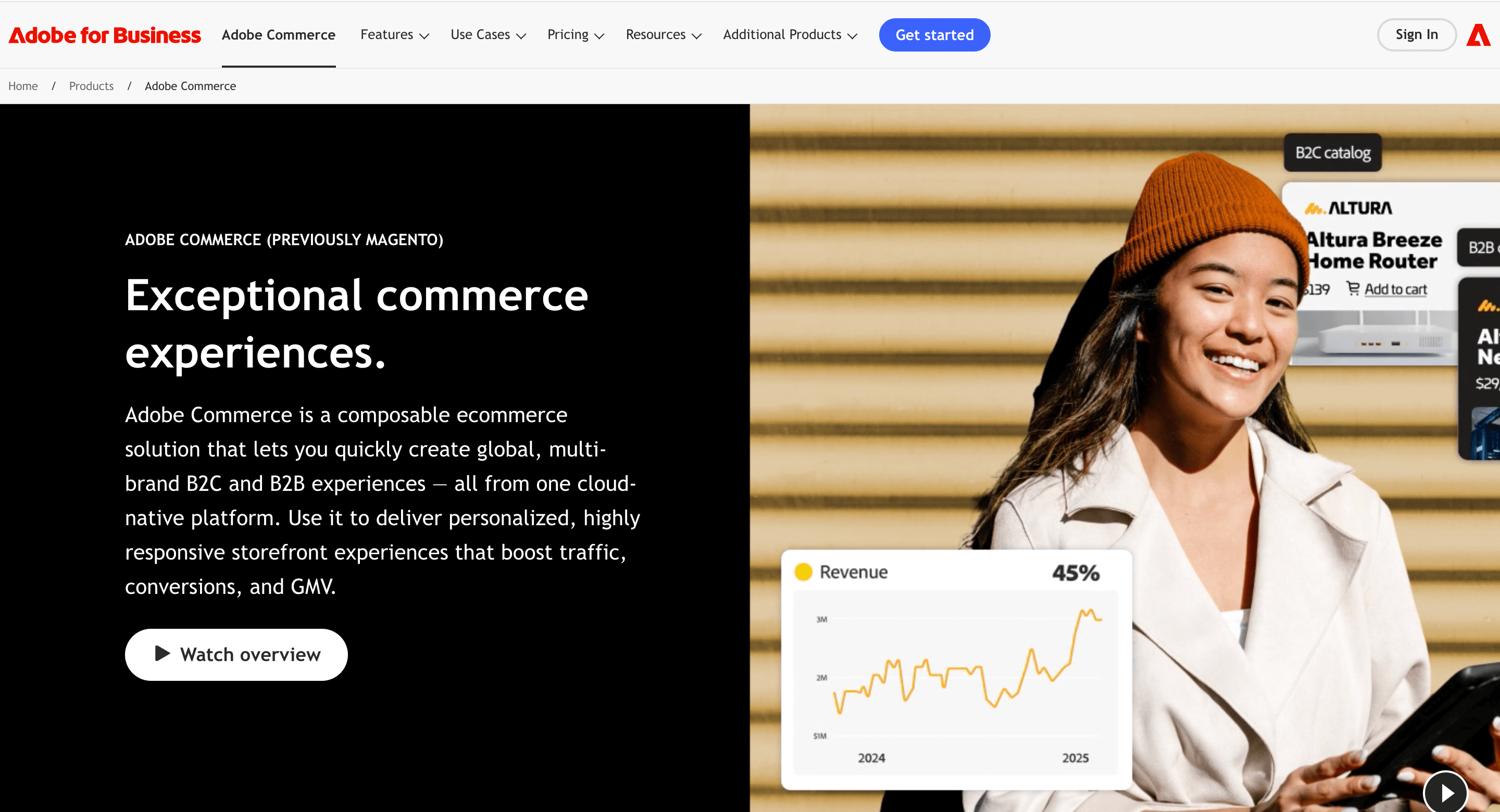
Adobe Commerce is a flexible enterprise commerce platform designed for businesses that require advanced customization, complex product catalogs, B2B functionality, and deep integrations with other business systems.
Unlike many SaaS platforms, Adobe Commerce gives businesses greater control over their commerce experience, making it a strong choice for companies with unique workflows and advanced requirements.
- Pricing – Adobe does not publish fixed prices for its commercial Commerce products. Pricing depends on the selected solution, business size, and requirements. Adobe Commerce plans are available with custom pricing.
- Best For – Mid-market and enterprise businesses, B2B companies, and brands requiring highly customized commerce experiences.
- Key Strengths – Advanced customization capabilities, powerful B2B features, extensive extension ecosystem, flexible architecture, and support for headless commerce.
- Key Thing to Know – Adobe Commerce requires stronger technical expertise and investment compared with SaaS platforms, including development, maintenance, and optimization.
3. WooCommerce
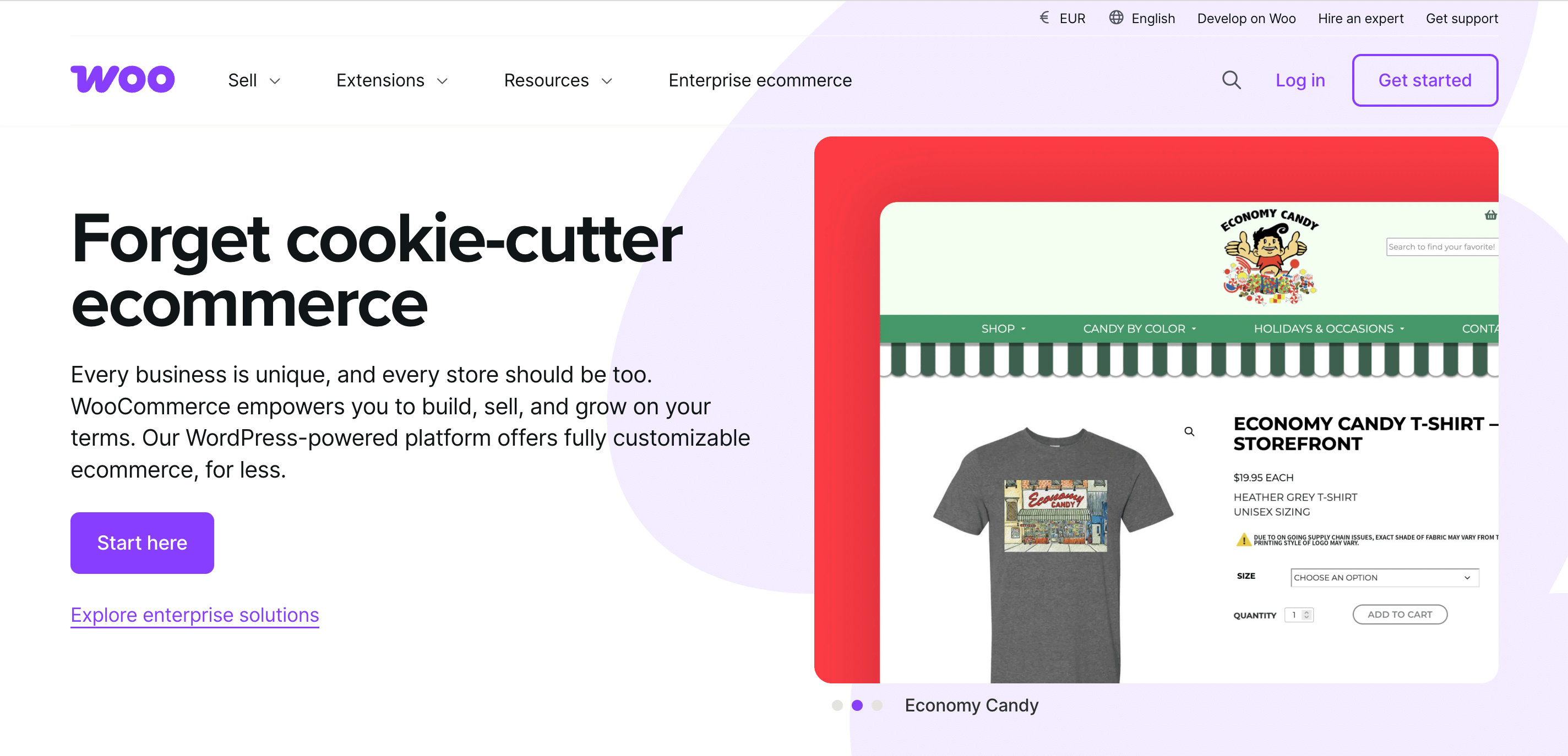
WooCommerce is a free, open-source e-commerce plugin for WordPress. It transforms any WordPress website into a fully functional online store, offering unparalleled customization. Because it's open-source, you have complete ownership and control over your data and store design. A detailed WooCommerce vs. Magento comparison can further help you evaluate the open-source landscape.
- Pricing – The WooCommerce platform itself is free. Businesses pay separately for hosting, payment processing, extensions, and development. Typical hosting costs range from around $25–$350/month, while extensions may cost approximately $29–$299/year each.
- Best For – WordPress users, small and medium businesses, and companies that need maximum control over their store.
- Key Strengths – Full ownership of store data, extensive customization options, thousands of plugins and themes, and seamless integration with the WordPress ecosystem.
- Key Thing to Know – Businesses are responsible for hosting, security, updates, and performance optimization, which may require technical resources.
4. BigCommerce
BigCommerce is a scalable, software-as-a-service (SaaS) platform built for business growth. It stands out by including many advanced features directly in its standard plans, reducing the need for extra apps. The platform is designed to handle high-volume sales and complex product catalogs with ease.
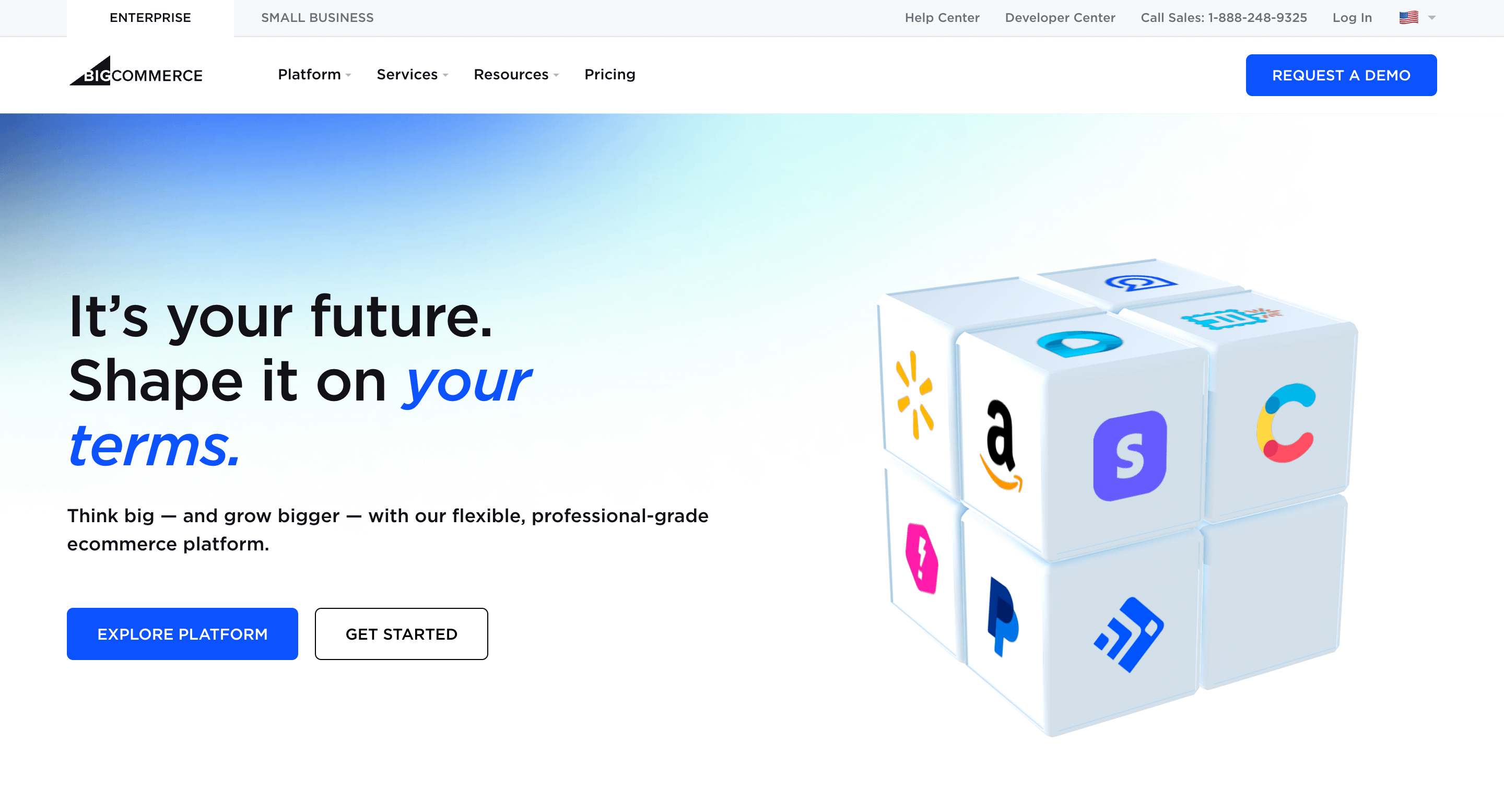
- Pricing – BigCommerce offers Core at $29/month, Growth at $79/month, and Scale at $299/month when billed annually. Performance plans start from $1,499/month with annual billing.
- Best For – Growing brands, mid-market companies, and businesses with large product catalogs.
- Key Strengths – Built-in commerce features, strong SEO capabilities, B2B functionality, multi-channel selling, and no additional transaction fees from BigCommerce.
- Key Thing to Know – Businesses should consider plan limitations and scaling costs as sales volume increases.
5. Salesforce Commerce Cloud
Salesforce Commerce Cloud is an enterprise-level, cloud-based solution designed for large global brands. It leverages artificial intelligence to deliver personalized shopping experiences at scale and can handle complex, high-volume sales across multiple countries and channels.
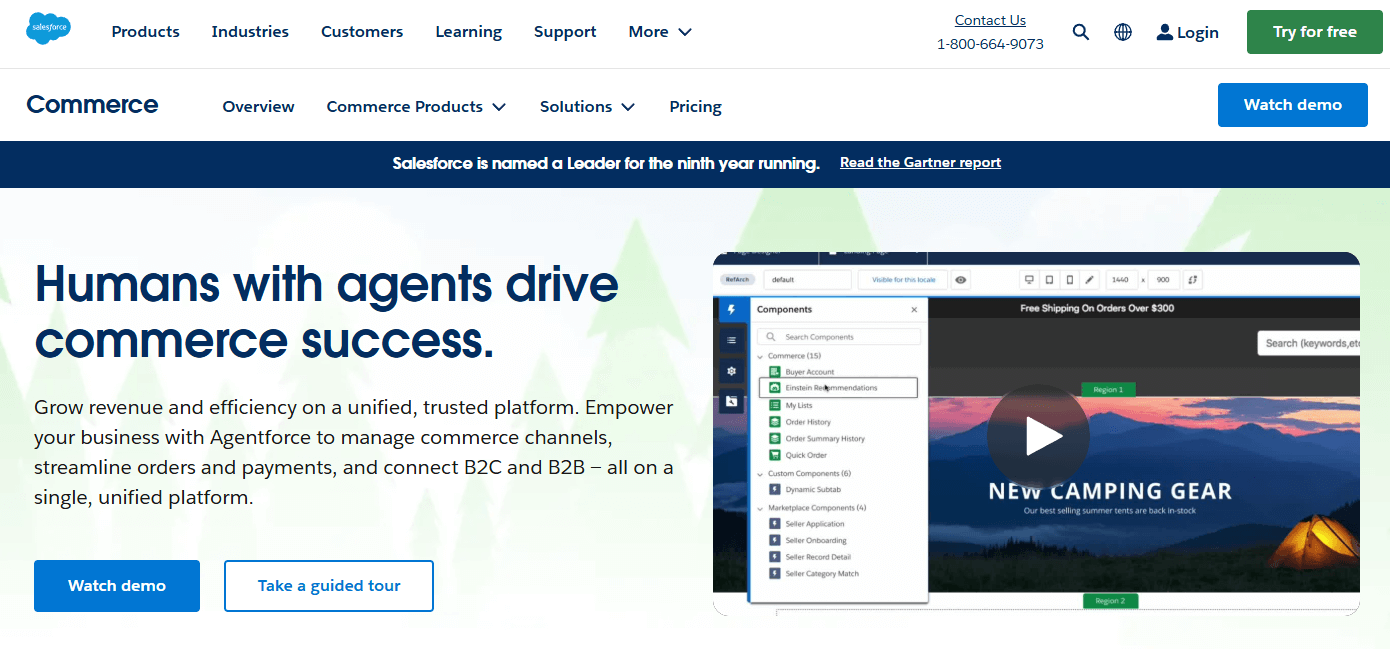
- Pricing – Salesforce Commerce Cloud uses custom pricing based on business requirements, transaction volume, and implementation scope. Plans such as B2B Growth Edition and B2B Advanced Edition are priced through Salesforce.
- Best For – Large enterprises with international operations and complex customer experiences.
- Key Strengths – Enterprise scalability, AI-powered personalization, strong CRM integration, and advanced omnichannel capabilities.
- Key Thing to Know – Implementation typically requires significant investment, technical expertise, and ongoing platform management.
6. Shopware
Shopware is a flexible commerce platform that has become especially popular among European retailers. It combines open-source flexibility with modern commerce capabilities and supports both traditional and headless storefront approaches.
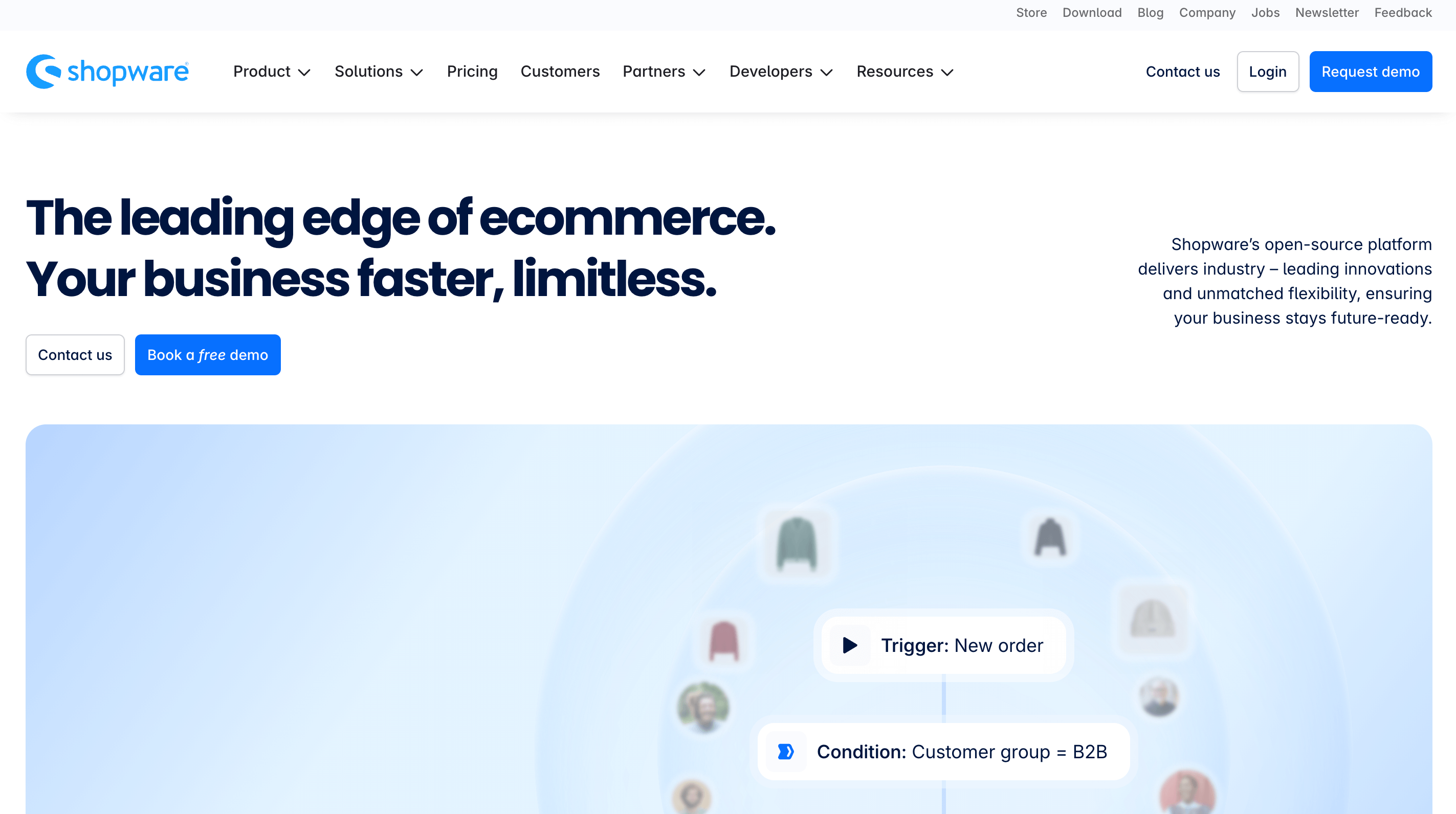
- Pricing – Shopware Community Edition is free. Commercial plans include Rise from €600/month, Evolve from €2,400/month, and Beyond with custom pricing.
- Best For – Mid-market and enterprise businesses, especially companies operating in European markets.
- Key Strengths – Flexible architecture, strong B2B features, rule-based commerce tools, customization options, and modern storefront capabilities.
- Key Thing to Know – Shopware has a particularly strong presence in Europe, while businesses in other regions should evaluate ecosystem availability.
7. Wix
Wix eCommerce is part of the Wix website builder, known for its intuitive drag-and-drop design interface. It allows you to build a visually appealing online store without needing to code. The platform is an all-in-one solution that includes hosting, security, and a range of built-in sales features.
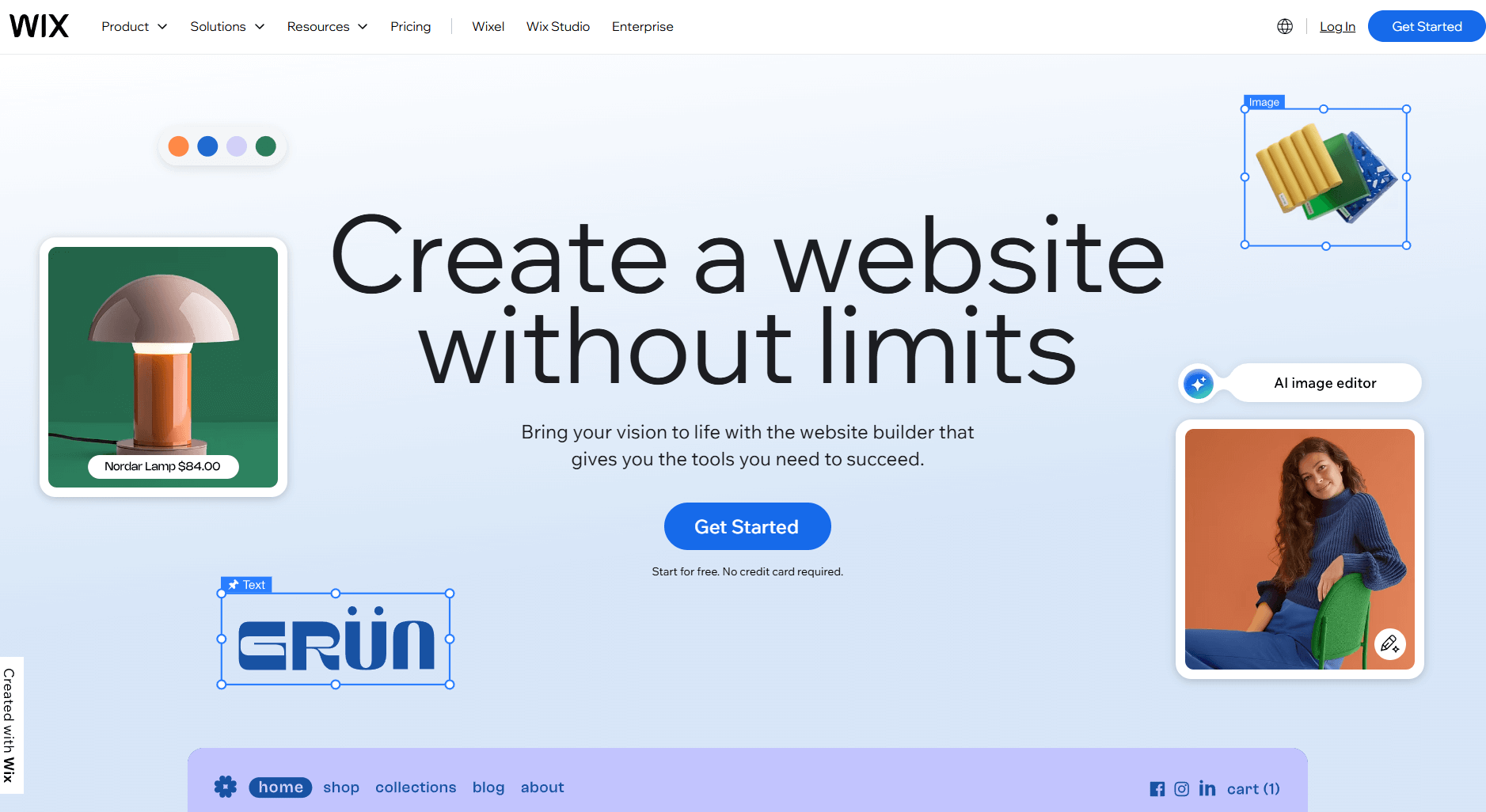
- Pricing – Wix eCommerce plans start with Core at $29/month when billed annually. Business costs $39/month, Business Elite costs $159/month, and Enterprise uses custom pricing.
- Best For – Small businesses, artists, and creatives who prioritize beautiful, simple design and ease of use.
- Key Strengths – Incredibly easy-to-use editor, beautiful designer templates, and a true all-in-one solution.
- Key Thing to Know – The design flexibility comes with a trade-off; you cannot easily switch templates without rebuilding your entire site, which can limit future redesigns.
8. Squarespace
Squarespace is a website builder renowned for its stunning, award-winning templates and strong focus on visual storytelling. Its e-commerce functionality is built directly into the platform, making it seamless to create a beautiful online store that aligns with a strong brand identity.

- Pricing – Squarespace offers Basic, Core, Plus, and Advanced plans. Pricing varies depending on billing cycle and region, with e-commerce features available on paid plans starting from approximately $25–$36/month.
- Best For – Creatives, artists, and brands where visual aesthetics and a polished portfolio are as important as sales.
- Key Strengths – Industry-leading design and templates, excellent blogging tools, and strong video integration for products.
- Key Thing to Know – The platform's checkout process is less customizable than on competitors like Shopify, which can be a limitation for brands with specific conversion needs.
9. Square Online
Square Online is the e-commerce arm of the Square payment ecosystem. It is designed to seamlessly sync online and in-person sales, making it incredibly easy for physical retailers to establish an online presence. Inventory and customer data are automatically updated across all sales channels.
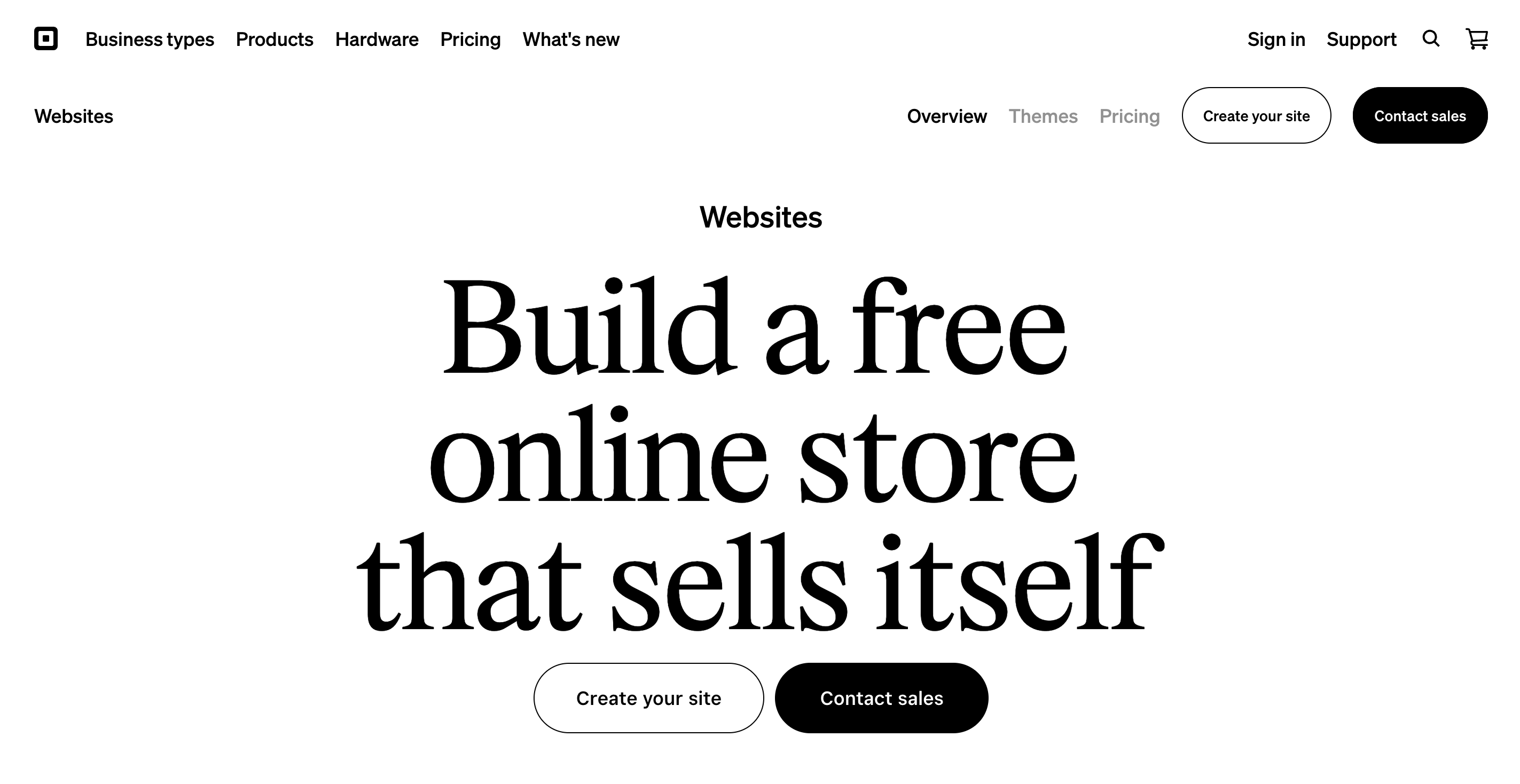
- Pricing – Square Online offers Free at $0/month, Plus at a paid monthly rate, and Premium with custom pricing for eligible businesses. Processing fees vary by market and plan.
- Best For – Brick-and-mortar stores, restaurants, and markets already using Square POS that want to add online sales.
- Key Strengths – Seamless integration with Square POS, real-time inventory syncing, and a free plan is available to start.
- Key Thing to Know – Its core strength is the Square ecosystem; if you don't use Square for in-person payments, other platforms may offer more powerful online-specific features.
10. Big Cartel
Big Cartel is a streamlined platform built specifically for artists, makers, and creators to sell their work online. It emphasizes simplicity and puts the creative work front and center, with a straightforward interface that gets you set up quickly.

- Pricing – Big Cartel offers Gold at $0/month, Platinum at $15/month, and Diamond at $30/month.
- Best For – Independent artists, makers, and creators with smaller product catalogs (up to 500 products).
- Key Strengths – Simple, clean interface; affordable pricing with a free plan; designed specifically with artists in mind.
- Key Thing to Know – It is built for simplicity, not scale. Features are limited compared to larger platforms, making it less suitable for fast-growing, complex businesses.
11. Shift4Shop
Shift4Shop is a robust e-commerce solution that offers a full-featured online store builder with no monthly fees, provided you use their Shift4 payment processing. It includes a comprehensive set of built-in tools for marketing, SEO, and order management.
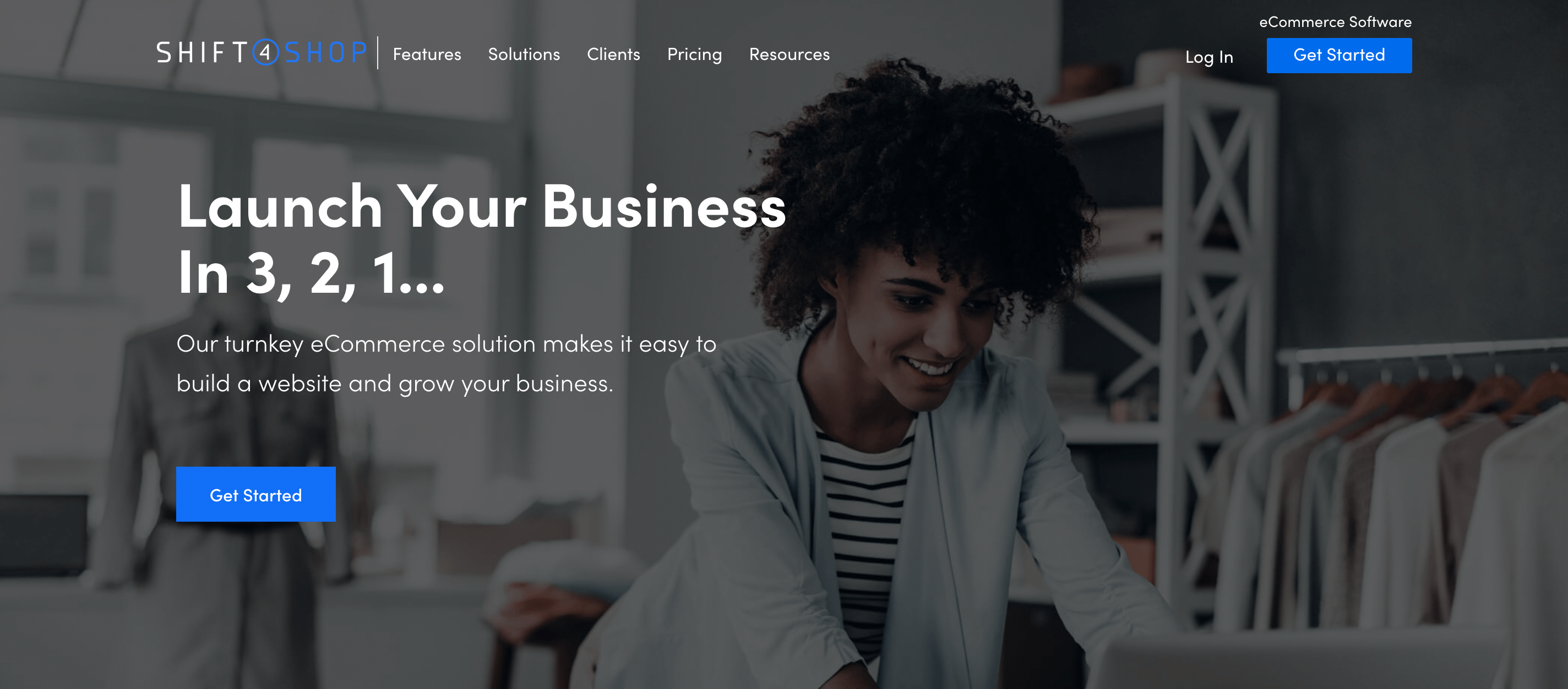
- Pricing – Shift4Shop offers Basic Store at $29/month, Plus Store at $79/month, and Pro Store at $229/month. Eligible U.S. merchants can use an End-to-End Ecommerce plan for $0/month with required payment processing.
- Best For – Cost-conscious entrepreneurs and small businesses who are comfortable with a specific payment processor and want a full-featured platform.
- Key Strengths – Potentially zero monthly fee, includes a wide array of built-in features, and is highly customizable.
- Key Thing to Know – The "free" plan is contingent on using Shift4 as your payment processor, and the interface can have a steeper learning curve than more user-friendly options like Shopify.
12. Prestashop
PrestaShop is a flexible, open-source e-commerce solution that gives merchants full control over their online store. Unlike hosted platforms, it requires you to manage your own web hosting and server environment, but offers extensive customization through modules and themes.
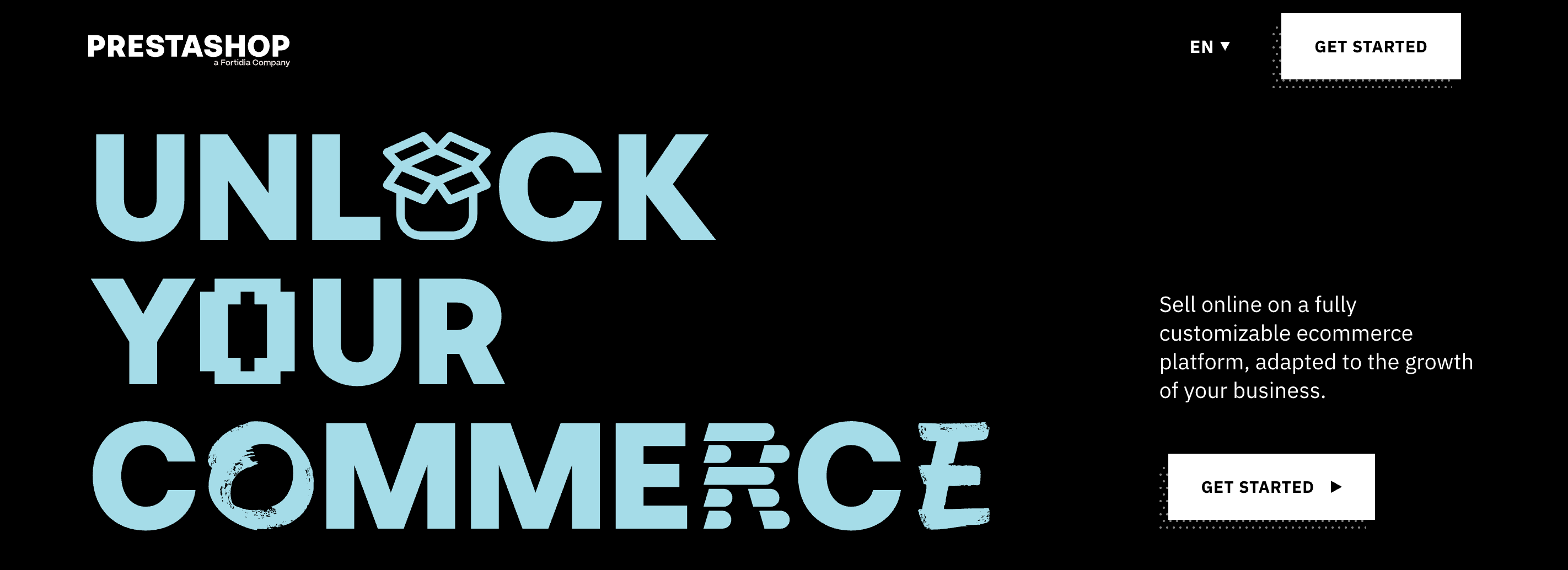
- Pricing – PrestaShop Classic is free to download and self-host. Hosted plans start from €24/month, while Enterprise solutions start from approximately €2,115/month.
- Best For – Technically-inclined users, developers, and businesses that want complete ownership and customization of their storefront.
- Key Strengths – Free to download and use, highly customizable with thousands of modules and themes, and supports a wide range of payment gateways.
- Key Thing to Know – While the software itself is free, you are responsible for all hosting, security, and maintenance costs, and premium modules or professional web development services can add significant expense.
13. OpenCart
OpenCart is a free, open-source e-commerce platform that is a direct competitor to WooCommerce and PrestaShop. It is known for being lightweight and having a straightforward administration interface.
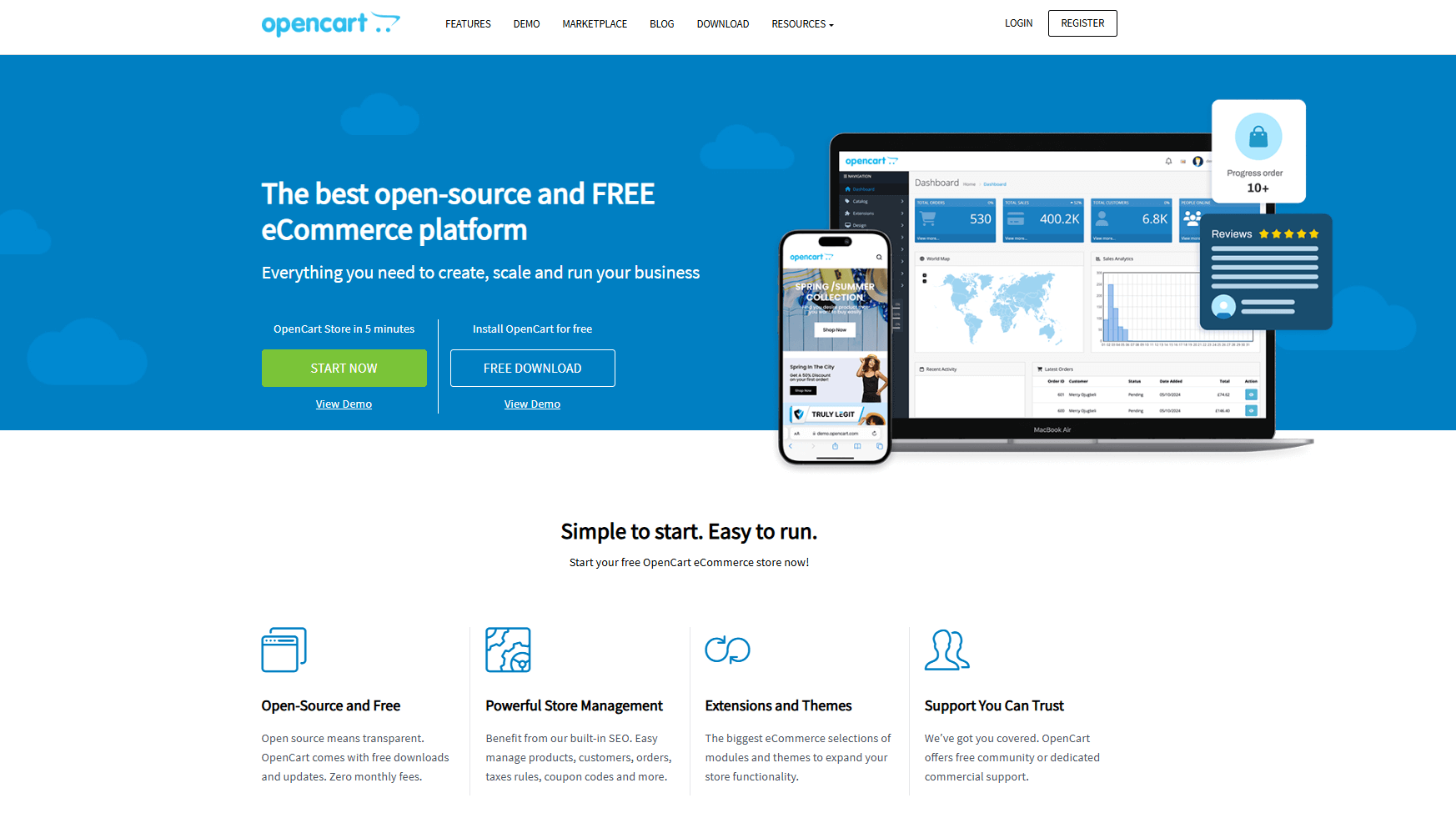
- Pricing – OpenCart is free open-source software. Businesses pay separately for hosting, extensions, development, and maintenance.
- Best For – Small to medium-sized businesses familiar with self-hosted solutions who find PrestaShop too complex.
- Key Strengths – Simple setup for an open-source platform, a wide range of extensions, and a strong, supportive community.
- Key Thing to Know – Like other open-source options, you are responsible for hosting, security, and maintenance. The quality of extensions can be inconsistent.
14. Volusion
Volusion stands out as one of the pioneering SaaS e-commerce platforms, comparable to BigCommerce and Shopify. It provides a comprehensive suite of tools designed to create and manage online stores efficiently. Known for its user-friendly interface, Volusion supports businesses in streamlining operations and enhancing customer experience.
- Pricing – Volusion offers Personal at $35/month, Professional at $79/month, and Business at $299/month. Prime uses custom pricing.
- Best For – Small businesses looking for an all-in-one solution with built-in analytics and a simple site builder.
- Key Strengths – Clean, user-friendly interface and strong built-in analytics and reporting tools.
- Key Thing to Know – It has lost significant market share to competitors like Shopify and BigCommerce, and its app ecosystem is less developed.
15. Weebly eCommerce (by Square)
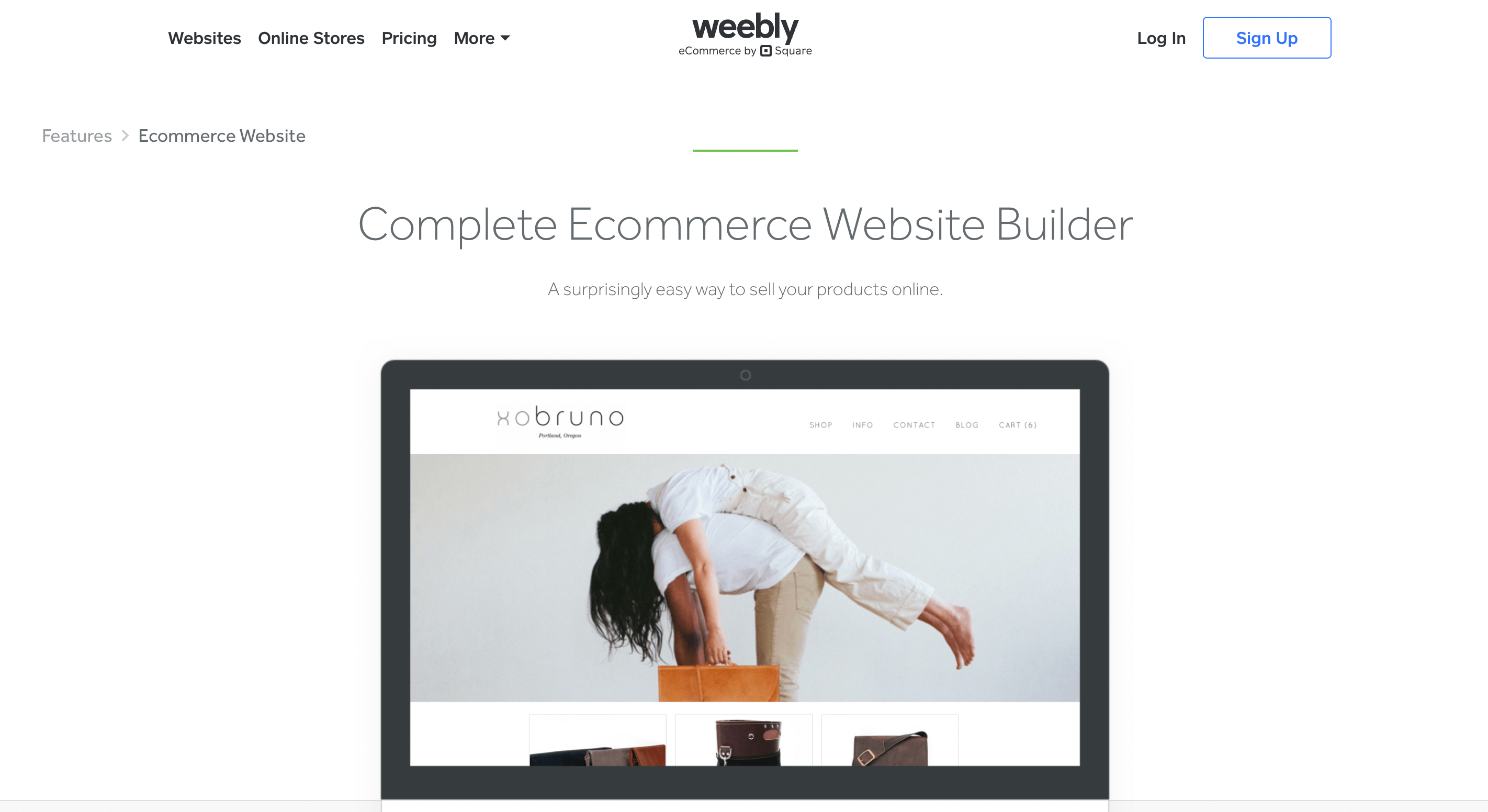
Weebly eCommerce, now powered by Square, is a straightforward website builder with robust e-commerce capabilities. Competing directly with Wix, it shines in terms of usability and simplicity. This platform enables businesses to quickly set up online stores while benefiting from seamless integration with Square's payment solutions.
- Pricing – Weebly offers Free at $0/month, Personal at $13/month, Professional at $15/month, and Performance at $32/month when billed annually.
- Best For – Absolute beginners and micro-businesses that need a very simple, easy-to-set-up online presence with a store.
- Key Strengths – Extremely easy to use with a drag-and-drop builder and affordable pricing.
- Key Thing to Know – Its e-commerce features are more basic than dedicated platforms. It is best for stores with a very small number of products.
5 Costly E-commerce Platform Mistakes to Avoid
Select the wrong e-commerce platform and you create major obstacles for business growth. Many entrepreneurs make these common mistakes, but you can avoid them with careful planning and research.
1. Focus Only on Price
Budget matters, but a platform choice based only on low cost often leads to higher long-term expenses. Many budget platforms lack essential features, which forces expensive workarounds or a complete platform migration later. Always calculate the total cost of ownership, which includes transaction fees, app subscriptions, and development costs.
2. Ignore Mobile Experience
Mobile commerce now drives over 60% of online sales. A poor mobile experience will limit your revenue. Avoid platforms that offer basic mobile responsiveness instead of a fully optimized mobile store. Always test the mobile checkout process during your trial to ensure a seamless customer journey.
3. Overlook Future Growth
Many businesses select a platform that fits their current needs but cannot support their future growth. Your chosen platform must handle more traffic, larger product catalogs, and international sales without a complete rebuild. Select a platform with a proven record to support businesses at your target scale.
4. Underestimate Technical Needs
Self-hosted platforms like WooCommerce and Adobe Commerce offer great flexibility but demand significant technical skill. Businesses often misjudge the need for constant maintenance, security updates, and performance optimization. Be realistic about your team's technical ability or budget for professional support.
5. Neglect Essential Integrations
Your e-commerce platform must connect to your other business tools. Avoid platforms with limited integration options for your CRM, accounting, or marketing software. Always check the available integrations before you commit to ensure smooth data flow across your business.
Which E-commerce Platform Should You Choose?
The right platform depends on how quickly you want to launch, how much customization you need, and how complex your commerce operations are.
Choose Shopify if…
You prioritize speed, simplicity, and low technical overhead. It works well for businesses that want a reliable SaaS platform with a large app ecosystem, built-in hosting, and strong omnichannel capabilities.
Choose BigCommerce if…
You need more advanced built-in commerce functionality while staying on SaaS. It is a good option for growing businesses with larger catalogs, B2B requirements, or multiple sales channels.
Choose WooCommerce if…
You want greater ownership and flexibility within WordPress. It suits businesses that are comfortable managing hosting, plugins, security, and ongoing technical maintenance.
Choose Adobe Commerce (Magento) if…
You need advanced customization, complex integrations, or enterprise-level B2B functionality. Adobe Commerce is particularly well suited to mid-market and enterprise businesses with demanding workflows and dedicated technical resources.
Consider Custom E-commerce Development if…
Your business model or workflows cannot be supported effectively by an off-the-shelf platform. Custom web development services allow you to build functionality around your specific requirements instead of adapting your processes to platform limitations.
Build Your Future in E-commerce Today
Your e-commerce platform choice will shape your business journey for years. The right platform serves as more than software. It forms the foundation that supports your growth, connects you with customers, and brings your vision to life.
Choose a platform that fits your current needs but also leaves room for future expansion. Use this guide's insights to make an informed decision, but do not let overthinking stop you from the start. Every successful online store began with one step: a platform choice and a first product launch.
FAQ
Which is the largest e-commerce platform?
As of 2026, Shopify and WooCommerce are among the largest e-commerce platforms globally, known for their extensive user base and comprehensive features that accommodate businesses of all sizes.
Which e-commerce platform is best for selling?
The best platform for selling varies based on your business needs. Shopify is renowned for its ease of use and powerful sales tools, while WooCommerce offers extensive customization options. Platforms like BigCommerce and Magento are also excellent for businesses with larger inventories.
What are the top e-commerce platforms for scalability?
BigCommerce, Magento, and Shopify Plus are top choices for scalability. These platforms provide robust infrastructure and advanced features that accommodate growing businesses and increasing demand.

Expert in creating engaging written content. Skilled at analyzing audience behaviors and refining strategies to align business goals with customer interests. Proven ability to craft content that connects deeply with audiences. Passionate about staying current with trends to boost engagement.
Expert in creating engaging written content. Skilled at analyzing audience behaviors and refining strategies to align business goals with customer interests. Proven ability to craft content that connects deeply with audiences. Passionate about staying current with trends to boost engagement.