
0%
With global e-commerce sales forecasted to grow to $8.09 trillion by 2028, the demand for efficient shipping solutions is higher than ever. Inefficient shipping processes not only cause increased operational costs, such as wasted time and resources, but also risk customer dissatisfaction due to delays and errors, ultimately resulting in lost loyalty and potential revenue losses.
To address these challenges, effective integration services can seamlessly connect shipping solutions with your existing platforms, streamlining operations and enhancing performance.
This article compares 10 leading e-commerce shipping platforms and software solutions to help you choose the right option for your business, reduce shipping costs, and improve fulfillment efficiency.
What is E-commerce Shipping Software?
Shipping software, also known as shipping management software, helps e-commerce businesses manage and automate key fulfillment tasks. These platforms connect with online stores, marketplaces, and carriers to simplify order processing, label creation, tracking, and other shipping operations.
Key features:
- Order Management – Consolidate and track all incoming orders in one place.
- Label Printing – Generate and print shipping labels automatically.
- Multi-Carrier Support – Access multiple shipping carriers to compare rates and options.
- Real-Time Tracking – Provide customers with up-to-date shipping status and location.
- Return Management – Simplify the process of handling returns and exchanges.
- Automated Notifications – Send alerts and updates to customers throughout the shipping process.
Key Considerations for Choosing Shipping Software
The best e-commerce shipping software should fit your current sales channels and shipment volume while giving your business room to scale. When you choose shipping management software, focus on the capabilities that affect your daily fulfillment workflow and long-term needs.
E-commerce Platform and Carrier Integrations
First, check whether the software connects with the e-commerce platforms, marketplaces, and carriers you already use. A reliable e-commerce shipping integration should import orders automatically, sync tracking information, and reduce manual work. If you sell through several channels, choose a platform that lets you manage them from one place.
Rate Comparison and Pricing
Multi-carrier rate comparison helps you choose the right service based on cost, delivery speed, destination, and package details. Also check how the price changes with shipment volume. Some providers base their plans on monthly shipment limits, while others charge per label or require extra fees for advanced features.
Shipping Automation and Label Printing
Shipping automation software can reduce repetitive fulfillment tasks through predefined rules. These rules can select carriers and services, assign packages, create labels and customs documents, or route orders automatically. Batch label printing can also save time as order volumes increase.
International Shipping and Returns
If you sell across borders, choose international e-commerce shipping software that supports customs documents, duties and taxes, international carriers, and shipment tracking. Also check the available return options, such as return labels, branded return portals, and automated return rules.
Tracking and Customer Experience
Good shipping software should give both your team and customers clear delivery updates. Look for real-time tracking, automatic status notifications, and branded messages. These features improve shipment visibility and can reduce routine “Where is my order?” requests.
API Availability and Scalability
Make sure the platform can support higher shipment volumes, new sales channels, additional fulfillment locations, and more complex workflows. API access is also important if you need custom e-commerce shipping integrations or want to connect shipping features with your own systems.
The Top 10 E-commerce Shipping Software and Platforms
Now that you know what to look for, here are 10 shipping management software solutions and platforms to consider for your e-commerce business:
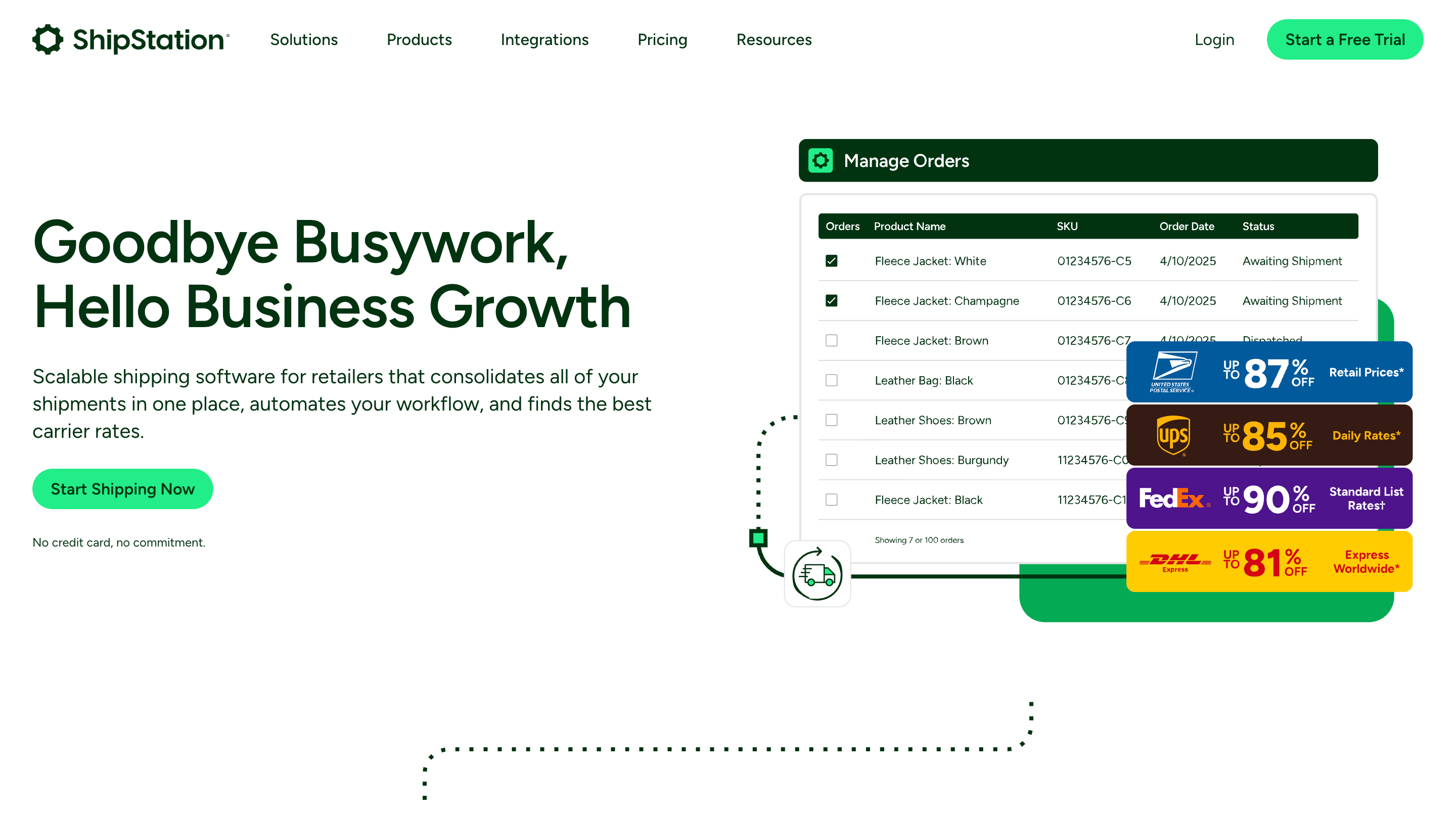
1. ShipStation
ShipStation is a robust and widely-used shipping solution known for its comprehensive features and ease of use. It caters to businesses of all sizes, allowing them to efficiently manage and process shipments across multiple carriers.
Key Features: Multi-carrier support, batch label creation, branded tracking pages.
Pricing Information: Starter plans begin at $14.99/month for up to 50 shipments, with higher tiers available for growing shipping volumes.
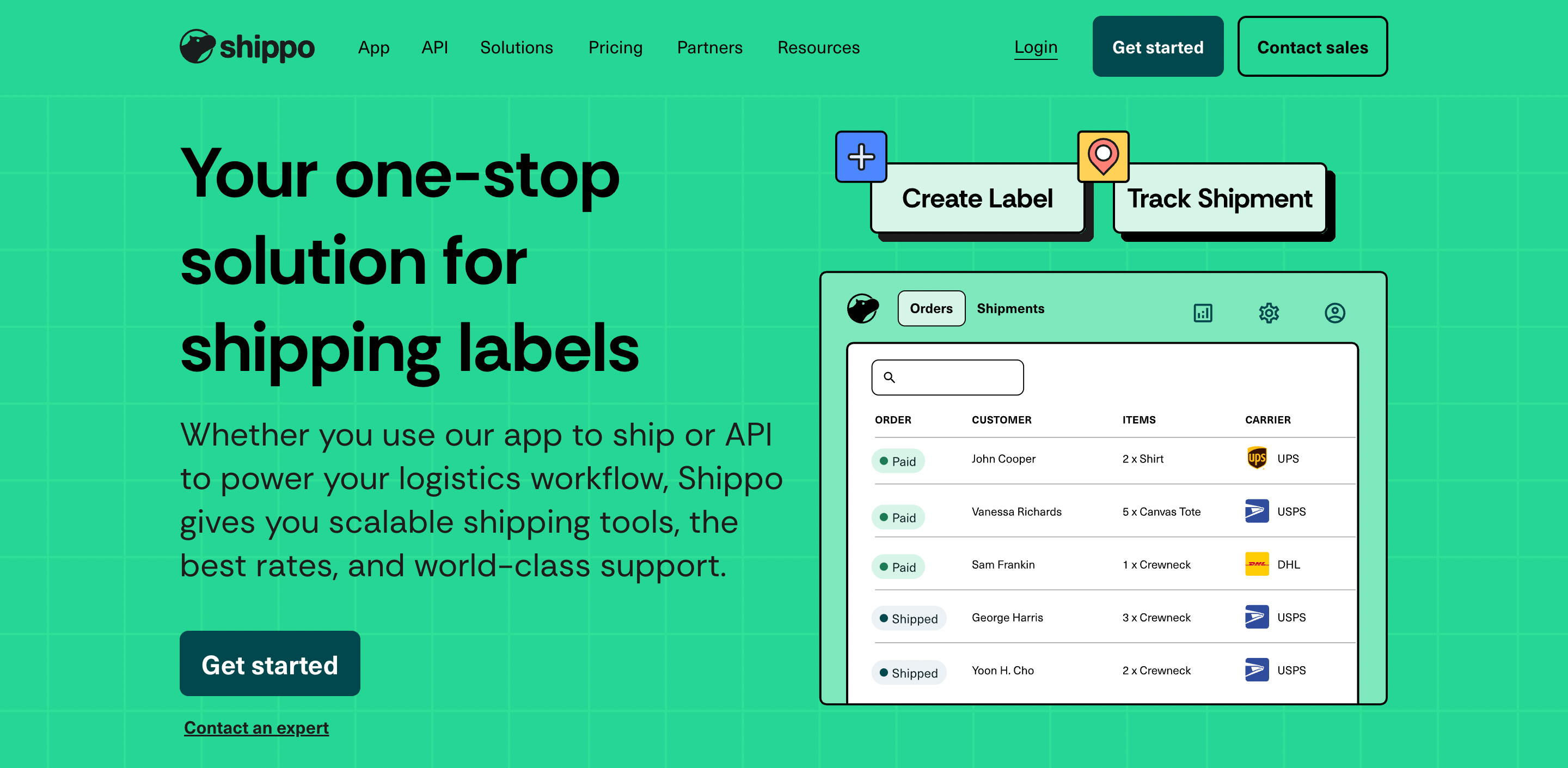
2. Shippo
Shippo is recognized for its simplicity and versatility, which makes it an ideal choice for small businesses and startups. It facilitates seamless shipping management with easy integration options and cost-effective solutions.
Key Features: Real-time tracking, discounted carrier rates, store integrations, and shipping automation.
Pricing Information: Free Starter plan available for up to 30 labels per month. Pro plans start at $17/month, while Premier pricing is available on request.
3. Easyship
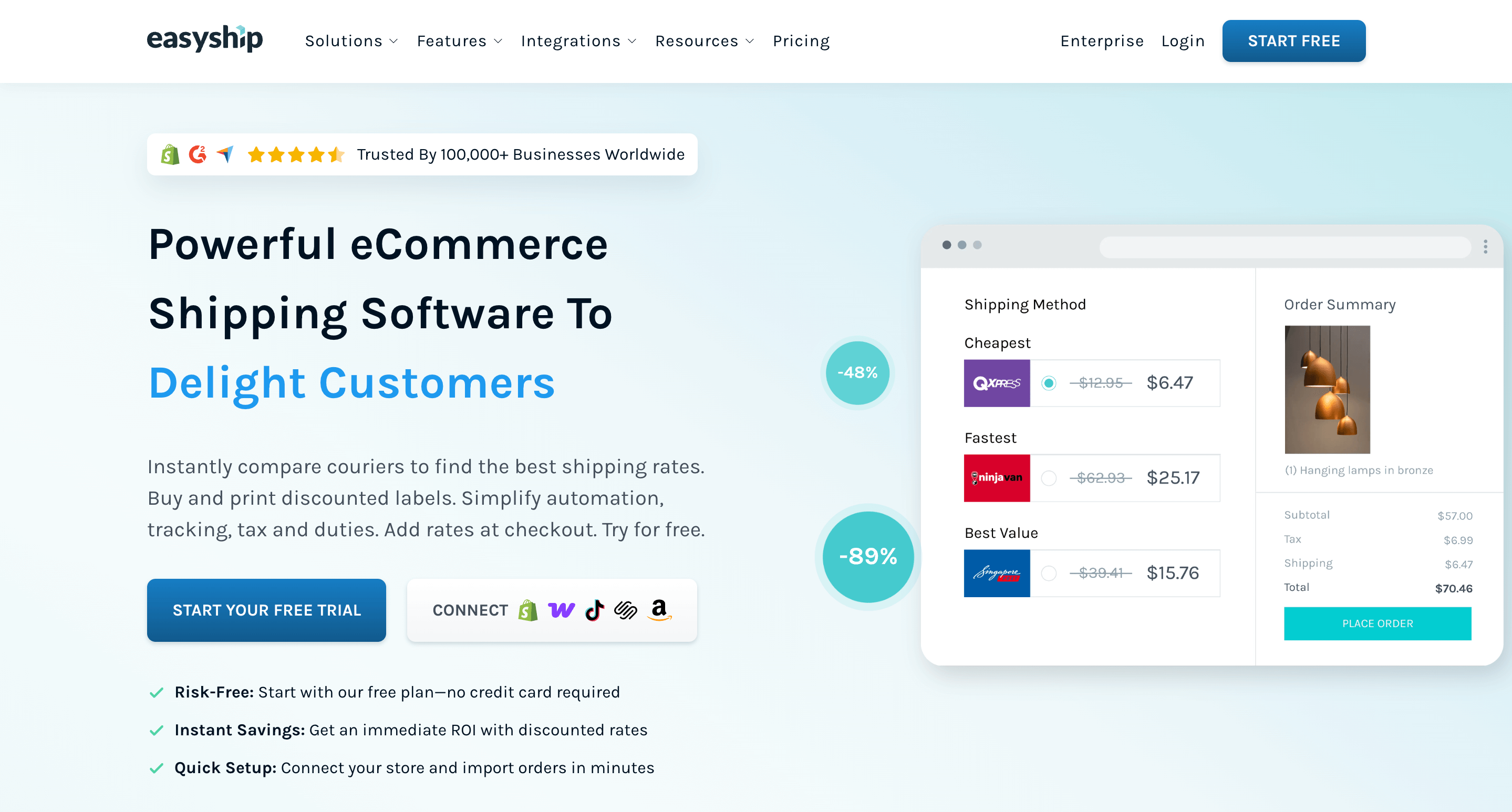
Specializing in global shipping solutions, Easyship helps businesses navigate international logistics with ease. It provides tools for automated compliance with international shipping regulations.
Key Features: Automated duty and tax calculations, multiple courier options.
Pricing Information: Free tier available, with paid plans starting at $29/month.
4. ShipBob
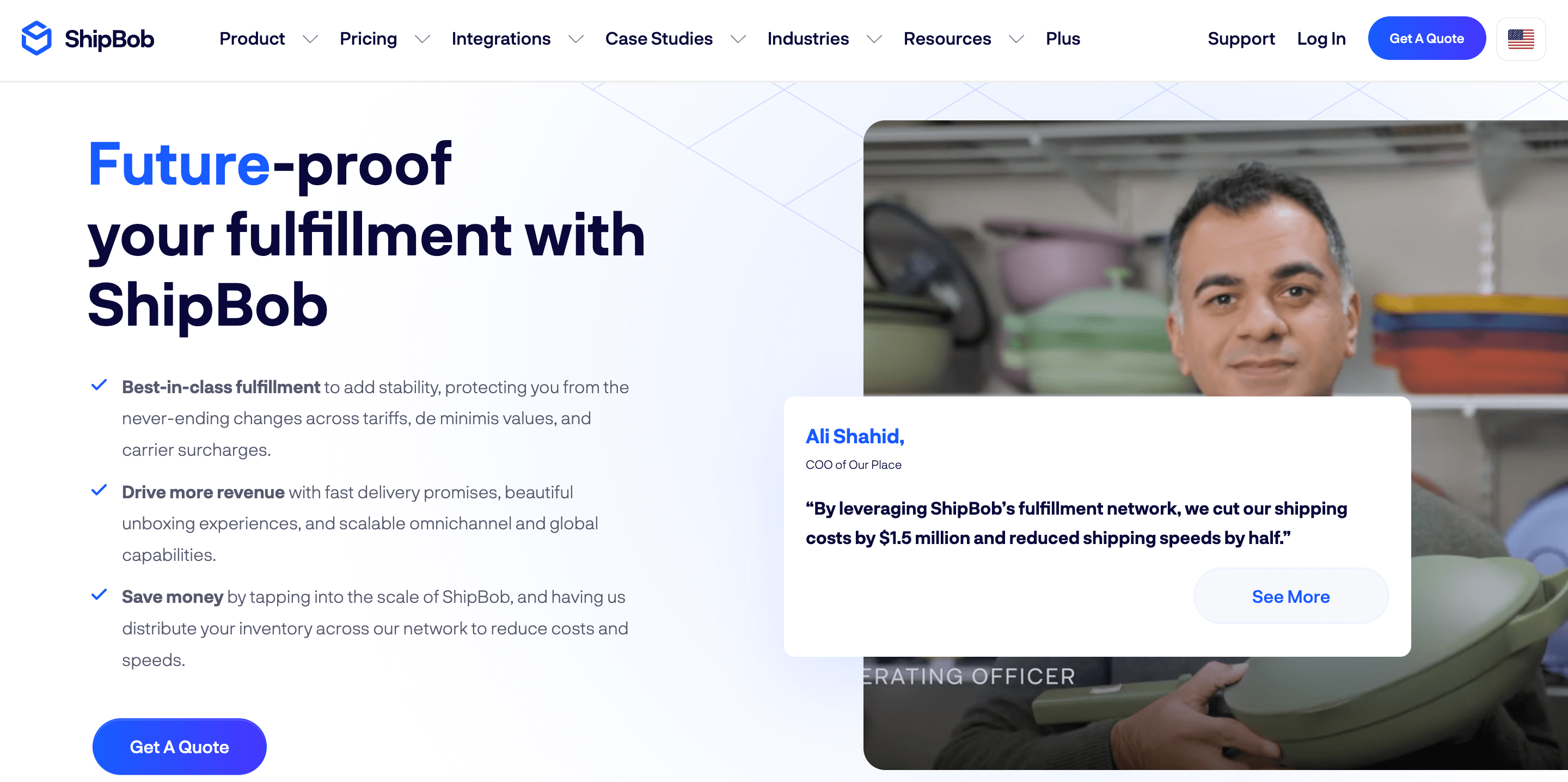
Unlike traditional shipping software, ShipBob is a third-party logistics (3PL) and outsourced fulfillment provider. It stores inventory in its fulfillment network and handles picking, packing, and shipping orders on behalf of e-commerce businesses, while providing technology for inventory and order management.
Key Features: Outsourced order fulfillment, inventory management, distributed fulfillment network, order tracking.
Pricing Information: Custom pricing based on fulfillment requirements, order volume, storage, and shipping needs.
5. Ordoro
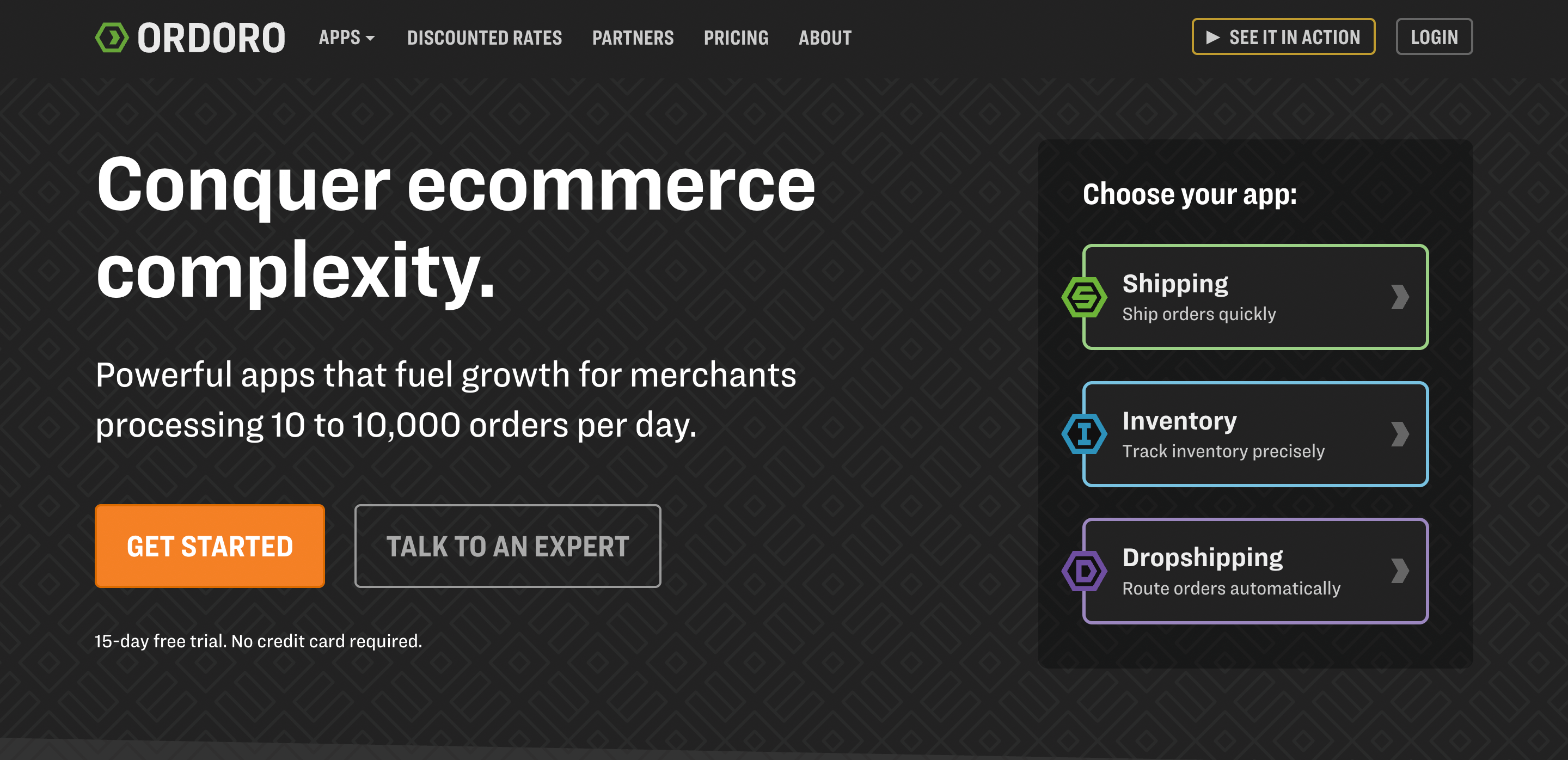
Ordoro is designed to streamline shipping and inventory management, providing strong integration capabilities and tools to enhance supply chain efficiency for medium to large businesses.
Key Features: Multi-carrier shipping, batch label printing, shipping automation, and order management. Inventory and dropshipping tools are available separately.
Pricing Information: The Essential shipping plan is free for up to 100 orders per month. Advanced costs $59/month, while Premium costs $149/month.
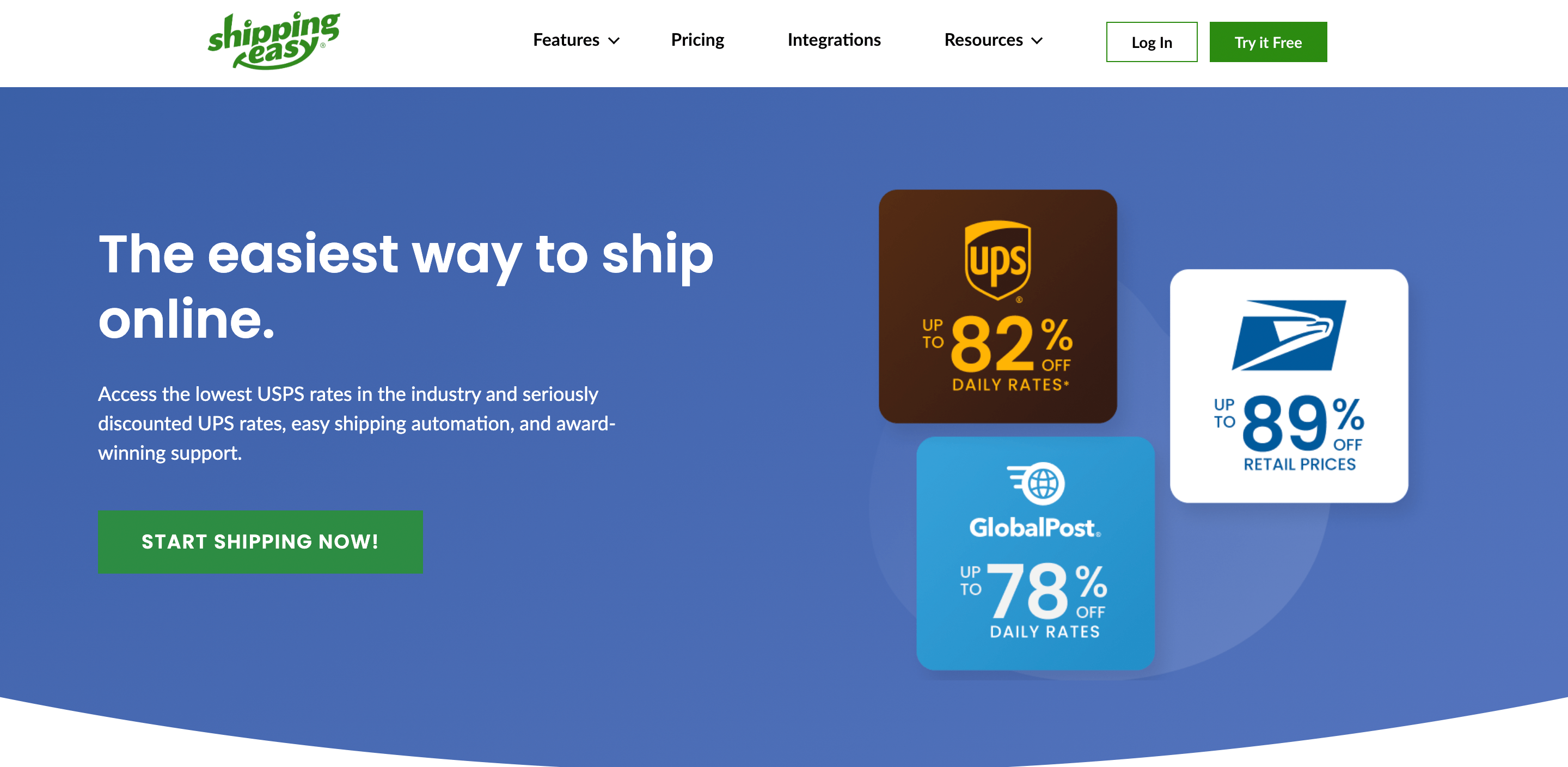
6. ShippingEasy
ShippingEasy is designed to simplify the shipping process for small to medium-sized businesses. It automates key tasks, integrates seamlessly with shopping carts, and offers features like email marketing to boost customer engagement. By leveraging discounted shipping rates, it helps businesses save on costs while scaling their operations effectively.
Key Features: Discounted shipping rates, automation rules, branded tracking, and returns management.
Pricing Information: A free Starter plan is available for up to 25 shipments per month. Paid Growth plans start at $19.99/month for 26–200 shipments.
7. ShipStation API
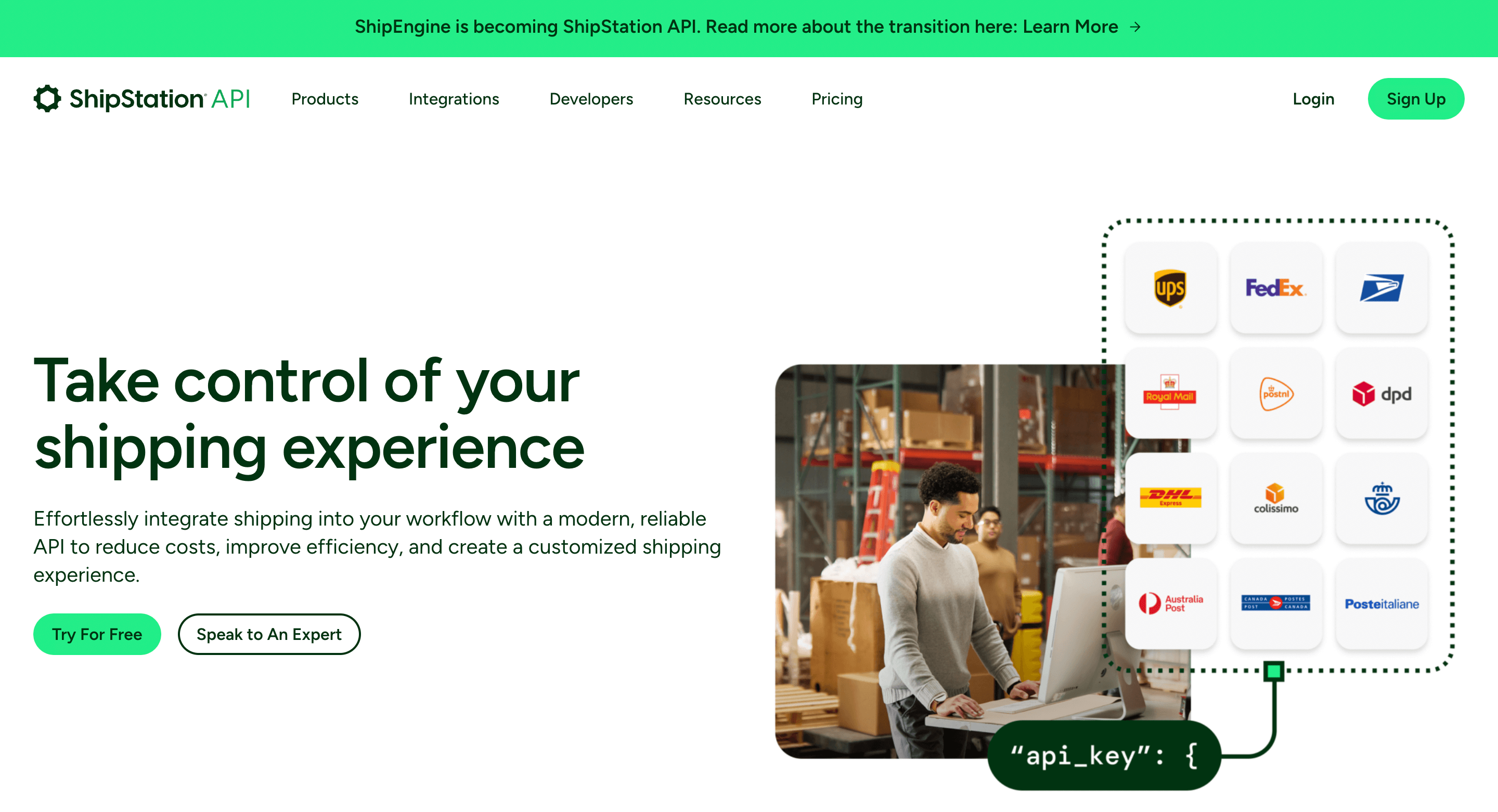
ShipStation API is an API-first platform that empowers developers to create customized shipping solutions. It offers robust functionality for managing logistics through real-time data, integration with multiple carriers, and support for a variety of shipping scenarios, making it an excellent choice for tech-savvy businesses looking to tailor logistics.
Key Features: API-based rate comparison, label creation, tracking, address validation, and carrier integrations.
Pricing Information: A Free plan is available with no subscription fee. Advanced plans start at $75/month for up to 1,000 labels, with higher-volume and Enterprise options available.
8. Sendcloud
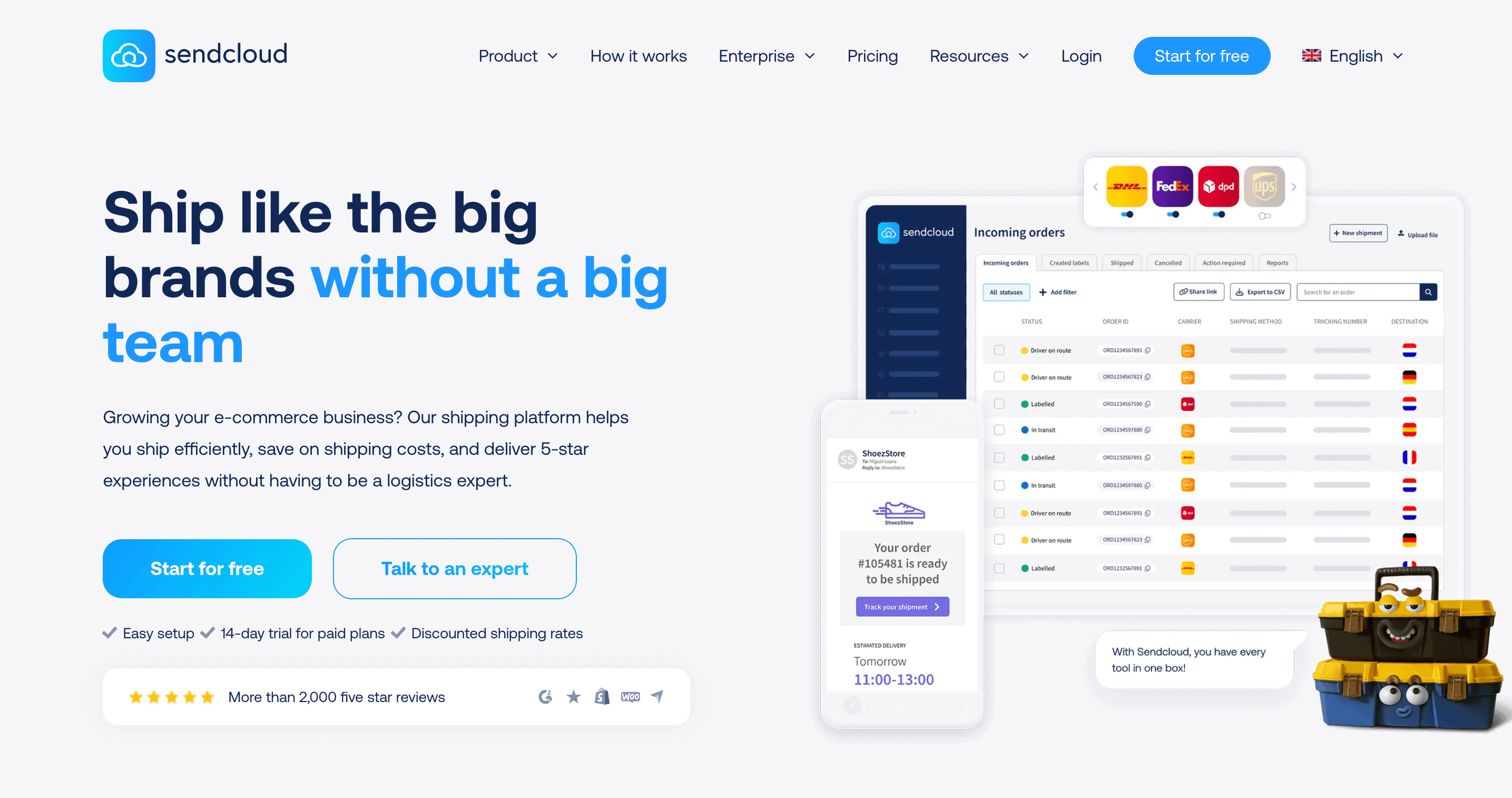
Sendcloud is ideal for European e-commerce businesses, providing an integrated platform that simplifies shipping through automation and efficiency. It connects with multiple carriers to offer flexible shipping options, while also handling returns and customer communications efficiently.
Key Features: Multi-carrier integration, returns management, branded tracking.
Pricing Information: A free plan is available for up to 20 parcels per month. Paid plans start with Lite at €28/month, plus a €0.10 fee per label.
9. Shopify Shipping
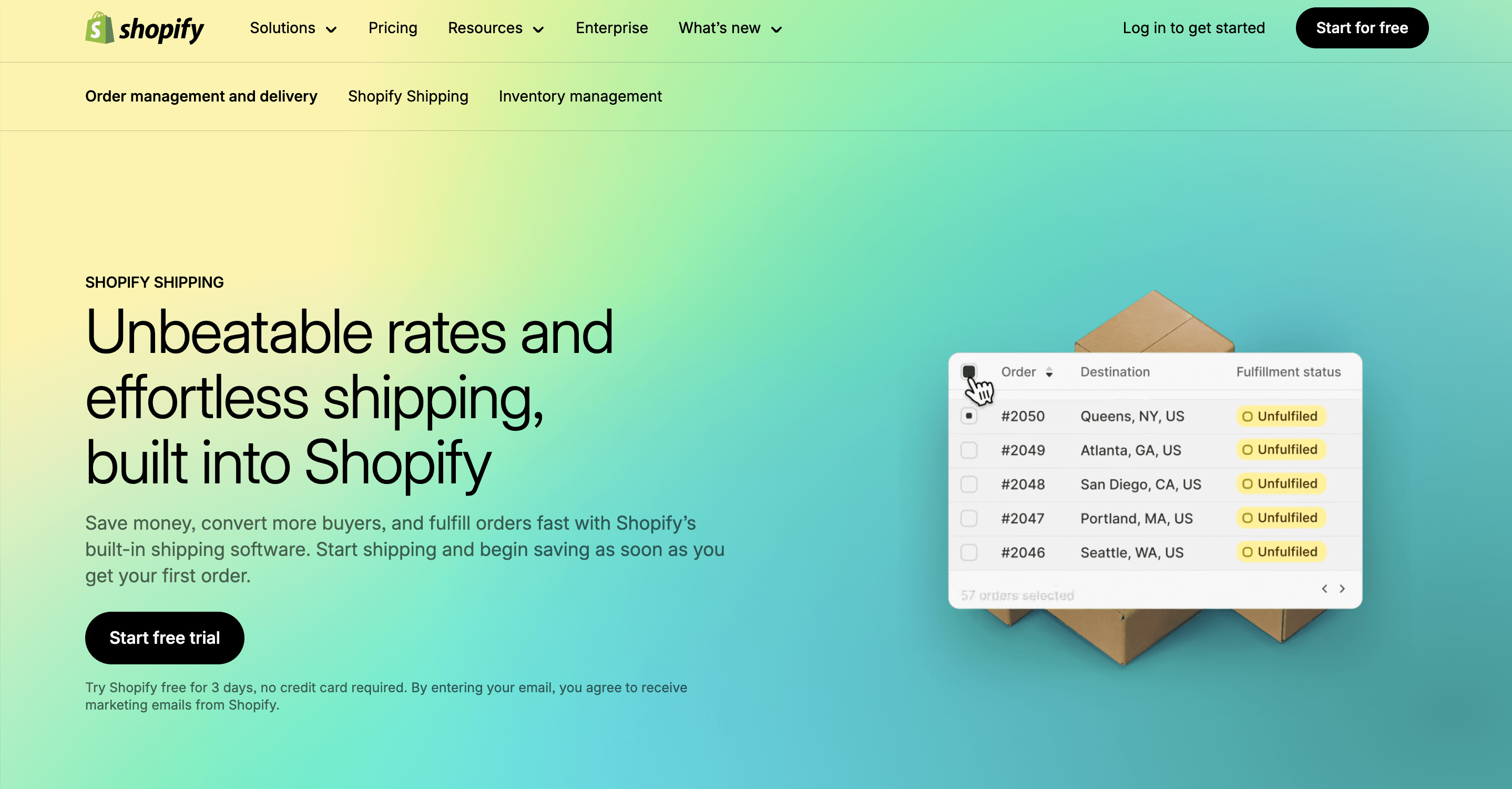
Integrated directly within the Shopify platform, Shopify Shipping enables retailers to manage shipping tasks seamlessly. It provides access to discounted rates and allows users to print labels directly from the order dashboard, streamlining the fulfillment process for Shopify merchants.
Key Features: Discounted shipping rates, label printing from the dashboard, integration with Shopify orders.
Pricing Information: Included with Shopify subscription plans.
10. Veeqo
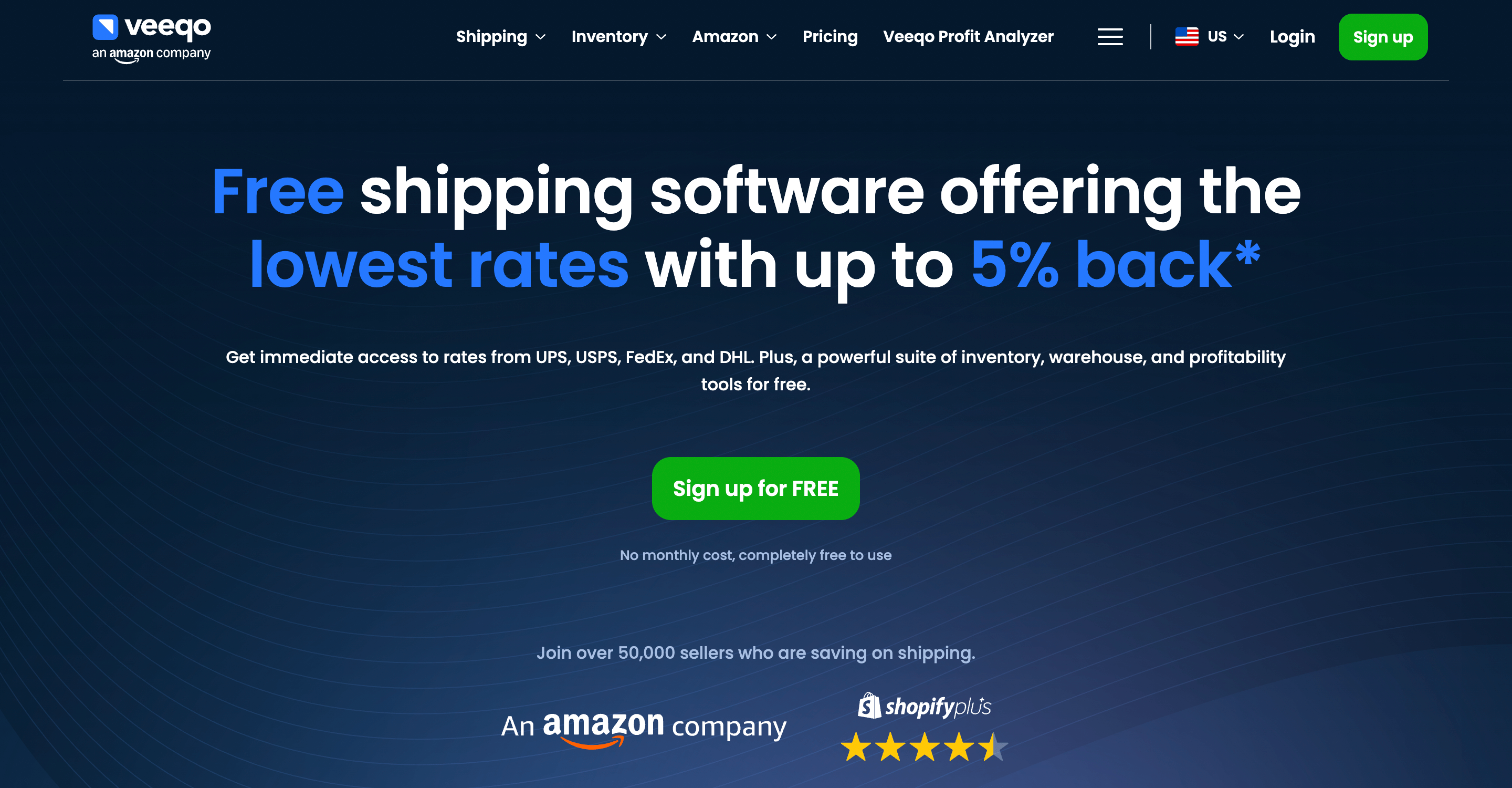
Veeqo provides free multichannel shipping software, with optional paid plans for businesses that also need advanced inventory management, digital picking, API support, and ERP integrations. It is designed for retailers managing orders and shipping across multiple sales channels.
Key Features: Multi-carrier shipping, multichannel order management, discounted carrier rates, and optional inventory management tools.
Pricing Information: The Shipping plan is free with unlimited shipments. Inventory plans start at $19/month, while High Volume plans start at $350/month, with paid pricing based on monthly order volume.
Get in touch
with our expert
Discuss your project requirements and get a free estimate.
Get in touch
with our expert
Discuss your project requirements and get a free estimate.
Best E-commerce Shipping Platforms Compared
The best e-commerce shipping platform depends on your order volume, sales channels, automation needs, and whether you ship domestically or internationally. Compare the leading shipping software solutions by pricing, carrier support, automation, international shipping capabilities, and integrations.
| Software | Best for | Starting price | Multi-carrier | Automation | International shipping | Integrations |
|---|---|---|---|---|---|---|
| ShipStation | Growing multichannel e-commerce businesses | From $14.99/month | Yes, 200+ parcel carriers | Yes | Yes | 400+ integrations |
| Shippo | Startups and small e-commerce businesses | Free; Pro from $17/month | Yes | Yes | Yes | Major e-commerce platforms and marketplaces |
| Easyship | International and cross-border e-commerce | Free; paid plans from $29/month | Yes, 550+ courier services | Yes | Yes, 200+ destinations | 60+ native integrations plus API |
| ShipBob | E-commerce businesses that want outsourced fulfillment | Custom quote | Yes, through its fulfillment network | Yes | Yes | 50+ integrations plus API |
| Ordoro | Multichannel sellers that need shipping and order management | Free; paid plans from $59/month | Yes | Yes | Yes | E-commerce channels, carriers, and API |
| ShippingEasy | Small and growing e-commerce businesses | Free; paid plans from $19.99/month | Yes | Yes | Yes | Major e-commerce stores and marketplaces |
| ShipStation API | Developers and businesses building custom shipping workflows | Free; Advanced from $75/month | Yes, 200+ carriers | Yes, API-based | Yes | API and connected order sources |
| Sendcloud | European e-commerce businesses | Free; paid plans from €28/month | Yes, 170+ couriers on paid plans | Yes | Yes | 100+ e-commerce, marketplace, WMS, and ERP integrations |
| Shopify Shipping | Shopify merchants | Included with Shopify plans | Yes, carrier availability varies by location | Yes, within Shopify | Yes, from supported locations | Native Shopify ecosystem |
| Veeqo | Multichannel e-commerce retailers looking for free shipping software | Free; Inventory from $19/month | Yes, 21+ direct carrier integrations | Yes | Yes | Amazon, Shopify, eBay, Walmart, WooCommerce, and more |
Shipping Software vs. Fulfillment Software and 3PL
Shipping software and third-party logistics (3PL) providers can both simplify e-commerce fulfillment, but they serve different purposes.
| Solution | What it does | Best for |
|---|---|---|
| Shipping software | Helps businesses compare carrier rates, print labels, automate shipping rules, track orders, and manage returns while keeping fulfillment in-house. | E-commerce businesses that manage their own inventory and order fulfillment. |
| 3PL / fulfillment provider | Stores inventory and handles picking, packing, shipping, and often returns on behalf of the merchant. | E-commerce businesses that want to outsource some or all of their fulfillment operations. |
Most solutions in this guide, such as ShipStation, Shippo, and Easyship, are shipping software platforms. ShipBob is different: it is primarily a 3PL and outsourced fulfillment provider that combines physical fulfillment services with its own technology platform.
Best E-commerce Shipping Platforms by Use Case
Different e-commerce businesses have different shipping priorities. A small store may need an affordable and easy-to-use solution, while a growing international business may prioritize carrier coverage, automation, or cross-border shipping tools. Here are our picks for common e-commerce shipping use cases.
| Use case | Best option | Why it stands out |
|---|---|---|
| Best for small businesses | Shippo | Offers a free Starter plan with discounted carrier rates, store integrations, tracking, returns, international shipping, and automation. |
| Best for international shipping | Easyship | Provides broad courier coverage plus tools for duties and taxes, customs documentation, international returns, and cross-border shipping. |
| Best for multichannel e-commerce | Veeqo | Connects multiple stores and marketplaces, including Amazon, Shopify, eBay, Walmart, Etsy, and WooCommerce, in one shipping workflow. |
| Best for shipping automation | ShipStation | Supports advanced automation rules for carrier and service selection, packages, insurance, order routing, and rate comparison. |
| Best for Shopify | Shopify Shipping | Lets Shopify merchants buy and print labels, manage fulfillment, and update tracking directly from the Shopify admin. |
| Best for enterprise businesses | ShipStation API | Provides API-based shipping workflows, access to 200+ carriers, rate comparison, labels, tracking, returns, and high-volume shipping capabilities. |
Choose Your E-commerce Shipping Management Software
The right shipping management software can simplify fulfillment, reduce shipping costs, and improve the customer experience. Choose an e-commerce shipping platform that fits your sales channels, shipment volume, carrier needs, international shipping requirements, and plans for growth.
If your business has more complex requirements, the Transform Agency team can help you select, integrate, and customize e-commerce solutions around your existing technology stack and operations.
FAQ
What is the best e-commerce shipping software?
The best e-commerce shipping software depends on your business needs. Shippo is a strong option for small businesses, Easyship suits international shipping, Veeqo works well for multichannel sellers, and ShipStation offers advanced shipping automation.
What is the easiest shipping software to integrate with e-commerce platforms?
Shippo is a practical option for businesses that need straightforward e-commerce shipping integration. It connects with major platforms and marketplaces and supports order imports, label creation, tracking, and other core shipping tasks.
What is shipping management software?
Shipping management software helps e-commerce businesses manage carriers, compare rates, create shipping labels, track deliveries, process returns, and automate fulfillment tasks from one platform.
What is the difference between shipping software and a 3PL?
Shipping software helps businesses manage fulfillment tasks such as carrier selection, rate comparison, labels, tracking, and returns. A 3PL takes physical responsibility for inventory storage, order picking, packing, and shipping on behalf of the merchant.

Expert in creating engaging written content. Skilled at analyzing audience behaviors and refining strategies to align business goals with customer interests. Proven ability to craft content that connects deeply with audiences. Passionate about staying current with trends to boost engagement.
Expert in creating engaging written content. Skilled at analyzing audience behaviors and refining strategies to align business goals with customer interests. Proven ability to craft content that connects deeply with audiences. Passionate about staying current with trends to boost engagement.