
0%
In This Article:
What Is E-commerce Shipping?
Main Types of E-commerce Shipping Methods
Best E-commerce Shipping Carriers
Best E-commerce Shipping Software and Solutions
How to Choose the Right E-commerce Shipping Method
How to Reduce E-commerce Shipping Costs
Shipping Setup for Magento and Shopify Stores
Common E-commerce Shipping Mistakes
FAQ
Efficient delivery systems are the backbone that support the entire e-commerce operation, ensuring products reach customers promptly and in pristine condition. With an array of shipping methods and carriers, e-commerce businesses must navigate a sea of options to find the perfect match for their needs.
In this article, we dive deep into optimizing your deliveries through various available e-commerce shipping companies and methods that help you ensure the smooth sailing of your items – from checkout to unboxing.
What Is E-commerce Shipping?
E-commerce shipping is the process of delivering products purchased online from a store or fulfillment location to the customer. It includes order processing, packaging, shipping rate calculation, carrier selection, label creation, tracking, delivery, and returns.
A shipping method defines how the order is delivered, such as standard, express, flat-rate, or free shipping. A shipping carrier physically transports the order, while shipping software connects the store with carriers and fulfillment systems to automate the process.
Main Types of E-commerce Shipping Methods
E-commerce stores can combine different shipping methods based on delivery speed, order type, destination, and cost.
| Shipping Method | Best For | Key Benefit | Main Limitation |
|---|---|---|---|
| Standard Shipping | Non-urgent orders | Low cost | Longer delivery |
| Expedited Shipping | Urgent orders | Faster delivery | Higher cost |
| Express Or Overnight Shipping | Time-sensitive purchases | Fastest delivery | Premium price |
| Same-Day Or Next-Day Delivery | Local and urgent orders | Maximum convenience | Limited coverage |
| Free Shipping | Increasing conversion and order value | Less checkout friction | Lower margins |
| Flat-Rate Shipping | Similar products and destinations | Simple pricing | Inaccurate for varied orders |
| Real-Time Carrier Rates | Varied products and destinations | Accurate pricing | Requires correct package data |
| International Shipping | Cross-border sales | Wider market reach | Customs complexity |
| Click And Collect Or Local Pickup | Omnichannel stores | No delivery cost | Requires pickup locations |
| Local Delivery | Nearby customers | Fast and flexible | Requires route management |
| Freight Shipping | Heavy or oversized goods | Supports large shipments | Higher complexity |
| Subscription Shipping | Recurring orders | Predictable fulfillment | Requires automation |
Best E-commerce Shipping Carriers
Navigating the diverse market of shipping partners can be daunting. Here’s a detailed look at what each major carrier offers, ensuring you find the perfect fit for your e-commerce needs.
| Carrier | Best For | Key Services | Main Advantages | Main Limitations |
|---|---|---|---|---|
| UPS | U.S. ground and B2B shipping | UPS Ground, UPS 3 Day Select, UPS 2nd Day Air, UPS Next Day Air, UPS Worldwide | Reliable service and broad coverage | Additional surcharges may increase costs |
| FedEx | Express and time-sensitive shipping | FedEx Ground, FedEx 2Day, FedEx Standard Overnight, FedEx International | Strong express and delivery-speed options | Can be costly without negotiated rates |
| USPS | Lightweight parcels and small businesses | USPS Ground Advantage, Priority Mail, Priority Mail Express, Priority Mail International | Affordable domestic shipping and wide U.S. coverage | Fewer premium delivery options |
| DHL | International and cross-border shipping | DHL Express Worldwide, DHL Parcel International Direct, DHL SmartMail Parcel | Strong global network and customs expertise | Domestic availability varies by market |
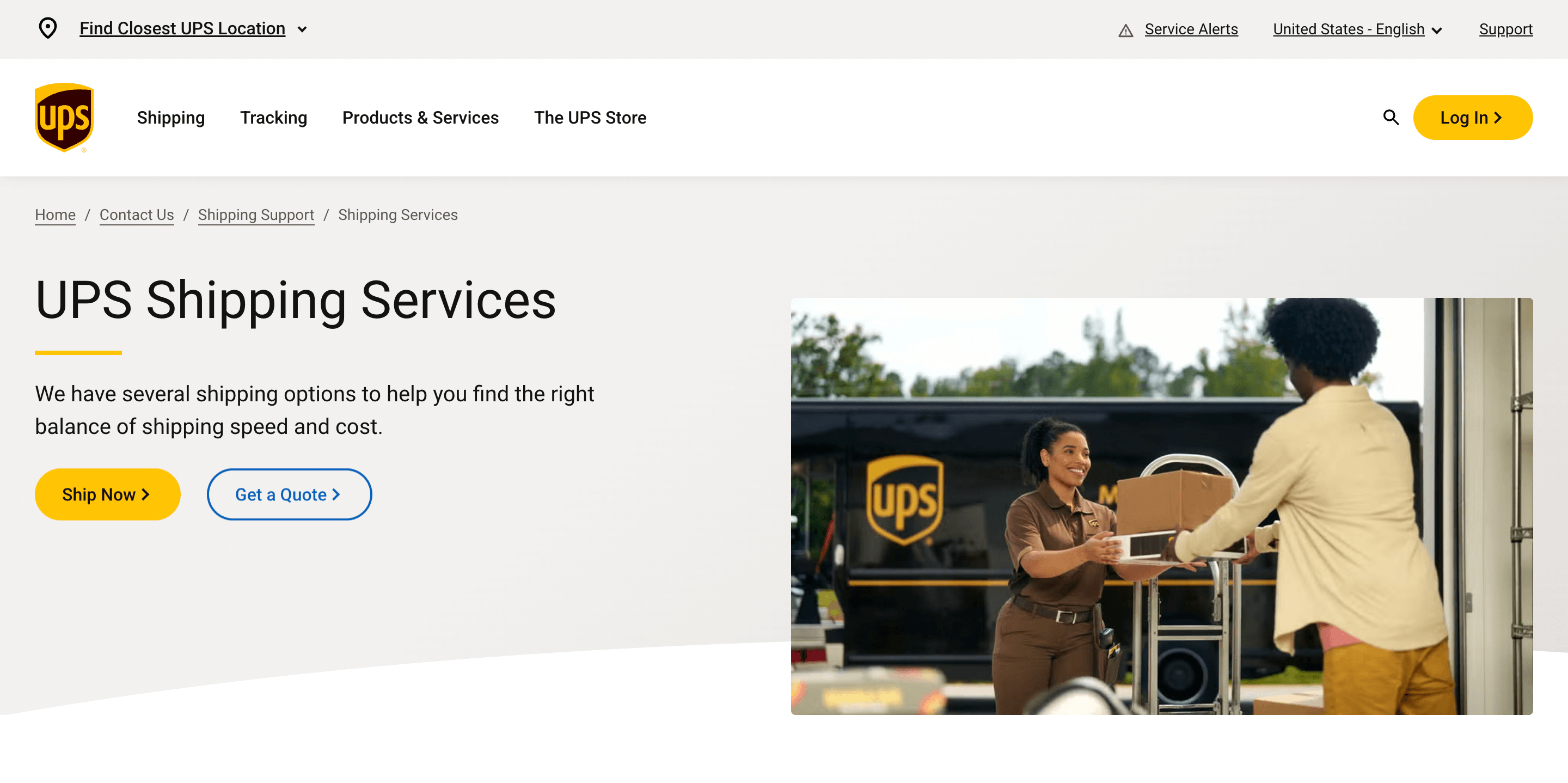
UPS Shipping Methods
UPS is synonymous with reliability and versatility, offering a variety of services designed to meet every possible shipping requirement:
- UPS Ground—The go-to option for affordable, domestic shipments within the United States. It provides dependable service at a competitive price.
- UPS Next Day Air—UPS’s fast shipping method ensures early morning delivery for urgent shipments across the U.S.
- UPS 2nd Day Air—Guarantees second-day delivery to most U.S. locations.
- UPS 3-Day Select—An economical choice for deliveries not governed by tight deadlines, arriving within three days.
- UPS Worldwide—Delivers packages internationally in 1–5 days, depending on the speed selected.
UPS’s options cater to domestic and international markets with a spectrum of speed-focused options.
FedEx Shipping Methods
FedEx is celebrated for its extensive service range and impeccable reliability, making it a formidable player in the shipping industry:
- FedEx Ground—Ideal for budget-friendly shipments, offering reliable service at an attractive price point.
- FedEx Standard Overnight—Provides standard or priority next-business-day delivery within the U.S.
- FedEx 2 Day—Ensures second-business-day arrival to most U.S. addresses.
- FedEx International—Offers economy for cost-effective international or priority for rapid international deliveries.
With FedEx’s comprehensive suite of services, businesses can access domestic and international shipping solutions designed to meet various urgency levels and budget constraints.
USPS Shipping Methods
USPS stands out for its accessibility and affordability, especially suitable for small businesses and lightweight packages:
- USPS Ground Advantage—Perfect for small packages weighing up to 13 ounces (0.49 kg); this service offers an economical way to ship items domestically within 1–5 days.
- USPS Priority Mail®—A step up from First Class, providing expedited domestic delivery typically within 1–3 business days.
- USPS Priority Mail Express®—The fastest shipping method from USPS guarantees overnight delivery to most U.S. addresses.
- USPS Priority Mail International®—Extends USPS’s reputable service beyond U.S. borders with reliable international delivery at reasonable rates.
The USPS is particularly advantageous for e-commerce businesses focusing on domestic markets or those looking for economical options for smaller shipments.
DHL Shipping Methods
DHL excels in international logistics with a robust network that ensures your packages reach their global destinations efficiently:
- DHL SmartMail Parcel and Parcel Plus—Ship packages across the U.S. in 2–8 days, depending on the speed chosen.
- DHL International—DHL offers several options depending on the destination country, desired shipping speed, and package weight.
Each carrier brings something unique to the table. Whether you prioritize speed, cost-efficiency, or international reach, there’s a shipping method tailored just for your e-commerce business needs.
Best E-commerce Shipping Software and Solutions
Carriers physically transport packages. Shipping platforms help merchants compare carriers, automate fulfillment, create labels, track orders, and manage returns.
| Solution | Best For | Key Capabilities | Considerations |
|---|---|---|---|
| ShipStation | Growing multi-channel merchants | Multi-carrier rate comparison, labels, automation rules, order management, and tracking | Advanced workflows require careful configuration |
| Shippo | Small and medium businesses and API-based shipping | Carrier rates, labels, tracking, address validation, and shipping API | Some stores may need additional warehouse management systems |
| Easyship | International and cross-border selling | Courier comparison, duties and taxes, checkout rates, and customs documentation | Service and carrier availability varies by market |
| ShippyPro | European and international retailers using multiple carriers | Multi-carrier labels, automation, tracking, returns, and analytics | Best suited to stores with established shipping volumes |
| AfterShip | Post-purchase tracking and returns | Branded tracking, delivery notifications, estimated delivery dates, and returns tools | Focuses more on post-purchase management than warehouse operations |
| Shopify Shipping | Shopify stores with straightforward fulfillment | Native label purchasing, carrier rates, and order fulfillment | Features depend on location and Shopify plan |
| Magento Shipping Integrations | Stores with complex products, rules, and fulfillment systems | Carrier APIs, table rates, restrictions, checkout rules, and ERP/WMS/3PL connections | May require extensions, customization, and technical maintenance |
How to Choose the Right E-commerce Shipping Method
The right shipping method should meet customer expectations, protect profit margins, and suit your products, destinations, and fulfillment capacity.
Analyze Your Products and Destinations
Review product weight, dimensions, value, fragility, and special handling requirements. Identify your main delivery zones, international markets, remote locations, and product restrictions before you compare available services.
Balance Delivery Speed and Cost
Compare standard, expedited, and express delivery based on customer expectations. Faster options can improve satisfaction, but the customer, product margin, or order value must cover the additional cost.
Select the Right Pricing Model
Choose flat rates for orders with similar costs and real-time carrier rates for varied products and destinations. Offer free delivery only after you calculate a minimum order threshold that protects your margins.
Compare Carriers and Fulfillment Solutions
Assess rates, coverage, delivery performance, surcharges, tracking quality, and claims support. Consider multi-carrier software or a 3PL when manual order fulfillment becomes too complex or expensive.
Improve the Customer Experience
Display delivery costs, estimated arrival dates, tracking details, and pickup options before the customer completes checkout. Offer a small number of clearly distinct methods instead of several similar choices.
Measure and Improve Performance
Track cost per order, delivery time, failed deliveries, returns, and support requests. Use this data to revise carrier selection, pricing rules, and fulfillment processes.
How to Reduce E-commerce Shipping Costs
A cost-effective shipping strategy should reduce expenses without sacrificing delivery speed, reliability, or customer satisfaction.
- Optimize Packaging: Use boxes and mailers that match product dimensions, reduce empty space, and avoid unnecessary dimensional weight charges.
- Set a Free Shipping Threshold: Calculate a minimum order value that covers average delivery costs and protects your profit margin.
- Negotiate Carrier Rates: Use your shipment volume, destination mix, and service usage to request better rates and lower surcharges from carriers.
- Compare Multiple Carriers: Use multi-carrier software to select the most cost-effective service for each package, destination, and required delivery date.
- Choose the Right Warehouse Locations: Store inventory closer to key customer regions to reduce shipping zones, transit times, and last-mile costs.
- Automate Shipping Processes: Apply rules for carrier selection, label creation, order routing, address validation, and tracking updates to reduce manual work and errors.
- Optimize Returns: Improve product information, set clear return rules, consolidate returns, and select cost-effective return services to reduce reverse logistics expenses.
Shipping Setup for Magento and Shopify Stores
Both Magento and Shopify support standard shipping options, but complex rates, restrictions, carrier connections, and fulfillment workflows may require additional configuration or custom development.
Shipping Setup in Magento
Magento provides flexible tools for stores with complex catalogs, customer groups, and fulfillment requirements. Merchants can configure:
- Shipping Methods: Enable flat-rate, free, table-rate, pickup, and carrier-based delivery options.
- Carrier Integrations: Connect carrier APIs to display available services, rates, and delivery estimates.
- Table Rates: Set prices based on destination, cart value, order weight, or number of products.
- Free Shipping Rules: Define minimum order values, eligible products, customer groups, regions, or promotional conditions.
- Shipping Restrictions: Limit delivery methods by country, postcode, product, cart weight, customer group, or store view.
- Checkout Options: Control method names, sort order, delivery estimates, error messages, and fallback rates.
- ERP, WMS, and 3PL Connections: Transfer orders, inventory data, warehouse assignments, shipment statuses, and tracking numbers between systems.
Shipping Setup in Shopify
Shopify provides native tools for stores with straightforward delivery requirements and supports apps for more advanced workflows. Merchants can configure:
- Shopify Shipping: Purchase labels and manage supported carrier services from the Shopify admin.
- Carrier-Calculated Rates: Display rates based on package details, destination, and available carrier services.
- Shipping Profiles: Apply separate rules to standard, oversized, fragile, or supplier-fulfilled products.
- Local Delivery and Pickup: Define delivery zones, postal codes, order limits, pickup locations, and preparation times.
- Multi-Carrier Apps: Add advanced rate comparison, international delivery, label automation, tracking, and returns tools.
Need a Custom Shipping Setup?
Use our custom web development services to connect your Magento or Shopify store to carriers, warehouses, ERP, WMS, or 3PL systems and create shipping rules tailored to your products and fulfillment processes.
Common E-commerce Shipping Mistakes
Shipping errors can reduce conversion, increase support requests, and damage profit margins. Avoid the following mistakes when you plan your delivery strategy.
Offering Free Shipping Without Calculating Margins
Free shipping can improve conversion, but the store must absorb the cost. Calculate average delivery expenses, product margins, and order values before introducing it.
Showing Shipping Costs Too Late at Checkout
Unexpected charges at the final checkout stage can cause cart abandonment. Display shipping costs or clear estimates before customers reach the last step.
Providing Unclear Delivery Dates
Terms such as “standard” or “express” do not tell customers when an order will arrive. Show a realistic delivery date or time range for each method.
Providing No Shipment Tracking
Customers expect order updates after purchase. Send tracking details automatically and provide clear information about delays or delivery exceptions.
Ignoring the Returns Process
A confusing returns process can reduce customer trust. Clearly define return conditions, fees, deadlines, labels, and refund steps.
Using One Carrier for All Orders
One carrier may not offer the best price or service for every package and destination. Compare rates, coverage, delivery times, and surcharges across several carriers.
Providing No Clarity on International Duties and Taxes
Unexpected customs charges can lead to refused deliveries and complaints. Explain whether duties and taxes are included at checkout or collected upon delivery.
Wrapping It Up: Navigate Your Way Through E-commerce Shipping Solutions
Mastering e-commerce shipping isn’t just about choosing a carrier, but also aligning your delivery strategy with your business goals and customer expectations. Understanding different shipping methods’ nuances and leveraging technology to find the best rates can turn logistics from a headache into a competitive advantage. Remember that the journey of your items matters as much as the destination.
FAQ
What is the best shipping method for e-commerce?
The best method depends on product size, destination, delivery expectations, and profit margins. Most stores benefit from offering an affordable standard option and a faster paid option.
What is the cheapest shipping method for small businesses?
The cheapest option varies by package weight, dimensions, and destination. Lightweight domestic parcels often cost less through postal services, while multi-carrier software can help compare available rates for each order.
How can e-commerce stores reduce shipping costs?
Stores can reduce costs through smaller packaging, negotiated carrier rates, multi-carrier rate comparison, strategic warehouse locations, automated fulfillment, and a carefully calculated free shipping threshold.
Should I offer free shipping?
Free shipping can improve conversion and average order value, but only when product margins can cover the cost. A minimum order threshold usually provides a better balance between customer appeal and profitability.
When should an online store use 3PL fulfillment?
A store should consider a 3PL when internal fulfillment becomes too expensive or difficult to scale. A 3PL can also help reduce delivery times, support seasonal demand, and place inventory closer to key customer regions.

Expert in creating engaging written content. Skilled at analyzing audience behaviors and refining strategies to align business goals with customer interests. Proven ability to craft content that connects deeply with audiences. Passionate about staying current with trends to boost engagement.
Expert in creating engaging written content. Skilled at analyzing audience behaviors and refining strategies to align business goals with customer interests. Proven ability to craft content that connects deeply with audiences. Passionate about staying current with trends to boost engagement.