
0%
The seamless integration of Shopify stores with key platforms like Amazon and Salesforce is essential for businesses. This is especially important for businesses aiming to streamline operations and maximize their online presence. As businesses strive for efficiency and reach, selecting the right Shopify integration apps tailored for Amazon and Salesforce integration becomes a pivotal decision. Here is a comprehensive review and comparison of popular tools and features within the Shopify ecosystem, with a keen focus on facilitating informed choices for businesses seeking optimal integration solutions.
What is Shopify Integration?
The integration of Shopify stores refers to the process of connecting your Shopify store with other software applications, platforms, or services to create a unified and automated business ecosystem. Instead of managing separate, siloed systems, integration allows these tools to communicate and share data seamlessly.
At its core, integration automates the flow of critical information, such as orders, customer details, inventory levels, and product data, between Shopify and other parts of your tech stack. This connectivity is essential for modern e-commerce operations, as it eliminates manual data entry, reduces errors, and provides a single source of truth across your business.
Common types of Shopify integrations include:
- Marketplace Connections – Linking to platforms like Amazon, eBay, or Etsy to sell and manage inventory across multiple channels from one dashboard.
- CRM & ERP Systems – Syncing with tools like Salesforce or NetSuite to unify customer data, enhance support, and streamline back-office operations.
- Fulfillment & Shipping – Connecting with warehouse management systems (WMS) or carriers like ShipStation to automate shipping and tracking.
- Marketing & Analytics – Integrating with email marketing platforms (Klaviyo, Mailchimp) and analytics tools to execute campaigns and track performance based on store data.
Implementing these connections is typically achieved through dedicated apps from the Shopify App Store or via custom-built API solutions for unique business needs. Ultimately, effective Shopify integration transforms disparate tools into a cohesive engine that drives efficiency, scalability, and a superior customer experience.
Shopify Apps for Amazon Integration
The Amazon marketplace stands as a cornerstone for e-commerce success, demanding seamless integration with Shopify to capitalize on its expansive reach. Having a seamless integration with Amazon will enhance customer experience and make storefront management that much easier for you. Explore the following Shopify apps designed to facilitate the harmonious connection between your online stores and the e-commerce giant.
1. Codisto (or Shopify Marketplace Connect)
Codisto excels in offering comprehensive inventory management, allowing businesses to sync product listings between Shopify and Amazon effortlessly. Its robust order fulfillment capabilities and real-time synchronization ensure accurate and timely processing.
Users of Codisto benefit from increased sales opportunities through Amazon, streamlined order processing, and an overall improvement in the customer shopping experience. Many user reviews highlight Codisto’s intuitive interface and its effectiveness in simplifying the complexities of Amazon integration. With Codisto, you can manage your inventory while saving time and without sacrificing revenue.
2. Amazon MCF by ByteStand
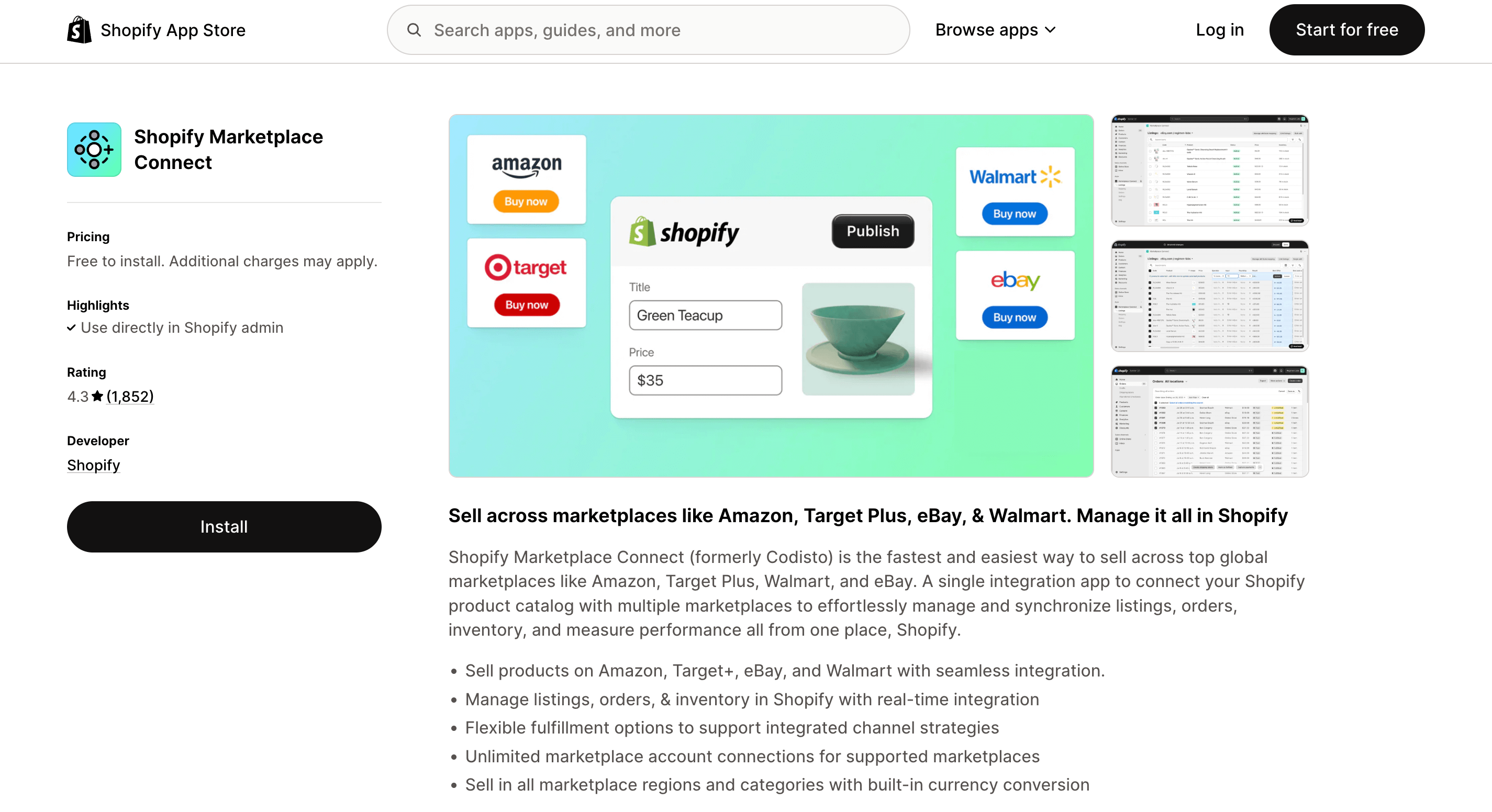
ByteStand distinguishes itself with automatic inventory management updates and order fulfillment. They make shipping and fulfilling orders simple. Its features are tailored to simplify the challenges of selling on Amazon, making it an attractive option for Shopify store owners. Byestand makes shipping and tracking orders easy and gives customers an easy order tracking experience.
Businesses using ByteStand enjoy the advantage of hands-free solutions, saving time and effort on manual updates. The app’s focus on accuracy ensures a seamless integration experience. Users praise ByteStand for its reliability, automated processes, and responsive support, contributing to positive experiences in managing Amazon integration.
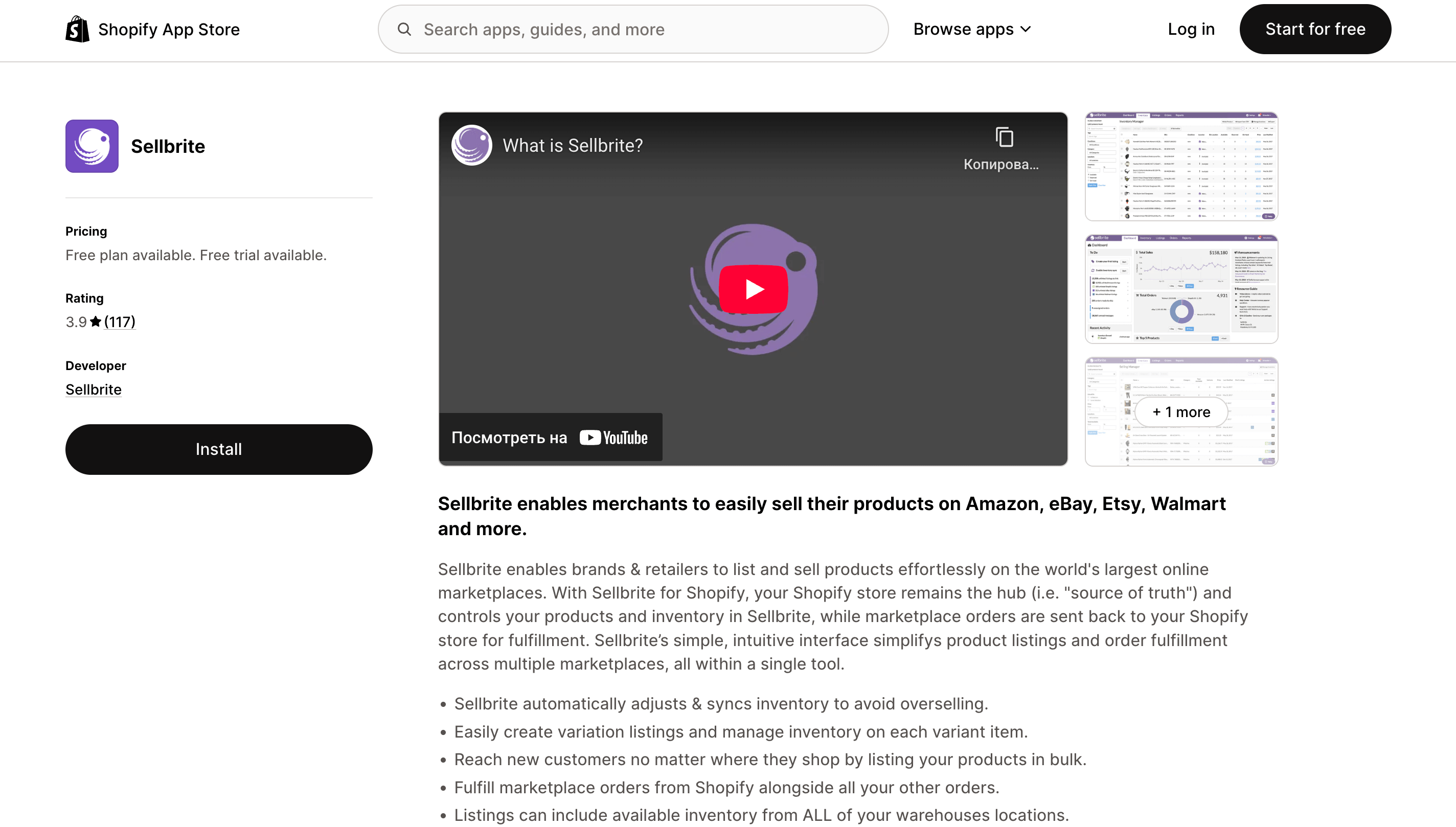
3. Sellbrite
Excellent for multi-channel sellers, Sellbrite provides a centralized command center to manage inventory and orders across all your sales channels, including Shopify and Amazon. Its core strength is robust, automated inventory synchronization that updates stock levels in real-time (or near real-time) across every connected platform. This is critical for preventing overselling, stockouts, and the associated negative customer experiences.
Beyond sync, Sellbrite streamlines the entire post-purchase workflow. Orders from all channels flow into a single, unified dashboard, allowing for efficient bulk processing and fulfillment. This eliminates the need to juggle multiple admin panels and reduces the risk of errors. The platform often includes additional features for bulk product listing and basic reporting, giving sellers a cohesive overview of their multi-channel operations from one intuitive interface.
4. WebBee
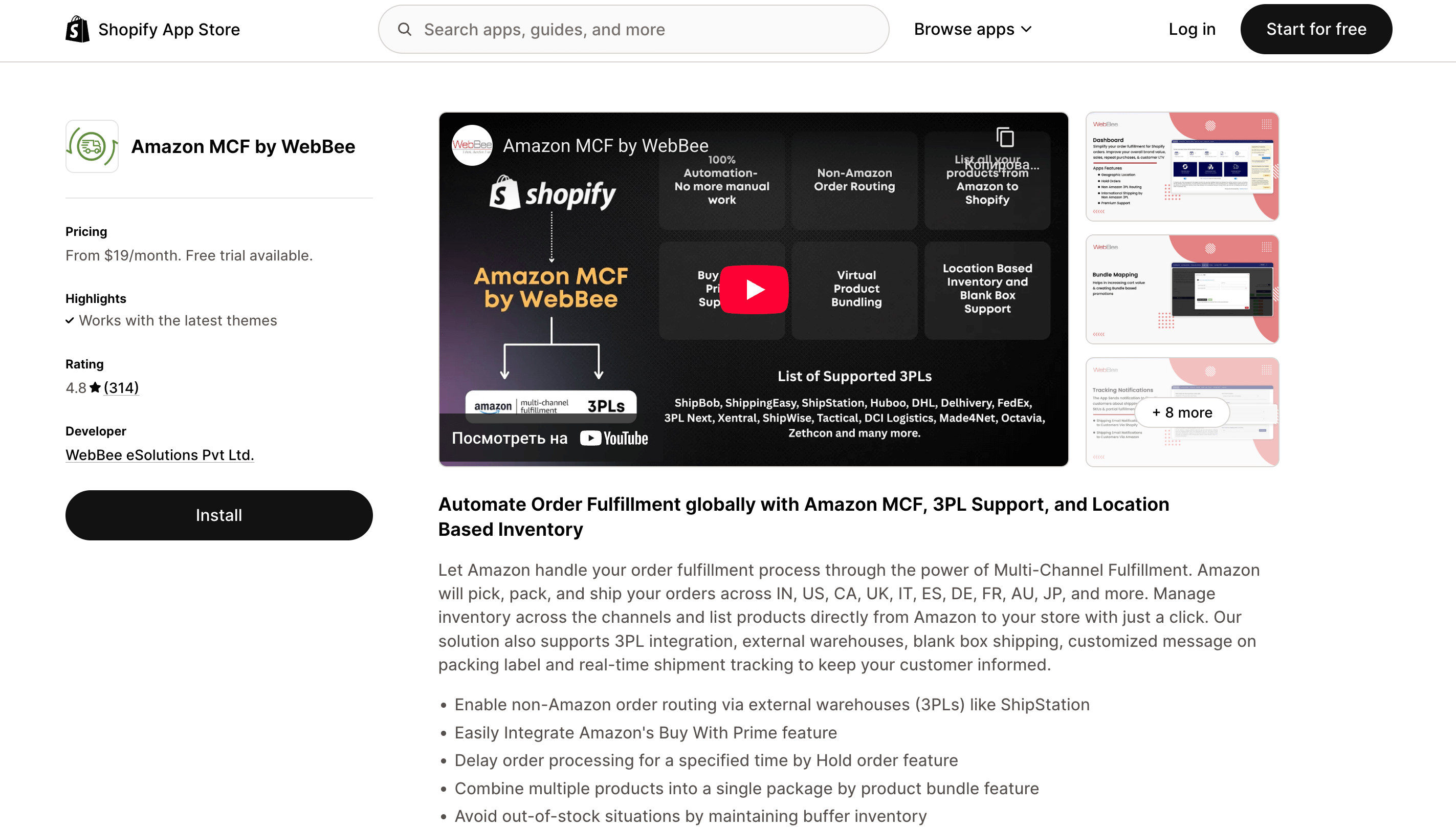
Specializing in advanced product feed management and automation, WebBee is a powerful tool for sellers who need precision and control when listing large catalogs on Amazon from Shopify. Its core strength lies in transforming and optimizing complex product data to meet Amazon's strict category-specific requirements. The app enables deep customization of product attributes, bullet points, and descriptions through bulk editing tools and templates, ensuring listings are not only compliant but also optimized for search and conversion.
5. CedCommerce Amazon Integration
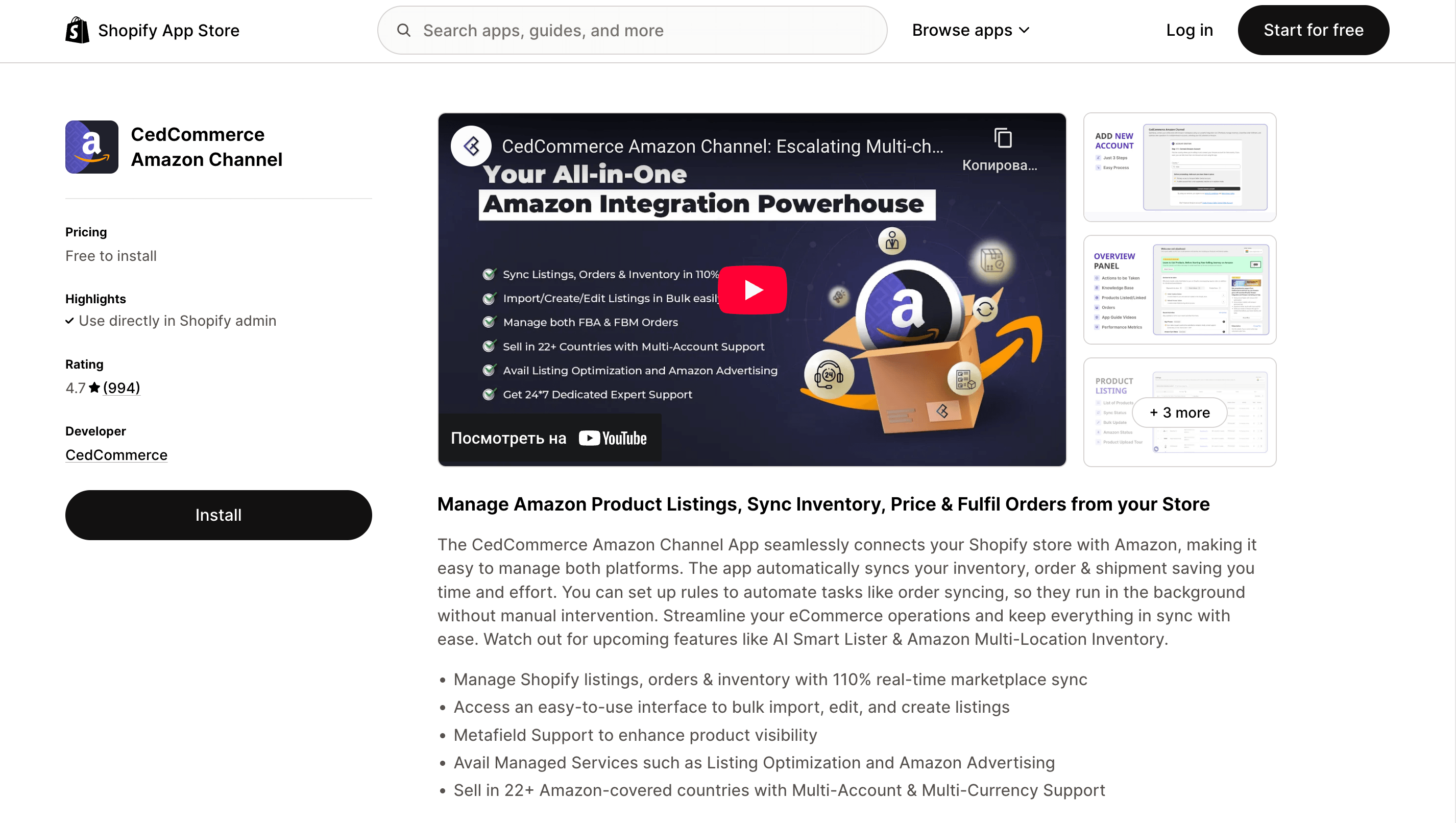
A robust and feature-rich solution, CedCommerce Amazon Integration provides a comprehensive toolkit for establishing and managing a seamless connection between Shopify and Amazon. It excels at the full lifecycle of multi-channel selling, from initial product listing and inventory sync to order fulfillment and automated repricing. The app supports detailed product feed management, allowing for bulk uploads and customization to comply with Amazon's category requirements.
A standout feature is its intelligent handling of Amazon-specific variants and configurations, ensuring complex product options are accurately mapped and displayed. The integrated repricing tool helps sellers stay competitive by automatically adjusting prices based on predefined rules. With reliable order synchronization and centralized management, CedCommerce reduces manual work, minimizes listing errors, and provides a unified workflow for sellers aiming to leverage Amazon's marketplace efficiently from their Shopify backend.
Comparison Table: Top Shopify-Amazon Integration Apps
The table below outlines the core strengths of each solution to help you compare them effectively.
| App | Key Focus / Differentiator | Best For | Key Features |
|---|---|---|---|
| Codisto (Shopify Marketplace Connect) | Real-time Multi-Channel Sync | Sellers needing instant, two-way sync across Amazon, eBay, and Walmart directly from Shopify. | • Real-time inventory & order sync • Direct listing & management from Shopify • Unified dashboard for multiple channels |
| Amazon MCF by ByteStand | Fulfillment Automation | Sellers who want to use Amazon's warehouse network (FBA) to fulfill Shopify orders with Prime speed. | • Automates Amazon Multi-Channel Fulfillment (MCF) • Syncs tracking back to Shopify • Handles returns and inventory updates |
| Sellbrite | Centralized Multi-Channel Command | Growing businesses managing inventory and orders across Shopify, Amazon, and other marketplaces (e.g., eBay, Walmart). | • Centralized inventory & order dashboard • Prevents overselling with smart sync • Bulk listing & basic reporting |
| WebBee | Advanced Product Feed Management | Sellers with large, complex catalogs requiring deep customization and optimization for Amazon’s specific requirements. | • Advanced feed transformation & bulk editing • Handles complex variants & attributes • Category-specific optimization tools |
| CedCommerce Amazon Integration | All-in-One with Repricing | Businesses seeking a comprehensive toolkit that includes competitive price automation alongside full lifecycle management. | • Product listing, inventory, & order sync • Intelligent repricing engine • Handles Amazon-specific variants & configurations |
Shopify Apps for Salesforce Integration
Salesforce serves as a powerhouse for e-commerce operations. From sales to data management, the right integration can significantly amplify a store's capabilities when paired with Shopify. Explore the following Shopify apps tailored for seamless integration with Salesforce:
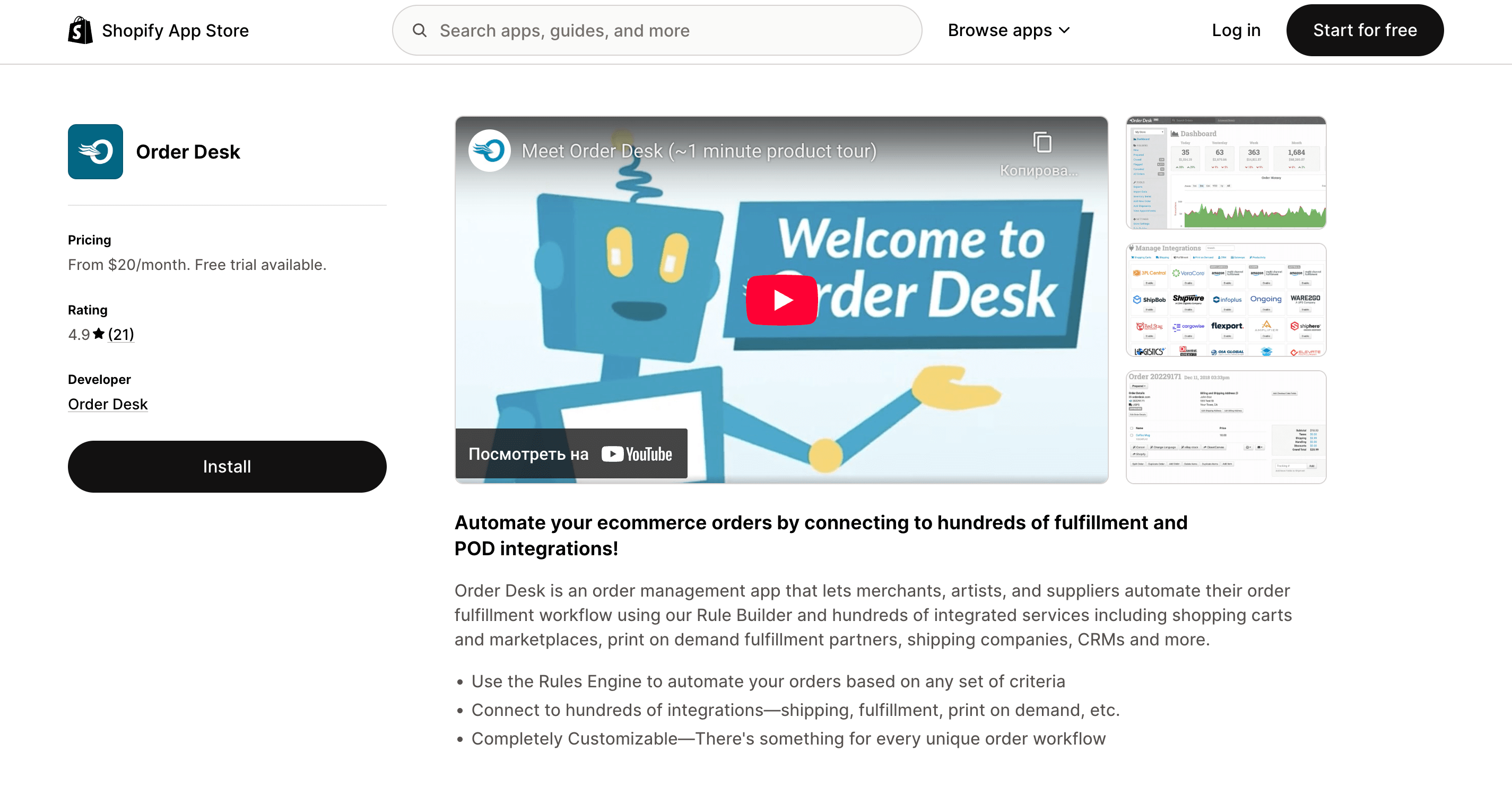
1. Order Desk
Order Desk stands out for its flexibility and scalability in handling complex order workflows. It enables smooth order processing and data synchronization between Shopify and Salesforce.
Businesses leveraging Order Desk appreciate its ability to centralize order management, reduce errors, and seamlessly integrate Shopify data with the Shopify Salesforce app for a unified view. Users commend Order Desk for its customization options, time-saving automation, and its contribution to creating a cohesive e-commerce ecosystem.
2. CRM Perks
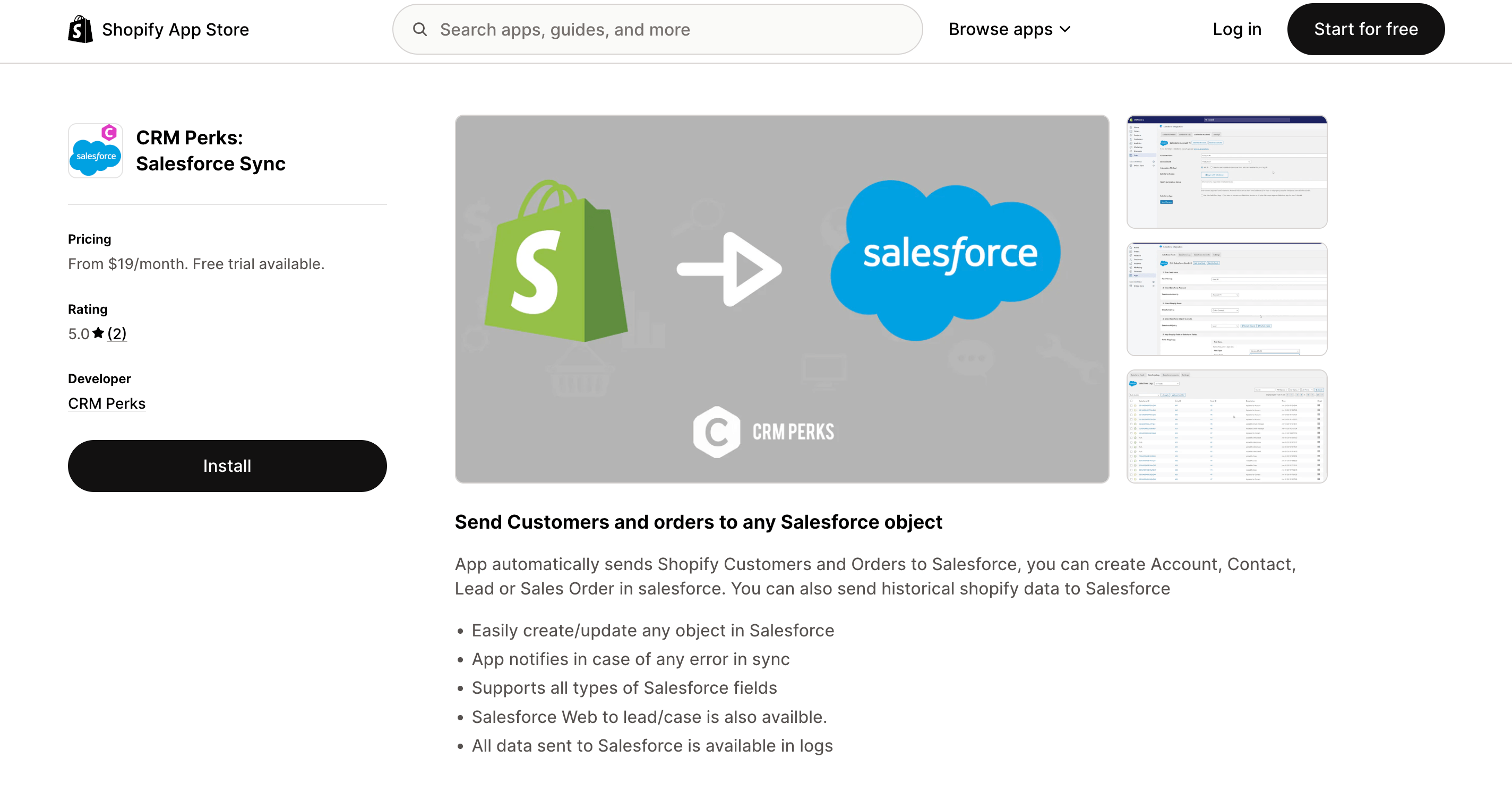
Salesforce Sync is a dedicated, robust connector designed to create a seamless one-way data flow from your Shopify store into your Salesforce CRM. Its core purpose is to automatically unify your e-commerce and customer relationship data, ensuring your sales and support teams have immediate, accurate access to customer purchase history and order details directly within Salesforce.
3. Zapier
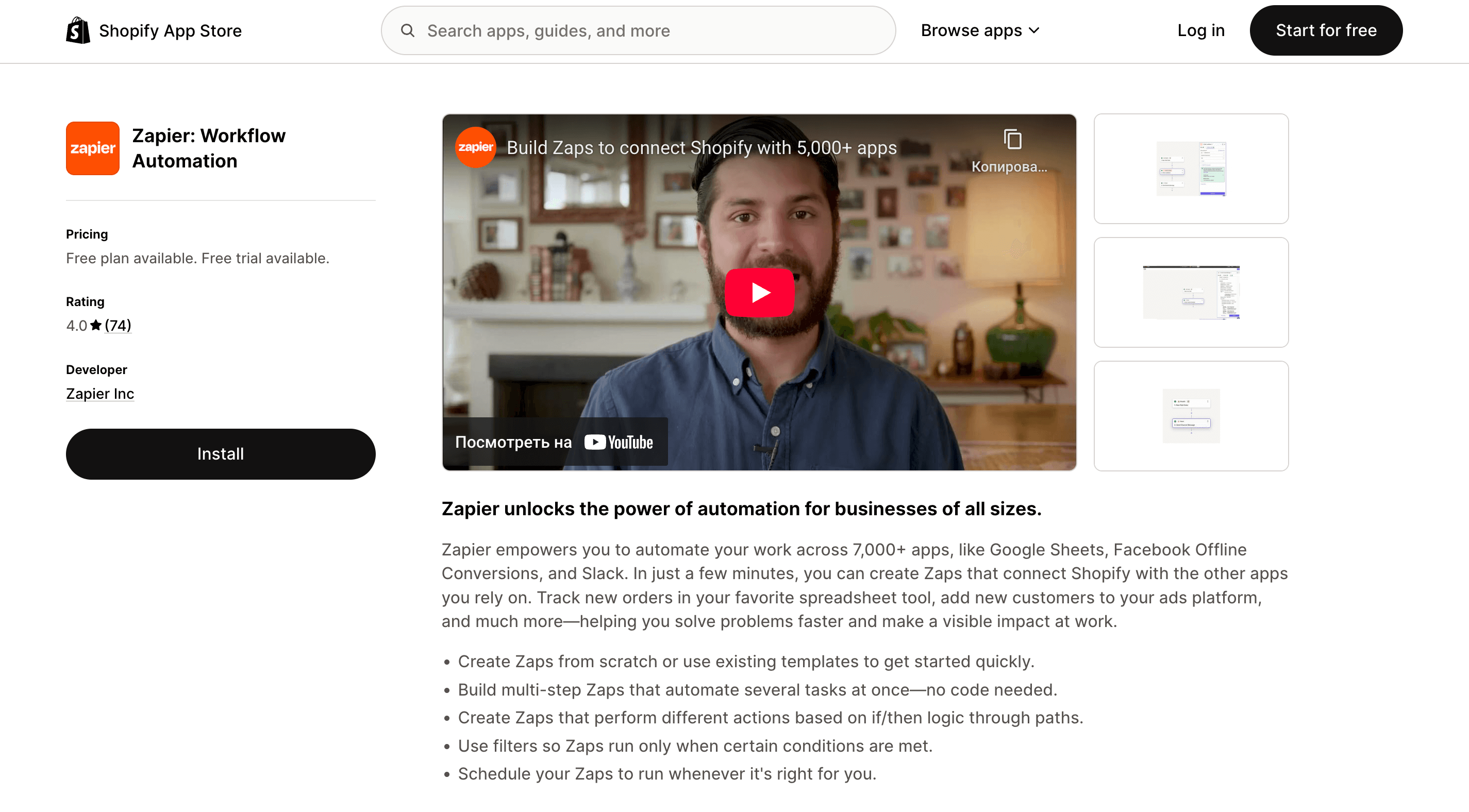
Zapier offers a uniquely flexible approach to Shopify-Salesforce integration by functioning as an automation platform rather than a fixed connector. It enables you to build custom workflows, called "Zaps," that link specific triggers in Shopify to precise actions in Salesforce. This allows you to automate tailored processes, such as creating a new Salesforce Contact from a Shopify order, perfectly matching your unique business logic.
Choose Zapier when you need targeted automation for specific data points or unique workflows. For comprehensive, bidirectional syncing of all commerce data, a dedicated native connector is typically more efficient. Zapier excels at providing control for custom integrations and connecting additional apps into your ecosystem.
4. Celigo
Celigo is an enterprise-grade integration Platform-as-a-Service (iPaaS) that offers a pre-built, managed flow for connecting Shopify and Salesforce. It goes beyond basic data sync to handle complex business logic, error management, and multi-step workflows.
This solution is ideal for larger businesses or those with intricate data transformation needs, such as syncing to custom objects, applying advanced field mappings, or integrating with other backend systems simultaneously. Celigo provides a high level of reliability and support, making it a robust choice for mission-critical operations where data integrity and scalability are paramount.

5. SyncSpider
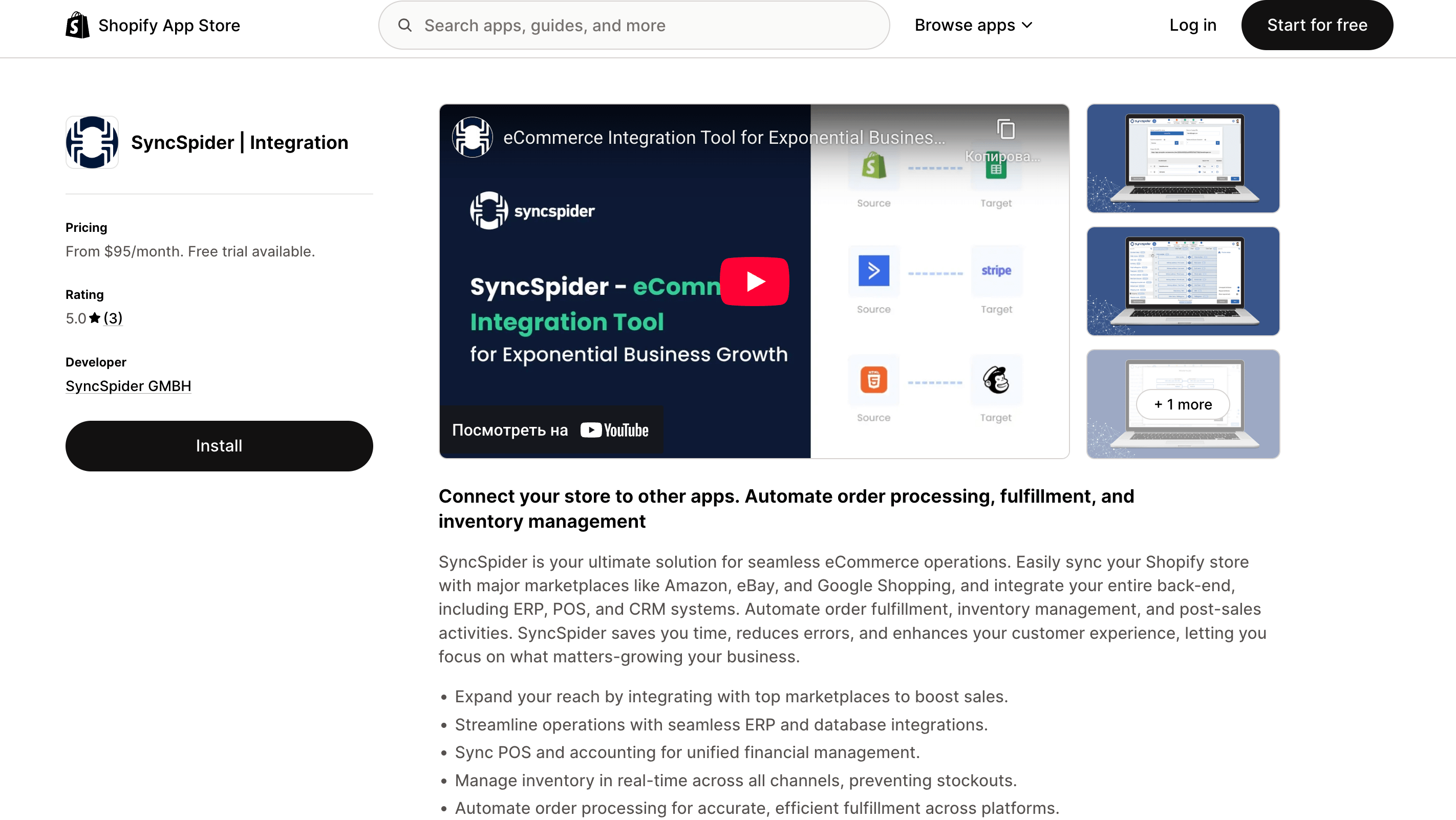
Data2CRM is a robust migration and synchronization tool designed to create a seamless, ongoing connection between Shopify and Salesforce. It accurately transfers and continuously syncs key data sets like products, customers, and orders, all while preserving historical information and maintaining critical data relationships. The app offers pre-built field mapping templates and supports custom fields, making it straightforward to align Shopify data with your Salesforce object structure.
Comparison Table: Top Shopify-Salesforce Integration Apps
This table highlights the core value and ideal use case for each solution.
| App | Key Focus / Differentiator | Best For | Key Features |
|---|---|---|---|
| Order Desk | Centralized Order Management Hub | Businesses that sell on multiple channels (Shopify, Amazon, etc.) and need to process, automate, and route all orders before sending clean data to Salesforce. | • Unified order inbox from all sales channels • Advanced rules for workflow automation & routing • Pre-processes data before syncing to Salesforce |
| CRM Perks | Direct, Native-Like Synchronization | Businesses seeking a straightforward, dedicated connector for bi-directional sync between Shopify and Salesforce CRM. | • Direct, two-way data sync (orders, customers, products) • Real-time or scheduled updates • Maps data to standard & custom Salesforce objects |
| Zapier | Custom Automation & Workflow Flexibility | Teams that need to connect many apps beyond Shopify & Salesforce, or create specific, custom-triggered actions without code. | • Vast library of app connections ("Zaps") • Point-and-click custom workflow builder • Ideal for specific, linear automations (e.g., "new order → new task") |
| Celigo | Enterprise-Grade Integration Platform (iPaaS) | Mid-to-large sized businesses with complex, high-volume, or custom data integration needs requiring robust management and error handling. | • Pre-built, managed integration flows (connectors) • Advanced data transformation and error handling • Scalable for complex ecosystems and custom logic |
| SyncSpider | Multi-Platform Automation & Data Orchestration | Businesses needing to sync and automate data flows across many platforms simultaneously (e.g., Shopify, Salesforce, ERP, email, accounting). | • Connects a wide array of apps in a single platform • Focus on data synchronization and workflow automation • Centralized control for "many-to-many" integrations |
Driving Growth Through Strategic Integration
Businesses need the right Shopify integration apps for Amazon and Salesforce to streamline operations and drive e-commerce success. While the reviewed apps offer powerful out-of-the-box solutions, businesses with complex needs may require a tailored approach.
This is where Shopify custom app development becomes the definitive solution. At Transform Agency, we specialize in building bespoke integrations and applications from the ground up. We go beyond standard apps to design seamless connectors, automate unique workflows, and leverage APIs for deeper, more robust synchronization between your platforms like Shopify, Amazon, and Salesforce. Our expertise ensures your entire tech stack works as a unified, scalable system built precisely for your business logic.
Ready to optimize your integrations and unlock growth? Contact Transform Agency today to learn how our custom solutions can elevate your e-commerce experience.
FAQ
Does Shopify have an Amazon integration?
Shopify does not have a native, built-in integration with Amazon. However, the Shopify App Store offers numerous third-party apps (like Codisto, ByteStand, and SellerSmith), that provide robust integration capabilities to connect your store to the Amazon marketplace.
Can Amazon fulfill Shopify orders?
Yes, through a process known as Multi-Channel Fulfillment (MCF). By using an integration app or a custom solution, you can sync your Shopify orders to your Amazon seller account. Amazon will then pick, pack, and ship those orders using its Fulfillment by Amazon (FBA) network, often with Prime shipping speeds.
Can Shopify integrate with Salesforce?
Yes, Shopify can integrate with Salesforce. While there is no direct native integration, several dedicated apps such as the Shopify Connector by Zynk, Order Desk, and Bold Integrations for Salesforce facilitate seamless bi-directional data sync for orders, customers, products, and inventory.
Does Amazon work with Salesforce?
Yes, Amazon and Salesforce can be integrated. This is typically achieved through specialized third-party connectors or custom API development. This integration allows businesses to sync data like Amazon sales orders, customer information, and product details into Salesforce for unified customer relationship management (CRM) and reporting.

Expert in creating engaging written content. Skilled at analyzing audience behaviors and refining strategies to align business goals with customer interests. Proven ability to craft content that connects deeply with audiences. Passionate about staying current with trends to boost engagement.
Expert in creating engaging written content. Skilled at analyzing audience behaviors and refining strategies to align business goals with customer interests. Proven ability to craft content that connects deeply with audiences. Passionate about staying current with trends to boost engagement.